Why Resonance: A Plague Tale Legacy's Ancient Greece Deliberately Defies History
Art director Olivier Cannone explains why Asobo Studio chose to sacrifice strict archaeological accuracy for atmospheric gameplay on the island of Crete.
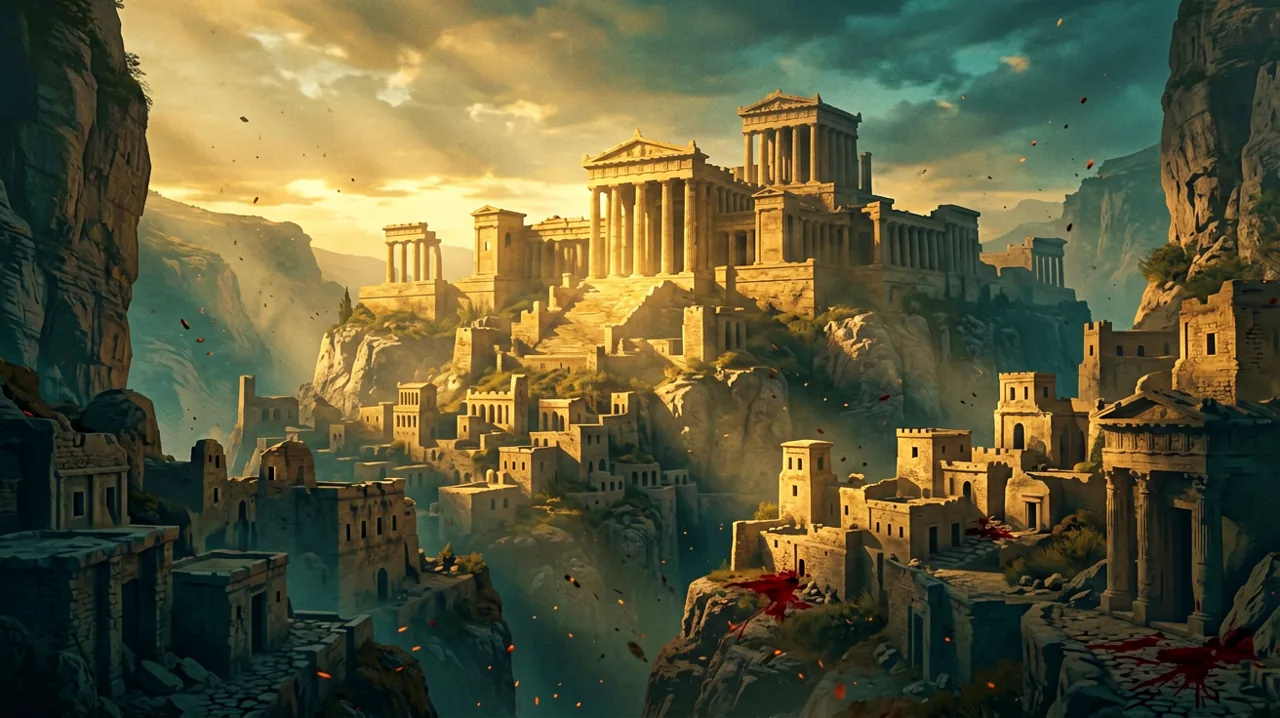
The countdown to August 27 is officially in its final stages. Microsoft has just confirmed the Wave 2 lineup for Xbox Game Pass this month, and as expected, Resonance: A Plague Tale Legacy is headlining the roster as a massive day-one addition. But while the release date and platform availability have been locked in for months, a fascinating new interview has surfaced that sheds light on exactly what kind of world we are about to step into. Speaking to Creative Bloq, Asobo Studio’s art director Olivier Cannone dropped a rather unexpected piece of information regarding the game’s setting on the island of Crete: “We had to tone down historical reality.”
For a franchise that built its entire reputation on the painstakingly accurate recreation of 14th-century plague-ridden France, hearing that the prequel is intentionally stepping away from strict historical facts is a significant shift. Both Innocence and Requiem were heavily lauded for their grimy, authentic depictions of medieval architecture, clothing, and societal structures. So why is Sophia’s journey into the Mediterranean taking creative liberties with its ancient Greek backdrop? When you examine the core mechanics of this new entry, the decision to bend history makes complete sense from a game design perspective.
The Practicalities of Level Design
To understand Cannone’s statement, we have to look at the harsh realities of video game level design versus actual archaeological blueprints. The ruins of the Minoan civilization, particularly the famous palace of Knossos on Crete, are historically fascinating but practically claustrophobic. They were built with incredibly tight corridors, low ceilings, and complex, confusing layouts—the very traits that gave rise to the myth of the Minotaur’s labyrinth.
While that sounds like a fantastic setting for a psychological horror game on paper, it presents a massive nightmare for a modern third-person action title. In Resonance, the gameplay loop has evolved significantly from the previous two entries. Sophia is far more capable in close-quarters combat than Amicia ever was, utilizing brutal parry mechanics and multi-target executions. To support this more athletic action approach, arenas need to be readable and spacious. If the development team adhered strictly to the floor plans of actual Minoan ruins, the camera would constantly clip into walls, and the combat would devolve into a frustrating, unreadable mess in narrow stone hallways.
Furthermore, the stealth mechanics in this prequel heavily emphasize verticality. We already know Sophia utilizes tools like a grappling hook that allow for a greater degree of environmental traversal. Toning down the “historical reality” likely means scaling up the architecture. The ceilings need to be higher, the courtyards wider, and the vertical drops much deeper to accommodate the gameplay loop. Asobo is clearly prioritizing a fluid, enjoyable player experience over producing a 1:1 museum exhibit.
Making Room for the Macula
Then, there is the undeniable elephant in the room: the Prima Macula. The central supernatural force of the A Plague Tale universe has always required specific environmental conditions to be truly terrifying. In the previous titles, the sheer volume of the rat swarms was a technical marvel, but it also demanded environments that could act as massive conduits for these fluid-like entities.
If Resonance is exploring the ancient origins of the curse and the phenomenon known on the island as “the presence,” the environment itself needs to serve as a canvas for this ancient threat. A historically accurate ancient Greek villa simply does not have the spatial capacity to host the kind of apocalyptic swarms Asobo is known for rendering. The architecture of the game’s ancient ruins had to be exaggerated, turning basic structural foundations into massive chasms and subterranean waterways that can physically support the rendering of thousands of moving entities. The terror of the Macula relies on overwhelming scale, and to achieve that scale, the history of the architecture had to be stretched to mythological proportions.
The Contrast of the Dual Timelines
Another critical factor driving this artistic liberty is the new “resonance” mechanic, which allows players to interact with dual timelines. Players will navigate the ruins in Sophia’s present day of 1334, while also experiencing echoes of the ancient past. For this mechanic to be visually effective and instantly recognizable during high-stress moments, there needs to be a stark, immediate contrast between the two eras.
By heavily stylizing the ancient Minoan era, Asobo ensures that players feel the thematic shift the moment the timelines overlap. The 1334 medieval layer of Crete—which we’ve seen featured heavily in the locations trailer—will likely feel more grounded and recognizable, characterized by medieval stonework and Mediterranean maritime influences. Beneath that, the ancient layer serves as the alien, almost otherworldly foundation. If the ancient Greek elements were entirely historically accurate, they might blend too seamlessly with the medieval ruins, muting the impact of the dual-era puzzles. Exaggerating the Minoan aesthetics gives the ancient timeline a distinct, haunting identity that feels separate from the medieval world above.
The Lighting Puzzles and the Minoan Orbs
We also have to consider the puzzle elements. The integration of stolen Minoan light spheres is a core mechanic for survival and progression in Resonance. These light puzzles require specific architectural setups—vast, cavernous rooms where beams of light can be manipulated, reflected, and cast across great distances to repel the darkness and whatever hides within it.
Historical Minoan structures utilized “light wells” to illuminate inner rooms, but they were relatively small, utilitarian shafts. To translate this concept into a compelling video game mechanic, Asobo had to reimagine these spaces as grand, intricate puzzle boxes. The “historical reality” of a simple light well is transformed into a colossal, ancient mechanism designed to hold back a supernatural plague. It is a necessary fiction that serves the gameplay, ensuring that the light-based mechanics feel impactful and deeply integrated into the world’s lore rather than just being glued on top of it.
Narrative Weight Over Textbook Accuracy
Ultimately, Resonance: A Plague Tale Legacy is a dark fantasy. The narrative focuses on Sophia, a Venetian smuggler drawn into a conspiracy that transcends time. We are experiencing this island entirely through her perspective. To a 14th-century rogue who is entirely out of her depth and encountering ancient, blood-cursed ruins, the environment should feel overwhelmingly oppressive, impossibly grand, and terrifyingly alien.
Olivier Cannone’s admission that the team toned down reality is actually a testament to strong, confident art direction. Good art direction knows exactly when to break the rules to serve the story and the gameplay. The island of Crete in this prequel is not just a passive setting; it is a character, a prison, and a puzzle box all rolled into one. By discarding the constraints of strict historical accuracy, Asobo Studio has given themselves the freedom to design a world that is custom-built to challenge Sophia and awe the player.
The Final Countdown to Game Pass
As noted earlier, Microsoft’s recent announcement confirms that the wait to explore this stylized vision of ancient Greece is almost over. Resonance: A Plague Tale Legacy will be the marquee title for the second wave of Xbox Game Pass this August, landing on day one alongside a handful of indie titles like Vapor World. Whether you are playing on Xbox Series X|S, PC, or PlayStation 5, the game promises a robust 20-hour experience that significantly shakes up the established series formula.
While historians and archaeologists might raise an eyebrow at the proportions of the labyrinth or the placement of certain frescoes, gamers have every reason to be excited by this design philosophy. The deliberate departure from reality suggests an environment that is perfectly engineered for brutal combat, tense stealth, and jaw-dropping encounters with the Macula. We will find out exactly how far from history Asobo has strayed when Sophia arrives on Crete on August 27. For a deeper look at what to expect before launch day, be sure to check out our combat deep dive and our comprehensive story primer to get fully caught up on the legacy of the Prima Macula.