How Long to Beat Resonance: A Plague Tale Legacy? Hard Mode Clear Times & Late-Game Impressions
Discover the true playtime of Resonance: A Plague Tale Legacy as players clear Hard mode in 9 hours, proving this prequel is a top-tier mainline experience.
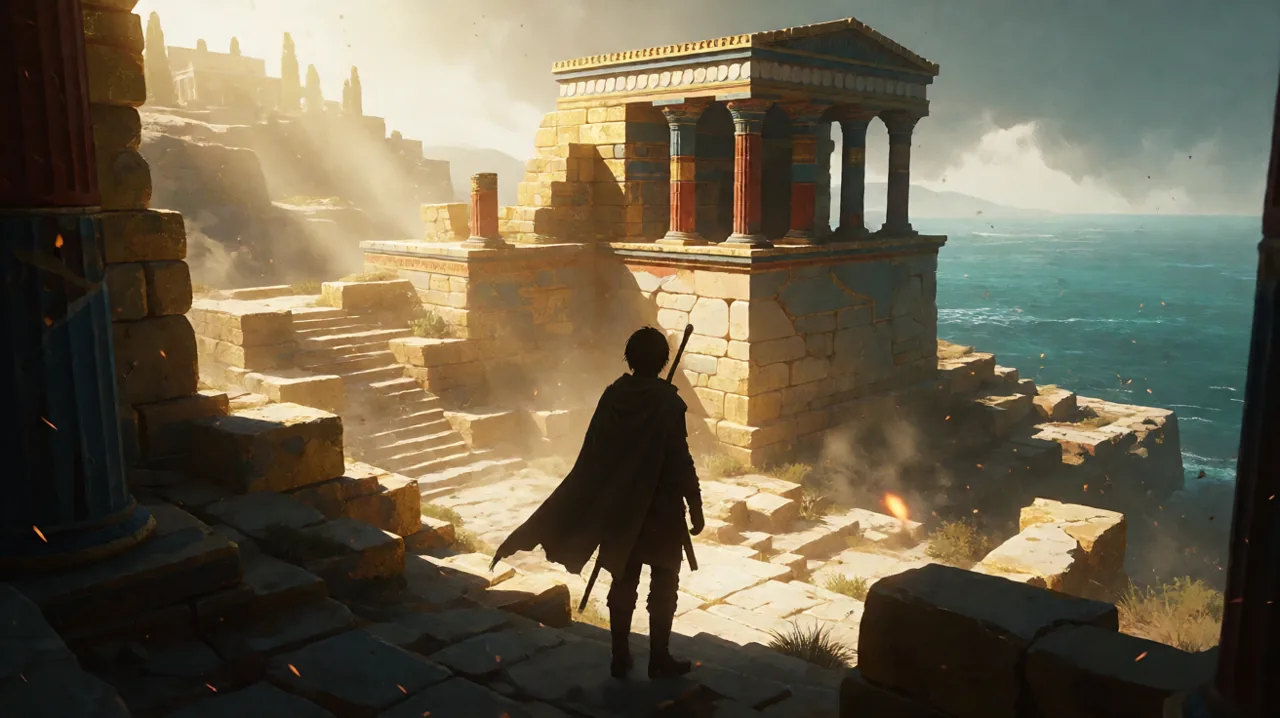
As the dust begins to settle on the Minotaur’s island of Crete, a much clearer picture of Resonance: A Plague Tale Legacy is finally coming into focus. It has been almost a month since Asobo Studio and Focus Entertainment launched their ambitious prequel, introducing players to a younger, fiercer Sophia in 1334—a full fifteen years before the grim events of Innocence and Requiem. With the game available on PlayStation 5, PC, and day one on Xbox Game Pass, a massive wave of players has had the opportunity to navigate this distinct chapter of the universe.
Now that the initial launch hype and day-one patches have subsidized, hardcore fans, achievement hunters, and lore enthusiasts are rolling the credits. Their final impressions are painting a fascinating picture of what this game truly is, challenging pre-release assumptions about its length, its mechanical depth, and its overall place within the overarching lore of the Prima Macula.
The Playtime Reality: 9 Hours vs. The 20-Hour Promise
One of the most persistent discussions surrounding any major single-player release is its runtime. Prior to the game’s launch in late August, there was significant buzz regarding how long Sophia’s journey would take. Asobo Studio had previously indicated a rather robust runtime, leading to widespread reports that Resonance confirmed a 20-hour runtime. For a linear, narrative-driven stealth-action game, twenty hours is a massive commitment, bordering on the runtimes usually reserved for semi-open-world titles.
However, as skilled players are now sharing their completion screens, a very different reality is emerging. Recent community reports, including a detailed breakdown from a player who completed the game on Hard difficulty, reveal that the main campaign can be decisively finished in approximately 9 hours. This is a staggering difference from the official estimates, effectively cutting the expected playtime in half.
What accounts for this massive discrepancy? We have to consider playstyles and the game’s structural design. A 9-hour clear on Hard difficulty implies a player who is adept at action games, quickly mastering the brutal parry and execution systems, and pushing through the labyrinth’s encounters with minimal retries. They are likely bypassing the more intricate, optional Minoan light puzzles that hold the game’s deepest lore secrets, and skipping the missable Resonance points. The developer’s 20-hour estimate is almost certainly tied to a “completionist” approach—hunting down every collectible, solving every environmental puzzle using the dual-timeline mechanic, and likely failing heavily during the punishing stealth sections involving the unseen “Presence”.
For many fans, this 9-hour focused runtime is actually being celebrated. Requiem was occasionally criticized for its pacing, with some chapters feeling artificially lengthened by repetitive combat arenas. A tighter, 9-to-10 hour experience aligns much more closely with the excellent pacing of Innocence. It delivers a relentless, gripping narrative without overstaying its welcome. For Xbox Game Pass subscribers looking for a thrilling weekend playthrough rather than a month-long commitment, this condensed, all-killer-no-filler playtime is a massive selling point.
Defying the Prequel Curse: A True Mainline Experience
Whenever a beloved franchise announces a prequel focusing on a supporting character—even one as beloved as the sea-faring smuggler Sophia—there is an inherent community skepticism. Fans often view these projects with caution, fearing they might be mere “filler” or spin-offs designed to cash in on the IP while the main studio works on a numbered sequel. Resonance definitely bore this heavy burden leading up to its release.
However, the verdict from players who have now earned their completion achievements is overwhelmingly positive. As one dedicated achievement hunter succinctly noted on community forums, they expected the game to feel like a side-story, but were completely blown away by what is undeniably a high-quality mainline experience. Asobo Studio has not cut corners here. The production values, from the hauntingly beautiful Mediterranean soundtrack to the breathtaking vistas of the Aegean Sea, feel incredibly premium.
More importantly, the narrative fiercely validates its own existence. By taking us to 1334, the game explores the historical weight of the Prima Macula in a way the mainline games only hinted at. Understanding what Sophia witnessed in the underground cisterns of Crete, and how she survived the macabre realities of the curse long before she met Amicia and Hugo, adds profound layers to her character. Players are reporting that finishing Resonance makes them appreciate the sibling duo of the later games even more. The tragedy of the Macula feels more inevitable, more ancient, and deeply rooted in the history of the world. For a deeper look into how the series has grown narratively, you can read our retrospective on the complete series evolution.
Combat Dynamics and the Illusion of RPG Mechanics
Moving away from Amicia’s iconic slingshot and crossbow, Resonance forces players into intense, close-quarters combat. Sophia is a hardened smuggler, and her fighting style reflects her gritty background in Venice. The combat system relies heavily on parrying, situational awareness, and executing multiple foes in the claustrophobic ruins of Knossos.
Late-game player reviews are praising the dynamic nature of this combat. As you progress through the roughly 9-hour campaign, the game consistently introduces new environmental hazards and enemy types that force you to adapt. The way the game uses the environment—especially manipulating the stolen Minoan light orbs—is repeatedly highlighted as a strong point.
However, a common critique is beginning to surface regarding the game’s supplementary progression systems. Resonance introduces a system of equipable weapons and amulets, seemingly designed to give players customizable builds to tackle different combat scenarios. Yet, veterans completing the game on Hard mode note that these elements feel entirely optional and somewhat tacked on. Players report that they could comfortably ignore the amulet system and still dominate the combat arenas through raw skill and timing alone.
This raises questions about why these pseudo-RPG mechanics were included. In a genre that thrives on tight, deliberate design, adding superficial loot or stat-boosting amulets can distract from the core mechanical purity. For players who might be struggling with the base mechanics, however, understanding the timing windows is crucial, and our combat deep dive can help you master the parry system without needing to rely on these optional crutches.
Additionally, while the game’s overall graphical fidelity is stunning, some players have pointed out a lack of polish in Sophia’s gameplay animations. When transitioning from the beautifully motion-captured cutscenes back to actual gameplay, her movements can occasionally feel stiff or abrupt. Given the athletic, fast-paced nature of her melee combat compared to Amicia’s slower ranged combat, this slight visual disconnect is noticeable, though players agree it rarely detracts from the overall enjoyment.
The Demand for Cutscene Photo Mode
It is impossible to talk about an Asobo Studio game without mentioning the striking visuals. Resonance: A Plague Tale Legacy is a masterclass in art direction. The juxtaposition of the bright, beautiful Mediterranean surface against the dark, decaying ancient ruins below creates a visual feast. The dual-timeline “Resonance” mechanic, which allows players to glimpse the ruins as they were in antiquity before snapping back to the medieval decay, provides some of the most striking imagery in the franchise’s history.
Naturally, the virtual photography community has flocked to the game, capturing breathtaking shots of Sophia navigating the ruins. The game reportedly runs exceptionally well on PC at maximum settings, making it a playground for screenshot enthusiasts. However, a major point of contention has arisen: the Photo Mode is currently disabled during cutscenes.
The cutscenes in Resonance feature some of the most dramatic lighting, intense emotional close-ups, and horrifying reveals of the rat swarms. For virtual photographers, being locked out of these meticulously crafted cinematic moments is incredibly frustrating. The community is actively petitioning Asobo Studio to release an update that unlocks Photo Mode during cinematics. Given the developer’s history of supporting their community post-launch, fans remain hopeful that this highly requested feature will be implemented in an upcoming patch.
A Legacy Secured
As more players reach the credits of Resonance: A Plague Tale Legacy, the narrative surrounding the game is shifting from cautious optimism to genuine celebration. It may not take the advertised 20 hours to beat for skilled players focusing on the main path, and its extra RPG mechanics might be a bit shallow, but the core experience is undeniable.
It is a stunning, emotionally resonant prequel that earns its title. Sophia is no longer just a supporting character; she is the anchor of a harrowing journey that recontextualizes the entire universe. Whether you are blasting through it on a weekend via Xbox Game Pass or taking your time to soak in the tragic lore of Crete, this is a mainline experience that no fan of the series should miss.