Next-Gen Benchmarks: Resonance on RTX 5090 and RX 9070 XT Unlocks True 4K Fidelity
A month after launch, PC enthusiasts are testing Resonance: A Plague Tale Legacy on extreme hardware like the RTX 5090 and RX 9070 XT, utilizing DLSS 5 to push Asobo's engine to its limits.
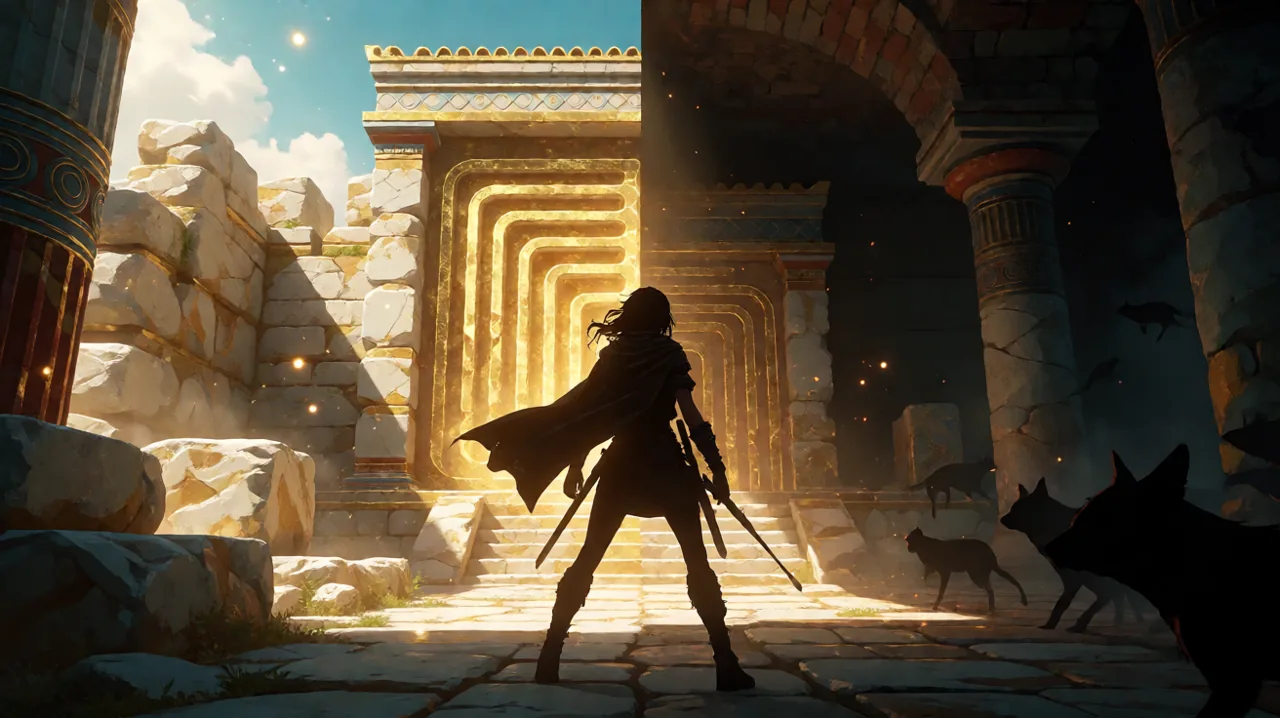
Asobo Studio’s proprietary engine has a long-standing reputation for melting graphics cards. While the endless sea of rodents in Requiem pushed CPU logic to the breaking point, Resonance: A Plague Tale Legacy shifts the architectural bottleneck entirely toward VRAM and ray-traced global illumination. Now, a month after the prequel’s August 27 launch, PC hardware enthusiasts are finally bringing the next generation of GPUs to the shores of 1334 AD Crete.
Based on fresh community benchmarks and performance reports surfacing today, extreme hardware configurations like the Nvidia RTX 5090 and the AMD Radeon RX 9070 XT are turning Sophia’s Mediterranean journey into an unprecedented visual showcase. Heavily aided by the cutting-edge DLSS 5 and 4x Frame Generation technologies, the PC gaming community is discovering what the labyrinth of the Minotaur looks like without any hardware compromises.
The RTX 5090 and DLSS 5 Experience
For those who have navigated the subterranean depths of Knossos, you already know the environmental density is staggering. The game demands that the engine stream hyper-detailed marble ruins, dense volumetric fog, and localized rat swarms simultaneously. This is compounded heavily by the core dual-timeline “Resonance” mechanic, which requires the game to hold both the decaying 14th-century reality and the pristine, golden age of the Minoan empire in active memory for instantaneous visual swapping.
Over on the r/CroatiansGaming subreddit, a community member recently shared their experience running the game on a bleeding-edge rig: an RTX 5090 ASTRAL variant paired with an Intel Core i9 285K and 64GB of DDR5 memory. Running the title at native 4K with maximum path-tracing settings is incredibly demanding, but the user reported that enabling DLSS 5 “really elevated the game to a new level.”
When Sophia holds a Minoan Light Orb, the dynamic shadows cast across the crumbling marble pillars are calculated with extreme precision. The ray tracing doesn’t just apply to static geometry; it dynamically interacts with the churning bodies of the rat swarms hiding in the periphery and the heavily armored mercenary patrols hunting her. Furthermore, DLSS 5 introduces next-generation frame generation and AI-driven ray reconstruction that smooths out the aggressive memory bandwidth spikes occurring during timeline shifts. Players running mid-range hardware during the launch week frequently complained about micro-stuttering during these exact transition moments (which prompted a wave of early PC optimization patches). With an extreme GPU buffer and DLSS 5’s predictive rendering, the visual swap between the ancient past and the grim reality of the Macula curse is reportedly flawless.
Breaking 100 FPS on the Radeon RX 9070 XT
Team Red is also putting up massive numbers. A hardware test published today by GameGPU indicates that the newly circulating AMD Radeon RX 9070 XT is outputting a remarkably stable 100 FPS in Resonance.
Interestingly, the report cites the use of “DLSS 5 and 4x FG” alongside the AMD card. While Nvidia’s DLSS pipeline is historically a closed ecosystem, the PC modding scene has rapidly developed injection tools to cross-pollinate frame generation algorithms, and preview hardware builds often test unified upscaling frameworks. Regardless of the exact software injection method being tested, holding 100 FPS at 4K in a game this dense is a monumental achievement.
Why does a high framerate matter so much for a narrative-heavy prequel? It entirely changes the rhythm of combat. As an older, more cynical protagonist, Sophia isn’t afraid to get her hands dirty. Her survival relies on aggressive, close-quarters encounters, a stark departure from the youthful, ranged tactics of the series’ past. Our combat mechanics breakdown highlights that her one-versus-many parry and execution system has very strict animation frames. Playing the game at 30 FPS on standard consoles introduced a noticeable input latency that made surviving heavily armored mercenary ambushes feel stiff. At 100 FPS, the reduced input delay turns the brutal melee exchanges into a highly responsive, fluid dance, allowing players to read enemy telegraphs with perfect clarity.
Extreme Graphics Don’t Mask Gameplay Realities
Brute-forcing high framerates and gorgeous path tracing can fix technical hiccups, but it does not alter the fundamental design of the game. The community sentiment attached to these extreme hardware benchmarks offers a sobering look at where Asobo’s formula still struggles.
The player testing the RTX 5090 ultimately awarded the game an 8.5/10. Their verdict was clear: the story and atmosphere are phenomenal, but the “combat and puzzles could be better.” This mirrors broader player feedback since launch.
The primary environmental puzzle loop revolves around the stolen Minoan Light Orbs. These artifacts are used to activate ancient doors, clear out the creeping “Presence”, and scatter the isolated rat swarms that serve as the early origin of the Prima Macula. Visually, holding an orb in a dark subterranean cistern while hardware-accelerated global illumination casts real-time, shifting shadows is breathtaking. Mechanically, however, the tasks often devolve into repetitive fetch sequences. Moving the sphere from pedestal to pedestal in Chapters 3 and 4 lacks the mechanical complexity that puzzle enthusiasts desire (you can find our walkthroughs for these sections here).
The overarching narrative brilliantly fleshes out the lore of the Prima Macula, showing how the curse manifested centuries before it decimated the French countryside in Innocence. Sophia’s personal journey, exploring the origins of her character, is compelling. However, the stealth sequences against the ‘Presence’—an amorphous, localized threat that stalks the island’s catacombs—can sometimes feel frustrating if the enemy AI pathing behaves erratically. You are meant to feel powerless, scrambling to use environmental distractions, but when a high-fidelity stealth system lacks adaptive flexibility, the resulting scramble for survival feels less like dynamic gameplay and more like a punishment for breaking the intended stealth strategies.
The PC Market: $30 Steam Keys and Accessibility
While discussing $2,000 graphics cards is fascinating, the reality is that most of the PC community relies on more accessible hardware to meet the base system requirements. Fortunately, the financial barrier to enter 1334 AD Crete is dropping rapidly.
The game enjoyed a massive influx of players due to its day-one inclusion on Xbox Game Pass. However, for PC purists who prefer owning a permanent Steam license, the grey market and trading communities are reacting to the post-launch demand curve. Across subreddits like r/indiegameswap, global Steam keys for Resonance: A Plague Tale Legacy are currently trading for as low as $30.
This represents a massive discount just four weeks after release. Whether this price drop is fueled by regional arbitrage or players offloading keys from promotional hardware bundles, it positions the game as an incredible bargain. For roughly half the price of a standard modern AAA release, PC players get access to a gorgeous, 20-hour narrative campaign, a gripping central mystery, and one of the best original soundtracks of the year.
As we move deeper into the holiday season, Resonance is firmly establishing itself as the premier benchmarking title for 2026. Whether you are playing it on a cutting-edge RTX 5090 to admire the path-traced dust motes, or grabbing a discounted Steam key to run it on a modest mid-range setup, Asobo Studio’s prequel remains a stark, beautiful, and highly demanding piece of software.