Resonance Light Puzzle Guide — The Minoan Sphere Explained
How the Minoan sphere and light-manipulation puzzles work in Resonance: A Plague Tale Legacy. A practical primer on solving the light puzzles, redirecting beams and reading the ancient chambers.
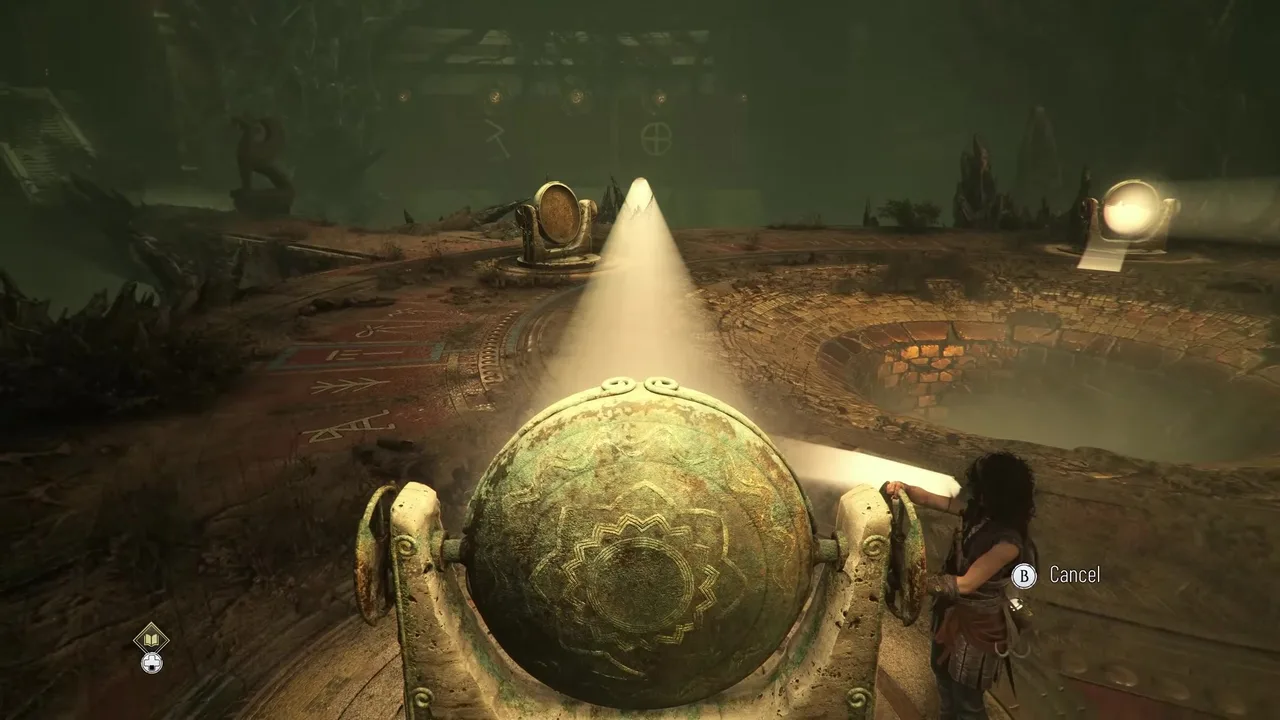
Every Plague Tale game has a “thing” — a signature toy that the puzzles bend around. In Innocence and Requiem it was fire and light versus the dark and the rats. In Resonance, it’s a stolen Minoan sphere that Sophia uses to bend light itself. The trailers spend a long, loving stretch in golden chambers thick with god-rays, floating orbs and ancient mechanisms, with Sophia twisting beams of light to open the way forward. These are some of the most visually striking moments in everything shown so far.
Here’s what we understand about how the light puzzles work, and how to approach them.
The sphere and the light
The core fantasy is light manipulation. The Minoan sphere is an artifact Sophia takes for herself, and it lets her interact with the ancient light-based machinery scattered through the ruins. In the footage you can see beams being projected, redirected and focused — light hitting a point and triggering a response, paths opening as the right beam reaches the right place.
If you’ve played puzzle games built around mirrors, prisms or light beams, the grammar will feel familiar: a source, a path, and a target. The puzzle is figuring out how to get the light from the source to the target, usually by changing the direction or position of something in between.
How to approach a light puzzle
Until we’ve solved the final game’s actual puzzles, the smartest advice is method, not specific solutions:
- Find the source and the goal first. Before touching anything, identify where the light comes from and what it needs to reach — a receptor, a mechanism, a sealed door. Knowing the start and end points turns chaos into a route.
- Trace the path. Follow the beam with your eyes. Where does it currently go? What’s blocking it, and what could redirect it?
- Look for the moving parts. Puzzles like this are built around interactable elements — pedestals, the sphere itself, rotating fixtures, reflective surfaces. Anything you can grab or turn is part of the solution.
- Change one thing at a time. Don’t flail. Adjust a single element, watch how the light responds, and build from there. Light puzzles reward observation over brute force.
- Use the environment as a clue. Minoan iconography, worn grooves on the floor, the placement of statues and braziers — the chambers are designed to nudge you. The art is the hint.
Why the puzzles matter to the story
What makes Resonance’s puzzles interesting is that they’re tangled up with the dual-timeline. The Minoan past and the medieval present are linked, and the light machinery belongs to that ancient age. Solving these puzzles isn’t just “open the door so I can keep walking” — it’s Sophia reaching back into a civilization that’s been dead for centuries and making it answer her. There’s a real chance some puzzles literally span both timelines, where an action in the past changes the state of a mechanism in the present. We don’t have that confirmed mechanically, but the framing strongly hints at it.
That connection is also why the puzzles feel weighty rather than like filler. They’re the game’s way of letting you feel the resonance between eras with your own hands.
Tips for when you’re stuck
- Step back and look at the whole room. Light puzzles are spatial; tunnel vision on one corner hides the solution. A wider view often reveals a beam path you missed.
- Check for second light sources. More complex puzzles layer multiple beams. If one path looks complete but nothing happens, there’s probably another source you haven’t dealt with.
- Re-read the space for “intended” routes. Designers build these so the answer is discoverable. If something feels like it should be interactable, it probably is.
- Don’t overthink early puzzles. The first ones teach the language. They’re meant to be solvable in a minute or two — if you’re stuck, you’re likely missing one obvious moving part.
We’ll publish step-by-step solutions for the trickier chambers once the game is out and we can document them properly. Until then, learn the grammar — source, path, target — and most of these will click. For the lore and mechanics behind the sphere, see the Minoan light puzzles system page, and read about the labyrinth where many of them live.