The Labyrinth
The Endless Maze
The endless labyrinth beneath Crete is the centrepiece of Resonance: A Plague Tale Legacy — a maze of hidden paths, light puzzles, ancient trials and the creature behind the myth. Here's what to expect.
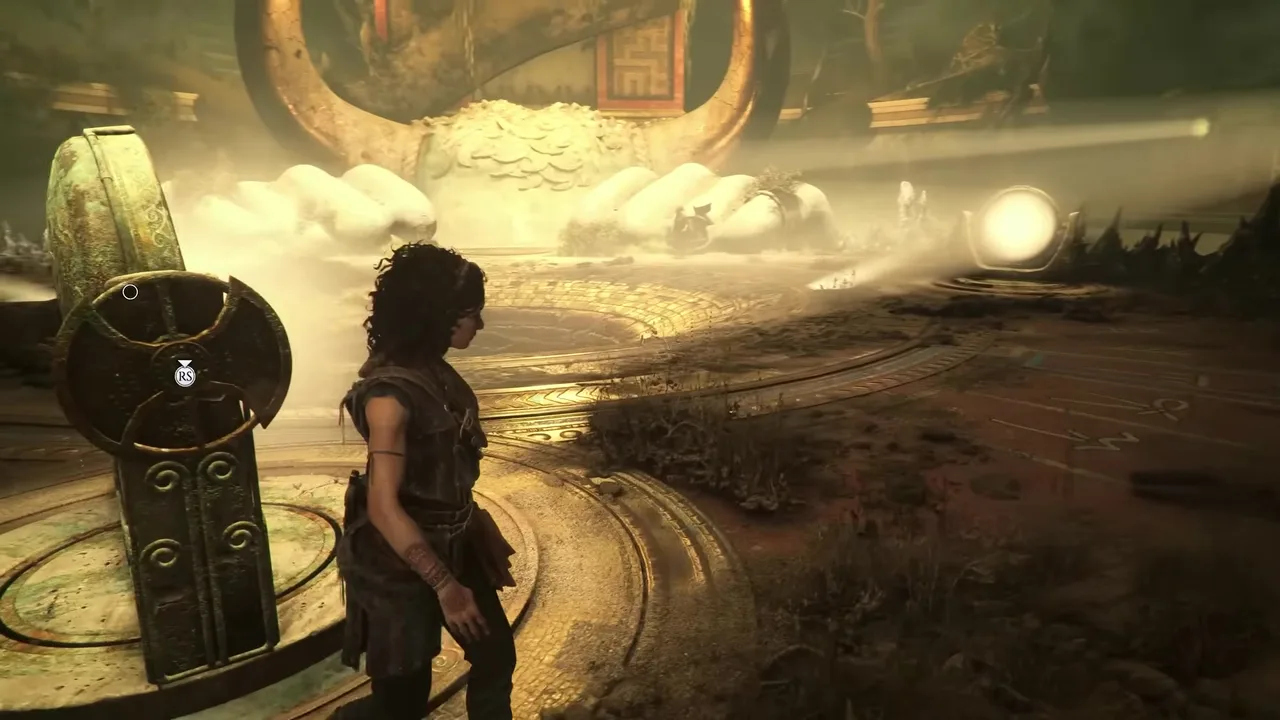
An endless labyrinth, filled with hidden paths and forgotten secrets.
At the centre of Resonance: A Plague Tale Legacy — geographically, mythologically and thematically — is the labyrinth. The game’s own description promises “an endless labyrinth, filled with hidden paths, forgotten secrets,” a place where Sophia solves ingenious puzzles, survives deadly trials, and is hunted by the creature behind the myth. It’s the Minotaur’s maze, reimagined as the beating dark heart of the game.
Built from the game’s official framing and the Minoan legend; marked expected until the final game lets us walk it.
The maze of legend
In Greek myth, the labyrinth was built by the master craftsman Daedalus at the command of King Minos to contain the Minotaur — a structure so intricate that even its designer barely escaped it. Theseus only survived by following the thread Ariadne gave him, unspooling it behind him so he could find his way back out. Resonance draws directly on this: an inescapable maze, a monster at its heart, and a hero who has to navigate both.
What’s inside
Everything that makes Resonance distinct seems to converge in the labyrinth:
- Light puzzles. The golden, god-ray-filled chambers shown in the trailers — where Sophia uses the Minoan sphere to manipulate beams of light and open the way — clearly live here. These ancient mechanisms are the labyrinth’s locks.
- Hidden paths and secrets. True to its “endless” description, the maze rewards exploration. Expect branching routes, concealed passages and lore tucked away off the obvious path.
- Deadly trials. Sophia must complete ancient trials to progress — set-pieces that test puzzle-solving, traversal and survival.
- The presence. Stalking it all is the restless presence, the creature you evade rather than fight. The labyrinth is where the game’s dread is thickest.
A bridge between eras
The labyrinth is also where the dual-timeline likely does its most interesting work. As an ancient Minoan construction, it exists in both the past and the present, and what Sophia does in one era may reshape it in the other. Solving a mechanism in the Minoan age could open a path in the medieval ruins; the maze itself becomes a puzzle that spans centuries. We don’t have that confirmed mechanically, but the labyrinth is the obvious stage for the game’s signature “resonance.”
The emotional centre
More than any other location, the labyrinth is where Resonance balances its two faces. It’s a place of beauty — those breathtaking light chambers — and of terror, the dark maze where something hunts you. That contrast, the golden surface and the black depths, is the whole game in miniature. Reaching the centre, and confronting what waits there, is plainly the journey the entire adventure is building toward.
Learn how the light puzzles inside it work in the light puzzle guide, read about its monster in the presence, or start above ground at Knossos.