Resonance: A Plague Tale Legacy Platinum Roadmap: Missable Resonance Points & Chapter 7 Easter Eggs
Planning your Platinum trophy run? Learn about the crucial missable Resonance Points, Chapter 5 light puzzles, and a secret Witcher easter egg in Asobo's new prequel.
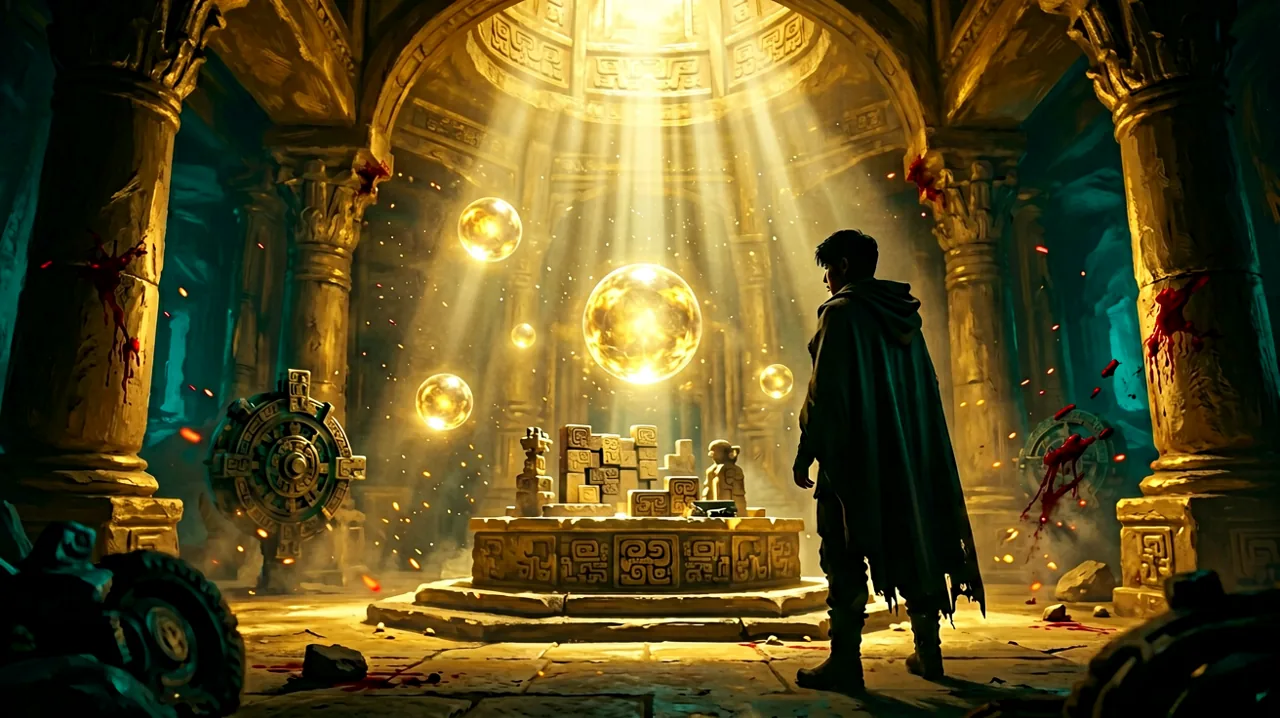
With Resonance: A Plague Tale Legacy out in the wild on PlayStation 5, Xbox Series X|S, and PC (including a highly celebrated Day One launch on Xbox Game Pass), the global race to 100% completion has officially begun. Asobo Studio’s highly anticipated prequel takes players far away from the familiar grim landscapes of medieval France and transports them back to 1334, roughly 15 years before the harrowing events of Innocence. This time, the narrative centers on a bold new protagonist: a Venetian smuggler named Sophia. Her journey to the sun-drenched, yet deeply cursed, ruins of Crete to uncover the ancient origins of the Prima Macula curse has completely revitalized the franchise’s formula. The shift from Amicia’s desperate, frantic survival to Sophia’s more calculated, action-oriented infiltration has fundamentally changed the pace of the game—and by extension, the Platinum trophy journey.
For achievement hunters and completionists, the game offers a relatively straightforward path, but the community has already discovered a severe missable trap that could force a complete restart. Additionally, new Easter eggs and complex Chapter 5 puzzles are stumping early players. Here is everything you need to know about the road to Platinum, the hidden Witcher reference, and the current state of PC performance.
The Platinum Roadmap: Beware the Missable Resonance Points
Many players jumping into the prequel via Xbox Game Pass are discovering that the achievement and trophy list is arguably the most straightforward and forgiving in the entire A Plague Tale franchise. Thanks to Sophia’s enhanced agility and the much-discussed forgiving parry window—which transforms intense one-on-many melee encounters into a cinematic spectacle rather than a frustrating instant death—surviving the Minotaur’s island is generally less punishing than navigating the unrelenting rat-infested streets of 14th-century France. Most of the trophies are tied directly to natural story progression or grabbing standard collectibles.
However, a massive caveat has emerged from the dedicated trophy-hunting community. While traditional collectibles like Minoan Artefacts and protective Charms can easily be swept up post-game using the handy Chapter Select feature, the exact same cannot be said for the elusive “Resonance Points.”
Resonance Points function as the primary currency for Sophia’s expansive skill tree upgrades. These points allow her to effectively manipulate the game’s signature dual-timeline mechanics and significantly enhance her combat prowess against the island’s haunting, invisible ‘presence.’ According to early reports from veteran community members who have already secured the elusive Platinum, these specific upgrade points do not currently accumulate retroactively if you jump back and forth through Chapter Select. If you reach the final narrative chapters and find yourself just a few Resonance Points short for the fully-upgraded skill tree trophy, you will reportedly have to restart the entire game from scratch.
To prevent this devastating setback, players are strongly advised to thoroughly explore every alternate path, flooded catacomb, and hidden chamber from Chapter 1 onward. Do not rely on Chapter Select to fix your upgrade tree progression later. If you are struggling with specific combat encounters because you are carefully hoarding your points, check out our combat guide to optimize your build early on without wasting resources.
Navigating the Chapter 5 Minotaur Temple Puzzles
By the time players push through the initial stealth encounters and reach Chapter 5, the game’s focus shifts heavily from brutal melee action into complex, brain-teasing environmental puzzling. Sophia arrives at the Central Temple on the island of Crete—a massive, sprawling architectural wonder deeply tied to the ancient origins of the Prima Macula and the lost Minoan civilization. Here, the game fully flexes its new lighting mechanics, requiring players to creatively utilize the stolen Minoan light orb.
While the early game featured relatively straightforward block-pushing and pathfinding challenges (as detailed extensively in our labyrinth solutions), Chapter 5 ramps up the difficulty curve significantly with intricate colored mirrors and colored light beam challenges. Players have community-reported that progressing through this specific temple requires perfectly aligning a series of ancient bronze mirrors to split, refract, and color the light beams, ultimately unlocking heavy stone doors to different wings of the facility.
The core challenge revolves around finding the correct environmental symbols to match the colored beams. You will need to actively use Sophia’s dual-timeline ‘resonance’ ability to peer into the distant past, carefully observing how the Minoan priests originally aligned the mirrors during their prime, and then attempt to replicate that exact configuration in the decayed, crumbling 1334 ruins. It is highly recommended to systematically clear the surrounding courtyard of any hostile faction members before attempting to solve the colored mirror puzzle, as the perilous platforming sections that immediately follow require precise timing, leaps of faith, and absolutely zero distractions from incoming enemies.
A Familiar Medallion: The Chapter 7 Witcher Easter Egg
Asobo Studio has always been fond of hiding subtle, clever nods to other beloved gaming franchises within their dark worlds, and Resonance is certainly no exception. A newly discovered Easter egg has the online community buzzing with excitement, specifically aimed at eagle-eyed fans of CD Projekt Red’s iconic The Witcher series.
During the emotionally charged Chapter 7, Sophia experiences a massive, visually stunning narrative set-piece known within the community as the ‘Theseus flashback’—a critical story moment that sheds vital light on the terrifying origins of the Prima Macula curse. Immediately after this intense sequence concludes, control is quietly returned to the player while Sophia is left standing alone on a highly weathered stone bridge overlooking a gorge.
Instead of rushing forward to the next main objective marker, players have community-reported that carefully dropping down and investigating the dark underside of this specific bridge reveals a beautifully hidden tribute. While we won’t spoil the exact visual details for purists, it reportedly involves a highly distinct, wolf-like medallion resting quietly among the medieval rubble. It is a brilliant, blink-and-you-miss-it atmospheric detail that greatly rewards players who take the extra time to slowly explore the beautifully crafted, albeit entirely desolate, environments of the Cretan underground.
PC Performance: RTX 50-Series Benchmarks and Upcoming Fixes
Visually speaking, Resonance: A Plague Tale Legacy is an absolute graphical powerhouse, pushing the extreme boundaries of what Asobo’s proprietary engine can practically handle. The dense atmospheric lighting, the terrifyingly fluid rat swarms surging in the dark, and the breathtaking sun-drenched Aegean coasts are a massive, undeniable generational leap from Requiem. However, this lofty ambition inevitably comes with some noticeable technical baggage on the PC platform.
Recent benchmark testing shared by the dedicated PC gaming community highlights the game’s staggering hardware demands. When running on enthusiast-grade, top-of-the-line hardware like the AMD Ryzen 7 9800X3D CPU paired with the NVIDIA GeForce RTX 5080 GPU, players are successfully able to hit a buttery smooth 4K resolution at a 120 FPS cap by smartly utilizing the DLSS Quality mode with Ray Tracing settings cranked to Ultra. The DLSS implementation is reportedly doing incredible heavy lifting here, stabilizing the overall image quality and effectively managing the intense, screen-filling particle loads generated by complex fire simulations and ray-traced ambient occlusion.
Despite these highly impressive peak numbers, the day-one experience is not entirely flawless for everyone. Players have rightly noted that while the sweeping cinematic shots look truly next-gen, some close-up environment geometry occasionally reveals glaring limitations that upscaling simply cannot mask. More importantly, the game currently suffers from highly noticeable traversal stutters and jarring hard freezes in specific, densely packed areas, seemingly regardless of your total hardware power. Asobo Studio is reportedly fully aware of these underlying engine-level optimization flaws and is widely expected to release a comprehensive performance patch shortly to iron out the stuttering. For now, PC players might want to closely monitor our dedicated PC fixes page for any emerging temporary community workarounds.
The Last of Us Inspiration and a Modern-Day Sequel?
Looking beyond the immediate day-one release of Resonance, Asobo Studio is already fielding eager questions about the long-term future of the A Plague Tale franchise. In a fascinating recent interview with TechRadar, the core development team openly discussed their biggest creative influences and tantalizingly hinted at what might potentially come next after Sophia’s Mediterranean prequel adventure officially concludes.
It is absolutely no secret that Naughty Dog’s masterpiece The Last of Us had a profound, lasting impact on the initial creation of Amicia and Hugo’s deeply emotional dynamic in Innocence. Asobo executives reiterated during the interview that the acclaimed post-apocalyptic title was a ‘big inspiration’ for the series’ unique blend of heavy narrative weight and brutal, unforgiving survival mechanics. But by far the most exciting revelation came when the development team was directly asked about the future timeline of the Prima Macula.
The developers explicitly stated they would ‘love’ to conceptually explore a potential modern-day sequel to the Plague Tale universe. Taking the ancient, bloodline-bound curse—which has so far been strictly anchored to the historical Justinian plague era and the 14th-century Black Death—and violently unleashing it in a modern 21st-century setting would completely and utterly reinvent the IP. Imagine modern, glass-and-steel cities crumbling under the terrifying weight of an unstoppable, supernatural rat tide, forcing new protagonists to desperately scavenge through ruined subways and collapsed skyscrapers rather than medieval castles and damp catacombs. While this is strictly a conceptual desire from the team right now and not an official game announcement, it definitively proves that Asobo’s dark vision for the Prima Macula extends far beyond the historical legacy of Sophia, Amicia, and Hugo.