Resonance: A Plague Tale Legacy Week 1 Status – PC Stutter Fixes, Game Pass Download Bugs, and the Series' Future
Asobo Studio confirms a patch is coming for PC shader compilation stuttering, while Game Pass players report frustrating download stalls. Plus, new developer comments on A Plague Tale 3.
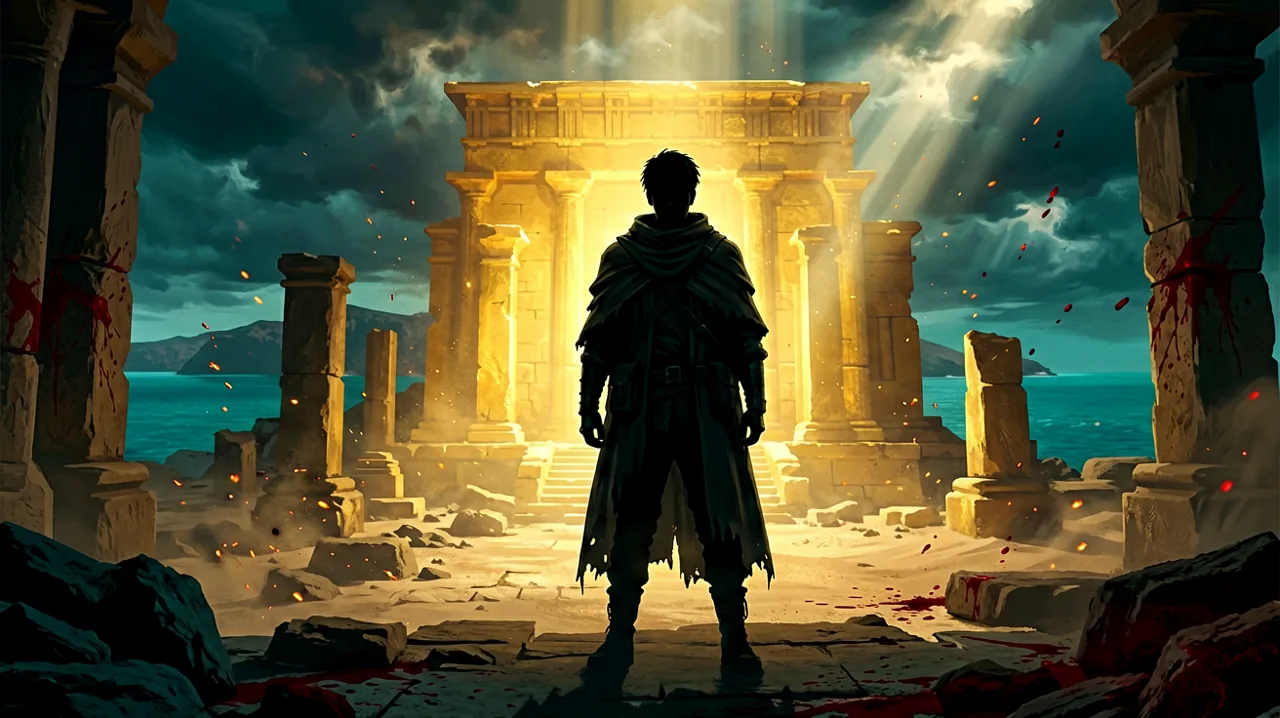
It has been exactly one week since Resonance: A Plague Tale Legacy launched globally across PlayStation 5, Xbox Series X|S, and PC, pulling players back into the grim, rat-infested universe established by Asobo Studio. Set in 1334, roughly fifteen years prior to the events of Requiem, this standalone prequel shifts the narrative focus entirely. Instead of following the tragic lineage of Amicia and Hugo De Rune in France, players take on the role of Sophia, a seasoned smuggler from Venice, as she navigates the perilous, labyrinthine ruins of the island of Crete.
While the critical reception has been largely positive—maintaining a solid 80 on Metacritic and drawing praise for its atmosphere and brutal melee mechanics—the technical state of the game on PC has been a massive point of contention for many players. In the past 24 hours, Asobo Studio has finally broken their post-launch silence regarding these performance issues, publishing a heartfelt update on Steam. Concurrently, the community has been actively reporting a severe download bug affecting the Xbox Game Pass PC version, while also discovering late-game secrets and dissecting recent developer comments regarding the future of the franchise. Here is a complete breakdown of the current state of Resonance: A Plague Tale Legacy as it enters its second week on the market.
Asobo Studio Acknowledges PC Shader Stuttering
One of the most persistent complaints surrounding the PC release of Resonance: A Plague Tale Legacy has been the erratic frame pacing caused by shader compilation. Unlike the more linear sequences found in the previous titles, this prequel relies heavily on a dual-timeline mechanic known as “Resonance.” Sophia must frequently shift her perception between the grim reality of 1334 and the ancient, golden era of the Minoan civilization to solve environmental puzzles and bypass deadly swarms. This rapid swapping of complex environmental assets puts an immense strain on hardware, leading to noticeable and often fatal stuttering when shaders fail to pre-compile efficiently.
In a recent Steam News update titled “Grateful for the feedback and reviews,” the development team directly addressed these pressing concerns. The official statement reads: “On behalf of both Asobo and Focus: we’re happy to see you loving Resonance as much as we do and want to thank you for the unwavering support. We have also seen the feedback about stuttering and the shader compiling problem (and some other bugs), we are looking into it to bring a fix as soon as we can!”
This confirmation is a massive relief for the PC community. Prior to this announcement, players were relying on community-sourced PC fixes and optimization guides to manually tweak engine configuration files and force smoother rendering. An official patch will likely introduce a mandatory shader compilation step on the main menu, a standard practice in modern AAA PC ports, ensuring that the heavy lifting is done before Sophia even steps foot into the Minoan ruins. The developers have not yet provided an exact date for this patch, but given the urgency of the statement, it is expected to deploy very soon.
The 15GB Trap for Xbox Game Pass PC Players
While Steam players are battling in-game stuttering, a significant portion of the Xbox Game Pass PC audience is struggling to even install the game. Over the past day, multiple threads have surfaced on community forums detailing a highly specific and deeply frustrating download bug via the Xbox App and Microsoft Store.
According to widespread community reports, the download for Resonance: A Plague Tale Legacy abruptly stalls when it reaches the 15 to 18.5 GB mark (roughly 15-20% of the total 65GB file size). At this exact threshold, the download speed drops entirely to 0 Bps. While the client occasionally spikes back up to normal speeds for a few fleeting seconds to grab a tiny chunk of data, it immediately plummets back to zero, creating an endless, agonizing loop that prevents the installation from finishing.
What makes this bug particularly insidious is that standard Windows troubleshooting steps—such as clearing the Xbox app cache, resetting the Microsoft Store via the ‘wsreset’ command, or toggling network adapters—are reportedly failing to resolve the issue entirely. Given that the game was heavily marketed as a Day One inclusion on the service, as noted in our Xbox showcase recap, this technical hurdle is preventing a massive influx of potential players from experiencing Sophia’s origin story.
At this time, neither Microsoft nor Asobo Studio has officially acknowledged this specific delivery issue. Community workarounds currently suggest pausing the download, completely restarting the PC, and resuming, though success rates vary wildly. Players desperate to play immediately may need to rely on alternative platforms or exercise extreme patience until the Xbox App routing issues are patched on Microsoft’s end.
No Current Plans for A Plague Tale 3
Beyond the technical hurdles, the lore and narrative implications of Resonance have sparked intense discussions regarding where the franchise goes next. With Sophia taking the spotlight and uncovering the ancient roots of the Prima Macula in Crete, fans have been eagerly speculating whether Asobo Studio will return to the De Rune bloodline or move forward to a modern setting, as teased by the post-credits scene of Requiem.
However, a recent comment from the game’s Lead Level Designer has tempered expectations for an immediate sequel. When asked about the potential for A Plague Tale 3 or additional character-focused spin-offs (such as a game centered around Arnaud’s past), the developer stated plainly that “there are no plans” at this time.
This revelation, heavily discussed across the franchise’s subreddit, suggests that Asobo Studio is either taking a well-deserved break from the IP after the grueling development cycles of three massive narrative games, or they are keeping their cards incredibly close to their chest. Resonance functions perfectly as a self-contained prequel, expanding the mythology of the Macula without demanding an immediate chronological continuation. For players interested in how the narrative architecture has shifted from France to the Mediterranean, our analysis on the series’ complete evolution breaks down why this standalone approach was necessary for the writing team.
Late-Game Discoveries: Blades and The Minotaur Encounter
For those who have successfully bypassed the technical issues, the actual gameplay of Resonance is proving to be a brutal, rewarding evolution of the series’ formula. Sophia is a fundamentally different protagonist than Amicia; she does not rely on a ranged slingshot. Instead, the combat emphasizes desperate, close-quarters encounters where parrying and lethal executions are essential for survival.
Community completionists have recently finalized the roadmap for the game’s weaponry. To unlock the highly sought-after “Plunderer” and “Adaptable” trophies, players must locate eight specific blades scattered throughout the island’s chapters. These community-confirmed weapons include the Rusty Sword, Falchion, Kopis, Greek Sword, Sica, Khopesh, Broken Spear, and the Xiphos. Finding these weapons is not merely a box-ticking exercise; each blade alters Sophia’s parry timing and execution animations, tying directly into the mechanics outlined in our combat deep dive. Equipping the Kopis, for example, allows for faster recovery after deflecting the island’s haunting “Presences,” making it vital for players who are forced into a corner and need a quick escape route.
Furthermore, players pushing into the late-game chapters are reporting intense puzzle and boss encounter mechanics that drastically raise the skill ceiling. Chapter 13, titled “As One,” has become a focal point of community discussion. Without venturing too deeply into story spoilers, this chapter requires players to “Follow the Beam,” utilizing the stolen Minoan light sphere to solve massive, room-scale illumination puzzles while simultaneously fending off relentless waves of soldiers and the island’s corrupted ancient warriors.
The culmination of Chapter 13 features a confrontation with an entity referred to simply as the “Minotaur.” This encounter reportedly tests every mechanic players have learned, forcing them to juggle the dual-timeline Resonance ability to alter the arena’s architecture, use the light sphere to expose the boss’s vulnerabilities, and rely on perfectly timed blade parries to survive the onslaught. It is a grueling testament to how far Asobo has pushed the gameplay loop beyond the simple stealth mechanics of the earlier games. Players struggling with these mechanics should review our light puzzles guide to better understand how the Minoan sphere interacts with the environment before charging into the labyrinth.
Looking Ahead
Resonance: A Plague Tale Legacy is currently existing in a state of dual realities, much like its core gameplay mechanic. On one hand, it is a masterfully crafted narrative experience that successfully expands the universe of the Macula and provides Sophia with a compelling, brutal origin story. On the other hand, the technical friction on PC and Xbox Game Pass is undeniably hindering the launch window experience.
With Asobo Studio officially on the case regarding the shader compilation stuttering, the PC version should soon reach the polished state it deserves. Until then, players braving the labyrinth of Crete will need a bit of patience—both for the download bars to finish and for the performance patches to arrive. We will continue to monitor the deployment of these updates and provide comprehensive coverage as more secrets of the Minoan ruins are unearthed.