Decoding Resonance's Cypriot OST and the 39-Hour Platinum Reality
Three weeks after launch, we examine the hidden linguistic depths of the game's choral soundtrack, Sophia's breakout popularity, and critical tips for achievement hunters.
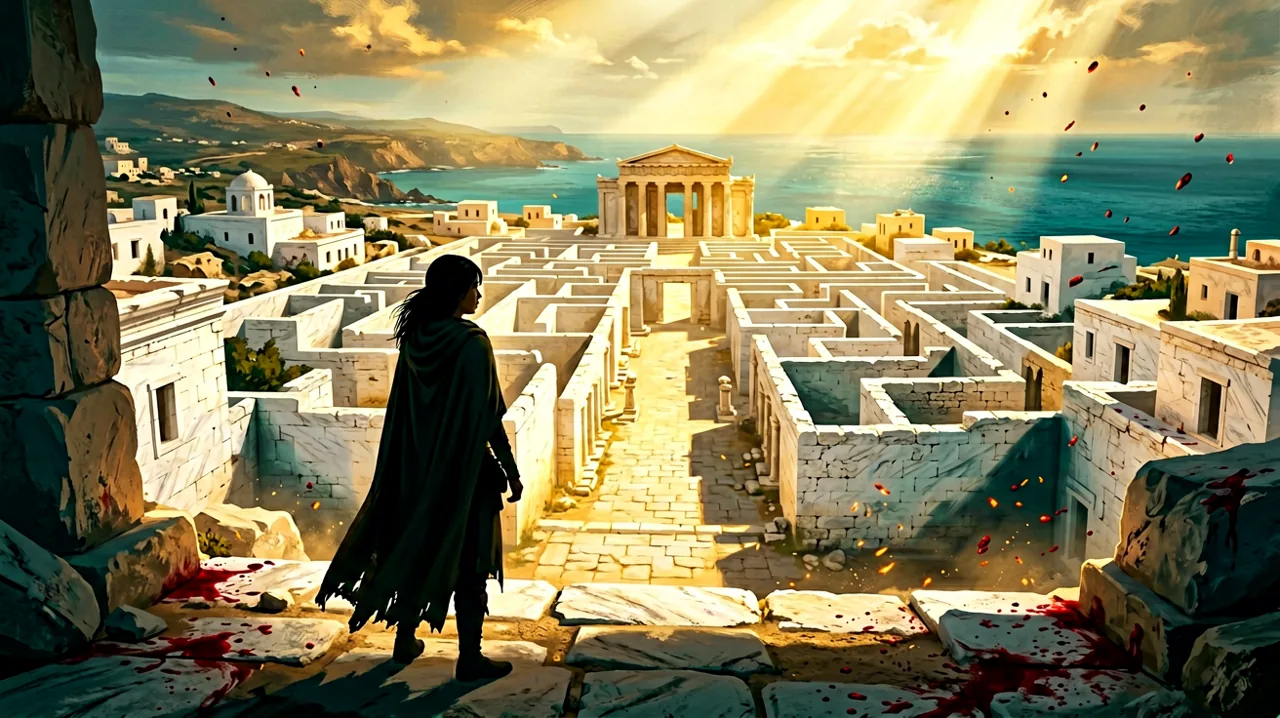
It has been precisely three weeks since Asobo Studio successfully launched Resonance: A Plague Tale Legacy. With the immediate post-launch rush settling down and the initial wave of Day One patches resolving most PC performance queries, the core community has finally had the time to properly digest the sheer scope of this ambitious prequel. Moving away from the 14th-century French countryside and dropping players into the sun-drenched, yet deeply haunted ruins of Crete in 1334 was a massive thematic gamble.
However, looking at the current community discourse and glowing critiques—including a recent piece by GameSpew asking if this might just be “the best in the series yet”—the shift in direction has paid off remarkably well. From profound linguistic discoveries hidden within the game’s official soundtrack to the meticulous reality of grinding out the Platinum trophy, the player base is uncovering exactly what makes Sophia’s journey so distinct.
The Linguistic Secrets of Olivier Derivière’s Choir
Long-time fans of the franchise know that composer Olivier Derivière does not approach video game music lightly. Just as he utilized the Estonian Philharmonic Chamber Choir to give Requiem its haunting, ethereal quality, he has completely retooled the auditory landscape for Resonance.
Recently, dedicated fans on the game’s official subreddits and forums have been attempting to decipher the lyrics echoing through the Minoan ruins. The fascinating discovery, later corroborated by the composer’s own upload descriptions, is that the soundtrack relies heavily on a Cypriot-based, all-female a capella choir. The lyrics themselves were crafted by Vassiliki Anastasiou, bringing an incredible layer of cultural authenticity to the game’s atmosphere.
Interestingly, while the game’s narrative is firmly anchored in the Isle of the Minotaur (Crete), the chosen dialect for the choral arrangements leans heavily toward Cypriot Greek. Linguistic enthusiasts in the community have noted that while the Greek dialects of Crete and Cyprus share many structural similarities, they have distinct differences. By utilizing a slightly “lighter” Cypriot dialect, the music manages to remain entirely comprehensible to modern mainland Greek speakers, while still evoking the isolated, ancient tonality required for a story exploring ancient Minoan curses and the origins of the Prima Macula.
This auditory framing is not just background noise; it is heavily tied into the gameplay mechanics. When players interact with the stolen Minoan light orbs or shift between the dual timelines using the game’s signature resonance mechanic, the a capella choir swells and recedes dynamically. It provides an emotional texture that heavily contrasts with the agonizing string instruments associated with the de Rune family in the mainline entries, fitting perfectly with our new protagonist’s localized Mediterranean adventure. For a deeper understanding of how the development team approached this auditory and violent balance, you can revisit our earlier developer insights on combat and music.
Sophia and Leni: An Unlikely Point of Entry
A recurring sentiment flooding social media platforms right now is the number of players stating that Resonance is their very first A Plague Tale game. A prequel naturally offers a clean slate, but the 1334 setting—roughly 15 years before the events of Innocence—has provided an incredibly smooth onboarding process for gamers who felt intimidated by the dense lore of the previous titles.
At the center of this successful onboarding is Sophia. Portrayed with fierce pragmatism by Anna Demetriou, the Venetian smuggler offers a very different perspective on survival than Amicia de Rune. While Amicia’s journey was defined by a desperate, protective love for her brother Hugo, Sophia is driven by survival, answers, and the thrill of the heist gone wrong. Players have noted distinct classical action-adventure undertones in her characterization, drawing favorable comparisons to iconic survivalist archetypes. Her agility, grit, and street-smart dialogue bring a refreshing energy to the grim world governed by “the Presence” and the looming threat of the Macula.
Equally praised is her dynamic with Leni. The genuine, banter-filled friendship between the two characters acts as the emotional anchor of the narrative. It prevents the 20-hour campaign from becoming suffocatingly dark. Their camaraderie is resonating so strongly with the fan base that players are already organizing character creation requests in games like Dragon’s Dogma to recreate Sophia’s likeness, and fan art of the duo is steadily increasing.
The 39-Hour Platinum Reality
Before launch, Asobo Studio confirmed that a standard playthrough of the campaign would take roughly 20 hours to complete (as we reported in our 20-hour runtime confirmation). However, now that trophy hunters and achievement completionists have thoroughly mapped the game, a different reality is emerging: achieving the Platinum trophy is a much longer endeavor, averaging around 39 hours.
According to several successful completionists, the game’s overall difficulty is highly accessible, generally rated as a 2 out of 5. The combat mechanics, particularly the parry system, are intuitive once mastered, and the stealth segments provide enough leeway for recovery if spotted. The time sink, therefore, does not come from brutal difficulty spikes, but rather the meticulous level design and the game’s economy.
Here is the most critical piece of advice currently circulating in the community for anyone aiming for 100% completion: Do not neglect your Resonance points.
Several players have reported falling into a frustrating trap during their initial playthroughs. Because the game encourages moving forward through the labyrinthine chapters, it is incredibly easy to miss optional side-areas hidden behind environmental puzzles. Failing to gather enough Resonance points early on means you will not have the required currency to unlock end-game skills needed for specific achievements. If you miss this threshold, you cannot simply load a late-game checkpoint; you will be forced to replay vast portions of the game to accumulate the necessary points. We highly recommend consulting a missable resonance points roadmap to save yourself an unnecessary 15-hour replay cycle.
Furthermore, hunting down the various trinkets scattered across both time periods of the Crete ruins requires a sharp eye. The dual-timeline mechanic means that a seemingly empty room in the 14th century might hide a collectible in its ancient, pristine state, forcing players to methodically check every corridor twice.
Evolving the Combat Sandbox
Finally, the shift in combat philosophy continues to be a major talking point. Ditching the long-range safety of Amicia’s slingshot in favor of Sophia’s close-quarters blades was a massive risk. Yet, the action-oriented, one-versus-many engagements have been universally praised.
Trophy hunters have been sharing clips of the game’s systemic combat mechanics, demonstrating how dynamic the enemy AI can be. For instance, specific achievements require players to manipulate the battlefield rather than just clearing it. Players have discovered strategies like weakening a smaller faction enemy down to one hit point and intentionally drawing the aggro of a larger Brute enemy, resulting in the Brute accidentally executing their own ally with a wide swing. This level of tactical depth proves that the developers didn’t just add swords to a stealth game; they rebuilt the combat sandbox from the ground up to support emergent, aggressive gameplay. For a deeper understanding of these mechanics, our combat deep dive breaks down the framing of every parry and execution.
As more players finish the main story, available on day one via Xbox Game Pass, the conversation is naturally shifting toward the game’s hidden secrets and how Sophia’s discoveries regarding the ancient origins of the Prima Macula recontextualize everything we thought we knew about the series. Whether you are hunting for the final trinket in the Minoan depths or just taking in the Cypriot choir’s haunting melodies, Resonance has proven it has the staying power to stand shoulder-to-shoulder with its mainline predecessors.