The Dual-Timeline Resonance
The Game's Signature Mechanic
Resonance: A Plague Tale Legacy's signature mechanic lets Sophia move between the Minoan past and the medieval present, where actions in one era reshape the other. Here's how the dual-timeline works.
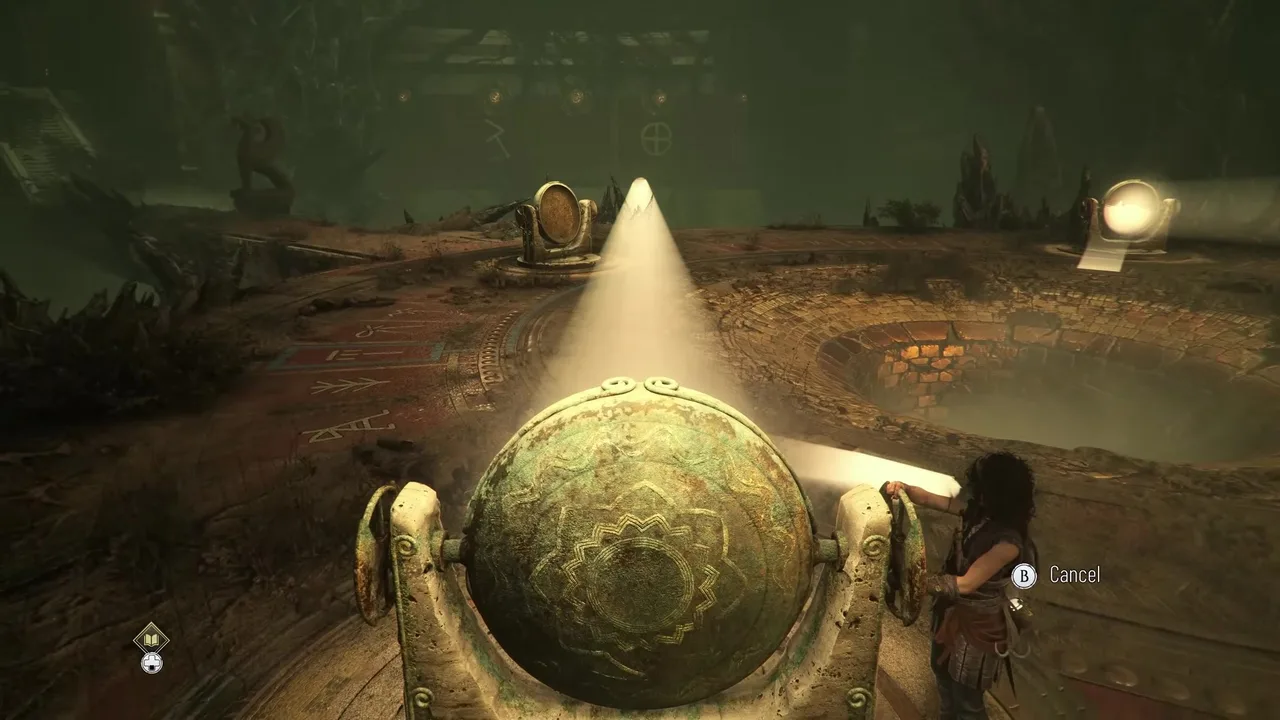
Events in the Minoan past can affect the present day.
The mechanic that gives the game its name is the dual-timeline. Resonance: A Plague Tale Legacy lets Sophia move between two eras — the Minoan civilization of antiquity and the Middle Ages of her present — and, crucially, what happens in the Minoan past can affect the present day. It’s the most distinctive system in the game, and the literal meaning of “resonance”: two times vibrating against each other.
How it works
The core idea is a timeline switch. Sophia experiences the same places, and the same mystery, across two periods centuries apart. The Minoan age is the world as it was — alive, intact, the civilization at its height. The medieval present is that same world in ruins, fifteen years before the events of A Plague Tale: Requiem. Moving between them isn’t just a narrative device; the game states that actions in the past ripple forward, reshaping the present-day state of the world.
We don’t yet have the precise mechanical rules — whether the switch is a free toggle, tied to specific locations, or triggered by story beats. But the principle is clear and confirmed: the past is editable, and editing it changes the now.
Puzzles across centuries
The most exciting implication is for puzzle design. Picture solving a mechanism in the Minoan era and watching its effect persist into the medieval ruins — opening a path, restoring a structure, redirecting the light machinery that’s central to the game. Cause-and-effect across time is fertile ground for clever puzzles, and the dual-timeline gives Asobo a whole extra dimension to build them in. The labyrinth, as an ancient construction existing in both eras, is the obvious stage for this.
While exact timeline-puzzle mechanics aren’t confirmed in detail, the framing — past affecting present — strongly implies puzzles that span both. It’s the natural payoff of the system.
Story across centuries
Narratively, the dual-timeline lets Resonance tell two stories at once and bind them together. Sophia is haunted by fragmented visions of the Minoan past, and the timeline mechanic turns those visions into a place she can actually go. Her personal mystery — why she’s connected to this ancient history, what the Prima Macula has to do with the Minoans — unfolds by literally walking through both eras and seeing how one shaped the other.
It also deepens the series’ mythology. By going back to antiquity, Resonance can show the origins of the curse that defines the whole franchise, then trace its echo forward to Sophia’s time. The “resonance” is the curse itself, ringing across centuries.
Why it matters
Plenty of games use time-travel or dual-era structures, but few tie them so tightly to a series’ existing mythology. For Resonance, the dual-timeline isn’t a gimmick bolted on for novelty — it’s the mechanical expression of the whole premise: that the past isn’t past, that an ancient curse still shapes the present, and that Sophia is caught in the vibration between them. It’s the system everything else hangs on.
See it in action through the light puzzles and the labyrinth, or read about the curse it explores on the Prima Macula page.