Resonance Devs Talk Post-Credit Theories, Hidden Secrets, and the Future of A Plague Tale
Asobo Studio addresses Plague Tale 3 rumors, confirms a Resonance post-credit fan theory, and teases a highly missed soul-destroying secret in Sophia's journey.
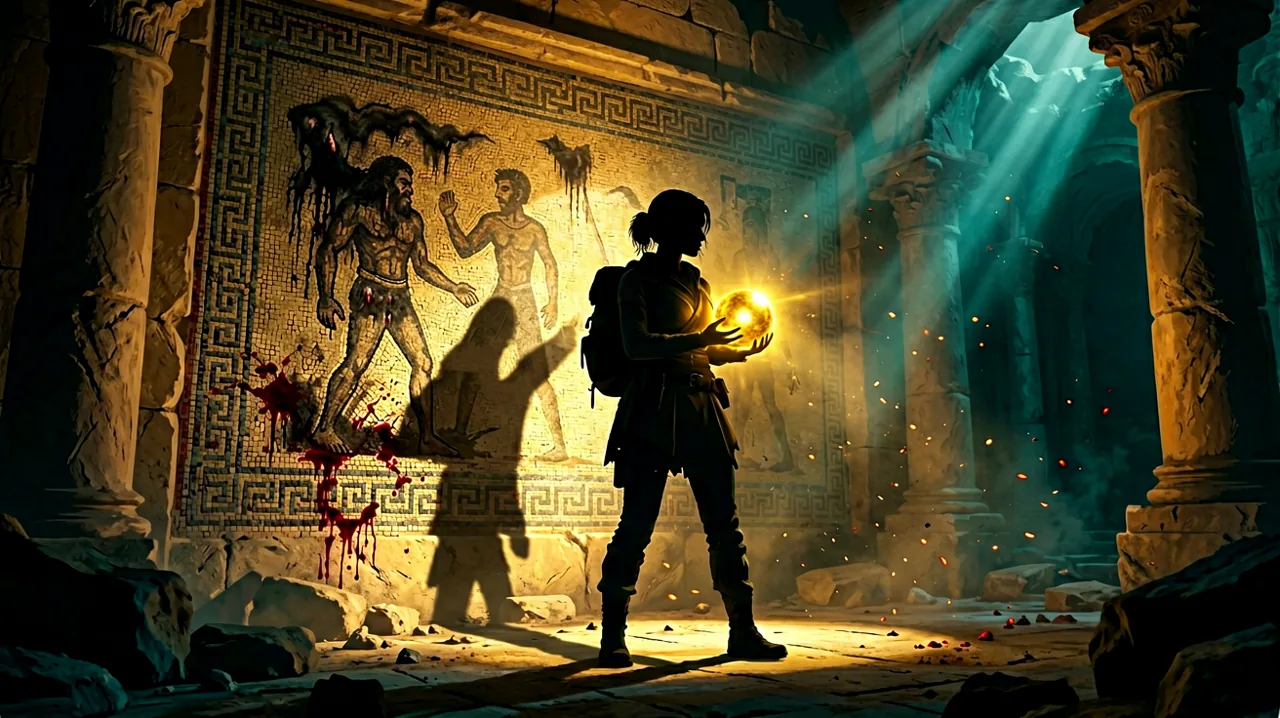
Resonance: A Plague Tale Legacy continues to dominate online discussions with its fresh take on the beloved, rat-infested universe. Set in 1334, roughly 15 years before the harrowing tale of Amicia and Hugo, this standalone prequel transports players to the sun-drenched but blood-stained shores of Crete. Following the journey of Sophia, a hardened Venetian smuggler voiced by Anna Demetriou, the game introduces a slew of mechanical shifts—from visceral, action-heavy melee combat to a mind-bending dual-timeline “resonance” system. As players and early access reviewers venture into the shadows of the ancient labyrinth to uncover the origins of the Prima Macula, a wave of new developer insights and community discoveries has surfaced. Over the past 24 hours, the development team addressed burning questions about the future of the franchise, confirmed lingering lore theories, and hinted at a devastating emotional sequence that most players are reportedly completely missing. Here is a detailed breakdown of the latest updates surrounding Asobo Studio’s ambitious new prequel.
The Future of the Franchise: No Current Plans for A Plague Tale 3
One of the most persistent questions surrounding the impending launch of Resonance has been what comes next for the studio. With Sophia taking the spotlight on a remote Mediterranean island, many fans wondered if Asobo was secretly building toward a full-fledged A Plague Tale 3 or planning additional character spin-offs based on other secondary figures from the main titles. In a recent community discussion on Reddit, the Lead Level Designer for Resonance: A Plague Tale Legacy set the record straight: there are currently “no plans” for a third mainline game or other character-focused side stories in the immediate future.
This revelation might sting for those hoping to immediately see the aftermath of Requiem, but it underscores the studio’s commitment to making Resonance a definitive, self-contained narrative experience. By shifting the focus back to 1334 and placing Sophia at the center of the mystery, the developers have crafted a narrative that reportedly deeply enriches the lore of the Prima Macula without needing to stretch the original timeline forward. The dual-timeline mechanic, which allows players to experience echoes of the ancient Minoan civilization alongside Sophia’s 14th-century reality, is designed to answer the series’ biggest historical questions. According to the team, Sophia’s journey through the labyrinth of Crete is intended to stand alone as a monumental pillar in the franchise’s mythology. For a deeper look at how the prequel fits into the broader historical timeline, check out our series evolution analysis.
The “Soul-Destroying” Moment You Are Probably Missing
Asobo Studio has never shied away from emotional devastation, and Resonance is expected to deliver on that front. However, in a surprising admission, the game’s Lead Writer recently noted that a significant portion of the player base may be missing what the team considers the most “soul-destroying moment of the entire game.”
Given the game’s heavy emphasis on stealth, survival, and evading a terrifying entity known only as “The Presence” within the labyrinth, it is highly expected that this hidden moment is tucked away in an optional area or triggered by a specific, easily overlooked environmental interaction. Sophia’s dynamic with her companion, Leni, forms the emotional core of the narrative. Fans are already theorizing that this easily missed sequence involves a quiet, heartbreaking conversation between the two smugglers, or a tragic revelation regarding the ancient victims of the Macula found deep within the underground cisterns. The developers are urging players to slow down, absorb the environment, and avoid rushing from one brutal melee encounter to the next. In a world where a single misstep against multiple foes can end in a brutal execution, taking the time to explore the quiet, dark corners of Crete might just break your heart. For tips on navigating these dangerous areas safely so you have time to explore, consult our stealth and survival guide.
Post-Credit Theories Confirmed
Adding fuel to the lore-crafting fire, the Lead Writer also took the time to confirm a major post-credit fan theory. While we will avoid outright spoilers regarding the ending, community-reported theories have heavily revolved around the connection between the Minoan light orbs, the ancient origin of the rat swarms, and the true nature of the “resonance” connecting the Greek ruins to the medieval plague.
Fans have long suspected that the ancient curse that wiped out the Minoans on Minotaur’s island was an early manifestation of the Prima Macula. The confirmation of a post-credit theory suggests that the ending of Resonance provides a definitive, chilling bridge to the events of Innocence. Players who successfully navigate the labyrinth and survive the final encounters are expected to witness a revelation that completely recontextualizes the curse. This validation from the writing team has sent the lore community into overdrive, with players dissecting every line of character banter and environmental storytelling found in the Greek ruins for further clues.
Redefining Studio Identity: Why Asobo Rejects the “AAA” Label
Despite Resonance: A Plague Tale Legacy launching on PlayStation 5, Xbox Series X|S, and PC (via Steam and Epic Games Store), alongside a massive day-one inclusion on Xbox Game Pass, the development team has made a surprising statement regarding their industry status. In a recent interview segment, the team explained why they do not consider Resonance a “AAA” game, nor do they harbor desires to become a massive AAA studio anytime soon.
The team emphasized that retaining their independent, “AA” spirit allows them to take massive creative risks—like swapping the traditional stealth-heavy slingshot gameplay for action-heavy, one-vs-many melee combat featuring intense parries and brutal executions. A larger, AAA budget often demands mass-market appeal and bloated open-world design philosophies. Instead, Asobo is focused on delivering a tightly paced, 20-hour narrative driven by authentic emotion, subverted myths, and intricate puzzle design. This philosophy is evident in their approach to the game’s mechanics, where every stolen Minoan artifact and desperate knife parry feels weighty and purposeful. For a breakdown of how the team balanced this new brutality and action, revisit our combat deep dive.
Unprecedented PC Performance and the Push for DLSS 5
On the technical front, the PC gaming community has been thoroughly impressed with the game’s optimization out of the gate. Early community reports and benchmarks indicate that Resonance runs exceptionally well, with some players reporting a buttery-smooth 120 FPS even on maximum graphical settings. This is a staggering technical achievement given the dense volumetric lighting of the Aegean sun and the complex background AI required to render thousands of writhing rats on screen simultaneously.
Because the game is reportedly running with such high performance overhead on modern rigs, PC enthusiasts are already looking for ways to push the visual boundaries even further. Discussions have erupted on hardware subreddits about the best methods to inject experimental DLSS 5 technology into the game. By utilizing tools like OptiScaler and RenoDX, tech-savvy players are attempting to integrate DLSS 5 before the internal upscaling process to maximize image quality without sacrificing the fluid frame rates necessary for the game’s demanding melee parry windows. It is a testament to the game’s robust technical foundation that players are actively trying to mod in next-generation upscaling just to see how beautiful the ruins of Knossos can truly look.
Mastering the Labyrinth: The Chapter 4 Reflector Puzzle
Finally, as more players make their way into the depths of the island, community-reported guides are beginning to shed light on some of the game’s most challenging environmental roadblocks. One notable challenge occurs during “Chapter 4: From Hell It Rose,” specifically within the “Down the Abyss” subchapter.
Here, Sophia and Leni are reportedly faced with a complex “Reflector Puzzle” that guards the path forward. According to community walkthroughs, the solution involves navigating the dark ruins to locate a primary light source. Players must first head up a nearby set of stairs and step onto a pressure plate to activate a golden beam of light. Once the beam is active, the core puzzle begins: players are expected to reposition four distinct reflectors, carefully redirecting the blinding beam through each node until it perfectly illuminates a Minoan symbol etched into a locked door. This puzzle relies heavily on the game’s new mechanics involving stolen Minoan light orbs, forcing players to master the interplay between light and shadow to keep the creeping threats at bay. If you find yourself stuck in the ancient dark, be sure to check our detailed light puzzles guide for further assistance.
Conclusion
As Resonance: A Plague Tale Legacy continues to drive discussions across social media and forums, it is clear that Asobo Studio has delivered a prequel that is as mechanically dense as it is narratively rich. From the confirmation of massive lore theories to the bittersweet realization that we may have missed the story’s most tragic moment, the game demands multiple playthroughs and meticulous exploration. Whether you are perfectly timing your parries against ruthless mercenaries, marveling at the reported 120 FPS performance on a high-end PC, or painstakingly redirecting light beams in the forgotten depths of Chapter 4, Sophia’s journey through 1334 Crete is shaping up to be an unforgettable chapter in the Plague Tale saga. We will continue to monitor developer updates and community discoveries as the world slowly unravels the ancient curse of the Prima Macula.