Expected AMD FSR Redstone Support Could Revolutionize Resonance: A Plague Tale Legacy on PC
Community reports suggest Asobo Studio's 1334 prequel will receive AMD FSR Redstone, bringing machine learning upscaling and ray regeneration to Sophia's Crete adventure.
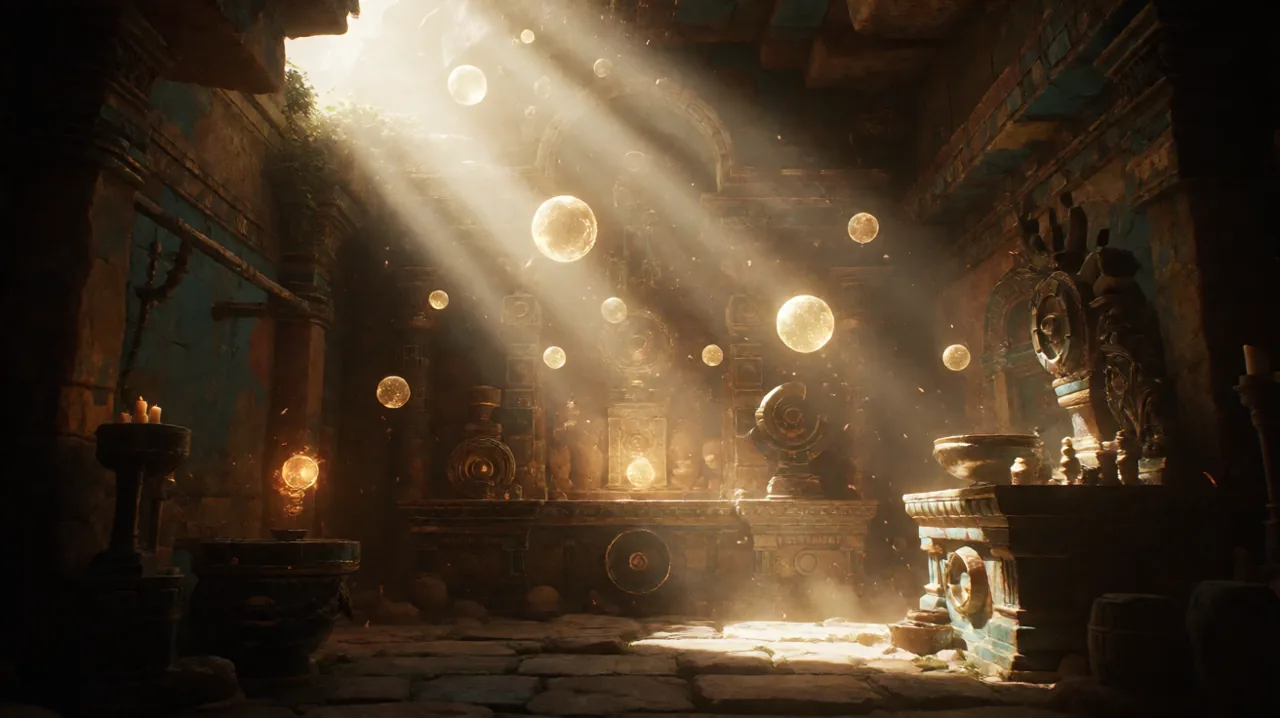
Resonance: A Plague Tale Legacy has firmly established itself as one of the most visually arresting and hardware-demanding titles of 2026. Released in August by Asobo Studio and Focus Entertainment across PlayStation 5, Xbox Series X|S, and PC, this standalone prequel transports players back to the year 1334. Following the story of Sophia, a Venetian smuggler navigating the mythic island of Crete, the game introduces a gorgeous but terrifying world that predates the journeys of Amicia and Hugo in Innocence and Requiem. However, rendering the sun-drenched shores of the Aegean Sea alongside the oppressive, rat-infested depths of ancient labyrinths has proven to be a monumental task for modern gaming PCs.
Now, a new community report suggests that a major technical update is on the horizon. According to a recently compiled list on the Radeon subreddit tracking software updates, Resonance: A Plague Tale Legacy is expected to receive support for AMD’s highly anticipated FSR Redstone Technologies. If these community-reported details hold true, this machine learning-powered update could completely alter how PC players experience Sophia’s harrowing journey to uncover the origins of the Prima Macula.
Breaking Down the AMD FSR Redstone Leak
Before examining how this technology will specifically impact the rendering of the Knossos labyrinths, it is necessary to understand the architecture of FSR Redstone. According to the October 2026 Reddit thread tracking early adopters, FSR Redstone represents AMD’s definitive pivot toward machine learning (ML) for its entire upscaling pipeline. The suite reportedly includes three core pillars that are expected to be integrated into the game’s engine.
- FSR Upscaling 4.1.1: Unlike the older analytical upscaling solutions used in RDNA3 and earlier architectures, this new version renders a lower-resolution base frame and uses a trained neural network to reconstruct it at a higher resolution. For a game with the dense geometric detail of Resonance—where every cobblestone in Crete and every crumbling pillar in the Minoan ruins is meticulously modeled—ML upscaling can preserve fine texture details without the shimmering artifacts that occasionally plagued older implementations.
- FSR Frame Generation 4.0.1: This iteration leverages machine learning frame interpolation to predict and insert entirely new frames between traditionally rendered ones. The algorithm analyzes motion vectors and predicts where an object should be located, resulting in a dramatic uplift in perceived smoothness to compensate for the heavy processing load of the game’s massive environments.
- FSR Ray Regeneration 1.2: This acts as a neural network denoiser designed to restore the quality of ray-traced details from areas with low amounts of light data. Given Asobo Studio’s heavy reliance on complex, dynamic lighting to drive both atmosphere and stealth gameplay, this could easily be the most crucial feature of the Redstone suite for PC players.
While Focus Entertainment and Asobo Studio have not officially confirmed this update, the inclusion of the game on community-tracked Redstone support lists aligns with the developer’s history of rapidly adopting PC-specific rendering features shortly after a major launch.
Illuminating the Abyss: Ray Regeneration and the Minos Orbs
To understand why FSR Ray Regeneration 1.2 is such a critical addition, we must look at the core mechanics of the prequel. The game completely revamps the light-and-dark survival gameplay of its predecessors. Instead of relying solely on Amicia’s ignifer alchemy, Sophia utilizes stolen Minos Orbs—ancient, glowing artifacts that serve as portable light sources and complex tools for solving the Minos Orb light puzzles.
When exploring the subterranean labyrinths beneath Crete, players are constantly manipulating these Orbs to cast localized light, repelling the horrific manifestations of the “Presence” and the early, terrifying swarms of the Prima Macula. The game utilizes heavy ray-traced global illumination and ray-traced shadows to ensure that every beam of light behaves realistically within these claustrophobic spaces. When you place a Minos Orb on an ancient pedestal to illuminate a gap in the floor, the resulting shadows stretch and warp dynamically across the ancient masonry. This interplay of light and shadow is not just set dressing; it actively dictates where Sophia can safely move and how enemies patrol the area.
Rendering ray-traced lighting in real-time within complex, moving environments—such as a swirling vortex of infected rats—often results in heavy visual noise. Standard temporal denoisers can blur these shadows, making the environment look smudgy or ghosted in motion. FSR Ray Regeneration 1.2 reportedly replaces these hand-tuned denoisers with an AI model that intelligently reconstructs the lighting data. For this game, it means the divine, golden light of the Minos Orbs will look incredibly pristine. The volumetric fog in the deep cisterns will diffuse light more naturally, and the shadows cast by lurking threats will remain sharp. This is not merely an aesthetic upgrade; it provides necessary visual clarity in an environment where stepping into the wrong shadow results in instant death.
Fluid Brutality: Why Frame Generation Matters for Combat
While lighting enhancements amplify the tense atmosphere of the labyrinths, FSR Frame Generation 4.0.1 will directly impact the moment-to-moment gameplay above ground. Sophia is an athletic, battle-hardened smuggler, and the game reflects this background by moving away from ranged stealth in favor of an action-heavy melee combat system. Players must rely on precise parries, well-timed dodges, and brutal executions to survive encounters with the local factions and cultists guarding the island’s secrets.
This tactical, melee-focused combat demands highly consistent framerates. Missing a parry window because of a sudden frame drop can be fatal, especially on the harder difficulties where human enemies are highly aggressive and coordinate their attacks from multiple angles. By using machine learning to interpolate frames, FSR 4.0.1 can significantly increase the perceived framerate during these intense encounters. This ensures that the intricate animations of Sophia drawing her blade and deflecting an incoming strike remain incredibly smooth, even when the screen is filled with particle effects from clashing steel and dynamic dust kicked up from the marble courtyards. Fast-paced encounters in tight spaces, such as the notorious ambush sequences in Chapter 4, heavily benefit from the increased visual fluidity that frame generation provides.
Frame generation can sometimes introduce slight input latency, which is typically a concern for action games. However, early reports of FSR Redstone indicate that the machine learning interpolation is heavily optimized alongside AMD Anti-Lag technologies to minimize this delay, making it highly suitable for action-heavy encounters. For players utilizing high-refresh-rate monitors but struggling to push past 60 FPS natively due to engine limitations, this technology will make the execution systems feel distinctly more responsive.
The Performance Cost of the Dual-Timeline Mechanism
Another massive technical hurdle in the game is its titular dual-timeline Resonance mechanic. Throughout her journey, Sophia can trigger a “resonance” state, allowing players to interact with the ancient Minoan era overlaid directly onto the 1334 medieval reality. This requires the engine to render two different versions of the same environment simultaneously, swapping architectural assets and lighting profiles instantaneously based on the player’s position.
This overlapping of eras is visually spectacular but incredibly taxing on VRAM and the GPU core. When transitioning between the sun-drenched, pristine ruins of the past and the decayed, plague-ridden reality of the present, frametime spikes are a common reality for many hardware setups. The ML upscaling provided by FSR 4.1.1 will be vital here. By lowering the internal render resolution without sacrificing the final image quality of either timeline, the GPU gains the necessary computational headroom to manage the rapid streaming of high-resolution textures and geometric data required for the timeline shifts, keeping the transition seamless and immersive.
Optimizing the PC Experience
Since the August launch, the PC community has actively sought ways to maximize performance. We have seen extensive discussions around next-gen benchmarks on extreme hardware, but the reality is that the vast majority of the player base—including those accessing the game via Xbox Game Pass—are utilizing mid-range systems that struggle with native rendering at 1440p or 4K.
The massive 65GB file size and the intricate 20-hour runtime mean there are countless unique environments that stress different parts of a computer’s system. While Asobo has released several stability patches in their ongoing PC optimization efforts, the fundamental rendering requirements remain intentionally heavy to push the boundaries of current generation graphics. The rumored addition of AMD FSR Redstone offers a highly practical solution for players who want to experience the game’s high-end visual presentation without needing a top-tier enthusiast rig. It serves to bridge the gap between hardware limitations and the developer’s uncompromising artistic vision for Crete.
Awaiting Official Confirmation
As with all community-reported features and leaked hardware roadmaps, it is important to temper expectations until Focus Entertainment or Asobo Studio makes a formal announcement regarding the patch schedule. The integration of machine learning upscaling and ray regeneration is a complex process that requires deep engine-level coordination and rigorous QA testing to ensure it does not break the game’s meticulously crafted lighting logic. However, given the technical ambitions of Resonance: A Plague Tale Legacy, adopting the latest FSR suite seems to be a highly logical step for the studio to extend the lifespan and accessibility of the PC version.
If FSR Redstone does indeed arrive on the shores of Crete in a future update, it will undoubtedly solidify the game’s status as a premier technical showcase for this generation. Until then, PC players will continue to master the labyrinths, perfect their combat timings, and navigate the dual timelines with the performance scaling tools currently available in the settings menu.