Unresolved Lore and the Unforgiving Platinum: What the Resonance Community is Debating
As players finish Sophia's journey on Crete, intense community discussions have erupted over open story beats like Asterion's blood, Ariadne, and a severe warning for trophy hunters.
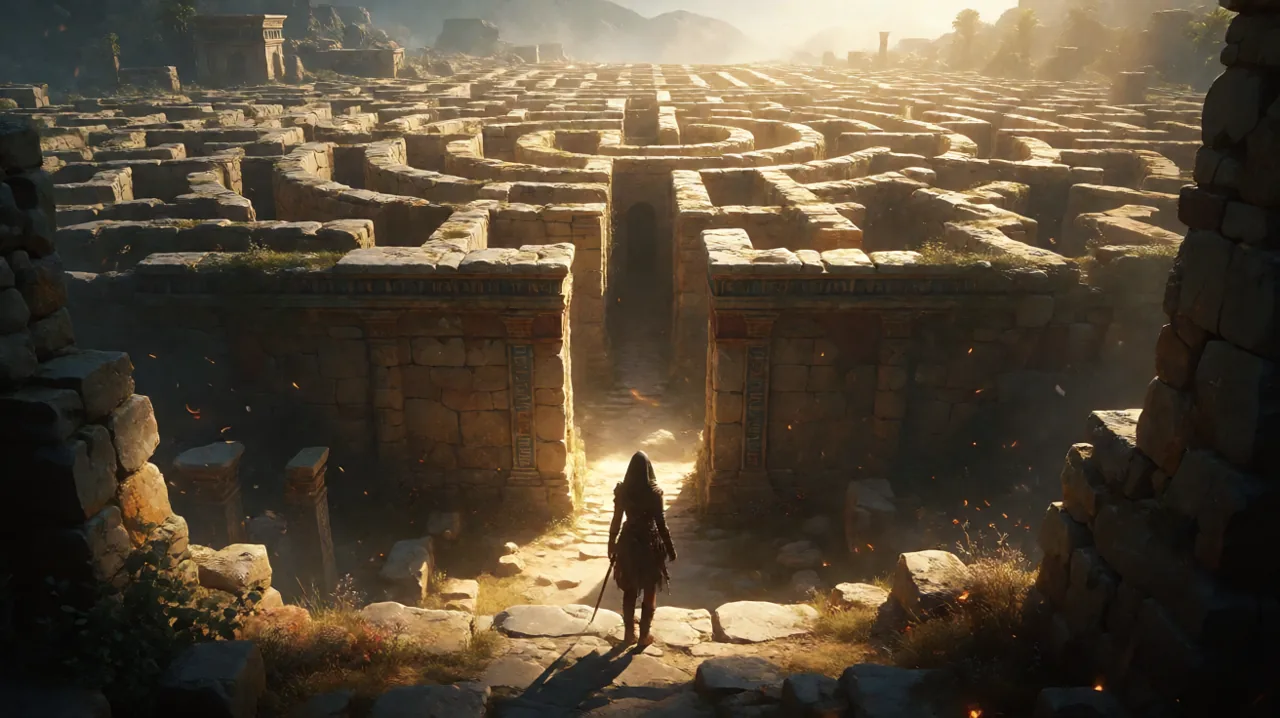
Over a month has passed since the release of Asobo Studio’s highly anticipated prequel, and the dust is finally beginning to settle on the sun-drenched ruins of Crete. Resonance: A Plague Tale Legacy transported players back to 1334, a full fifteen years before the grim events of Innocence, offering a fresh perspective through the eyes of the Venetian smuggler Sophia. While the critical reception has heavily praised the game’s shift in tone and mechanical fluidity, the community’s focus has now sharply pivoted toward dissecting the lore.
As more players reach the credits, a consensus is forming: the game is an undeniable triumph in art direction and atmosphere, but it leaves some of the franchise’s biggest historical questions deliberately unanswered. From intense debates over mythological bloodlines to frustrating hurdles for achievement hunters, the conversation surrounding the Minotaur’s Island is far from over.
A Triumph of Atmosphere and Animation
Before addressing the narrative mysteries, it is crucial to acknowledge the immense technical praise the game continues to receive. Across various community hubs and dedicated forums, players are consistently highlighting the visual presentation as a massive step forward for the franchise. The art direction for each distinct level—from the bustling, historically authentic Mediterranean ports to the deeply unsettling, shadowy depths of the Minoan ruins—has been widely described as top-notch.
The improvements aren’t limited to static environments. Fans have heavily praised the newly refined facial animations and the sheer fluidity of the action. Navigating one-on-many melee encounters as Sophia feels distinctly different from playing as Amicia; the emphasis on well-timed parries and brutal executions perfectly fits the profile of a hardened smuggler. Paired with yet another phenomenal, haunting original soundtrack and excellent voice acting from the lead cast, the game successfully holds its own against its critically acclaimed predecessors.
However, alongside the mechanical praise, a significant portion of the player base has expressed a lingering hunger for narrative closure. Resonance introduces bold new concepts, but community members are actively trying to piece together how these elements bridge the gap to the 1348 timeline.
The Ariadne Connection: Myth or Lineage?
One of the most persistent discussions dominating the lore community involves Sophia’s exact relationship with Ariadne. In classical Greek mythology, Ariadne is the Cretan princess who provided Theseus with the thread necessary to navigate the labyrinth and slay the Minotaur. Throughout the campaign, the game draws heavy, deliberate parallels between the ancient myth and Sophia’s harrowing journey through the dual timelines.
Yet, players completing the game report that the exact nature of this link remains notably ambiguous. Is Sophia meant to be a literal descendant of the Minoan bloodline, destined by her ancestry to interact with the ancient ruins and unravel the environmental mysteries? Or is the connection purely thematic—a narrative tool used to mirror the cyclical nature of human struggle against overwhelming darkness?
Community theorists suggest that the dual-timeline “resonance” mechanic hints at a deeper, almost supernatural lineage, but the narrative stops just short of confirming any direct biological tie. This intentional vagueness has frustrated some fans who were hoping for a definitive story primer explicitly linking the eras, while others appreciate the enigmatic approach, arguing that over-explaining the myth would strip away the game’s historical mysticism.
The Enigma of Asterion’s Blood
Closely tied to the Ariadne debate is the unsettling mystery of Asterion’s blood. For those brushing up on their ancient history, Asterion is the proper name of the Minotaur. While Resonance features its own terrifying interpretations of the labyrinth and the lurking “presence” that demands absolute caution, it also introduces dark rituals involving this mythological blood.
Lore enthusiasts are currently hung up on a critical, unexplained story beat: how exactly did the ancient figures—or the shadowy cults operating in the depths of Crete—obtain Asterion’s blood in the first place? And more importantly, what properties does this blood actually possess within the game’s universe?
Some community members theorize that Asterion was never a literal half-bull monster, but rather the very first Carrier of the primordial curse. In this interpretation, the blood is the concentrated source of the corruption. However, the game reportedly glosses over the precise mechanics of how this blood was extracted, preserved, and weaponized across the centuries. The lack of concrete details surrounding these ancient rituals has led to wildly divergent community theories, with some players scouring the environmental storytelling in the late-game temples for any missed clues.
How Did the Macula Become the Plague?
Perhaps the most significant question left hanging by the game’s conclusion is the evolutionary trajectory of the Prima Macula. Long-time fans of the series approached this prequel expecting a definitive origin story for the apocalyptic rat swarms that define the later games. They wanted to know exactly how a localized, ancient curse transformed into a continent-spanning plague.
While Resonance deeply explores the early manifestations of the Macula, it reportedly leaves the specific transition to the rat-plague unresolved. Players have noted that the corruption encountered on the Minotaur’s Island feels fundamentally different—more focused on the haunting, unseen entity and environmental manipulation than a literal rodent infestation.
This has sparked intense speculation. Did the ancient curse somehow mutate as it left the island? Was the Macula always capable of taking different forms depending on the environment and the host, meaning the rats were simply the form it chose in medieval France? Or, as some darker theories propose, did Sophia’s very actions on Crete inadvertently trigger the mutation that would eventually doom millions fifteen years later? The community remains divided, and the unresolved nature of the Macula’s evolution has left many hoping for either a substantial story DLC or further clarification in future updates.
Surviving the Presence: Stealth and Lore Intersect
One of the ways the game effectively bridges gameplay and its ambiguous lore is through its harrowing stealth guide sequences. When Sophia is forced to evade the island’s mysterious “presence,” the game heavily restricts her otherwise highly capable combat abilities. Players cannot simply hack their way out of these encounters; they must rely entirely on environmental awareness and the strategic placement of light sources to solve light puzzles.
This gameplay restriction has fueled further community speculation about the nature of the curse. If the presence is an early manifestation of the Prima Macula, its behavior in the labyrinth suggests a sentient, almost calculating malice that feels distinct from the mindless, ravenous swarms of the later games. The community has pointed out that navigating these stealth sections feels akin to surviving an ancient god’s trial, reinforcing the mythic themes of Asterion and the labyrinth. For players struggling to balance these intense survival sections with the broader combat deep dive mechanics, understanding the behavioral patterns of the presence is crucial—not just for survival, but for parsing the environmental clues scattered in the shadows.
The Platinum Trap: A Stern Warning for Trophy Hunters
While narrative deep-dives occupy the lore community, a much more pressing, practical issue is currently terrorizing achievement hunters. Resonance has been widely celebrated by the completionist community for offering a highly satisfying, action-oriented trophy list that encourages mastering the game’s parry and execution systems.
However, a severe warning is currently circulating across trophy-hunting forums: the collectible tracking system is incredibly unforgiving. Multiple players have reported that missing even a single hidden relic or lore document forces a complete restart of the campaign if you want the Platinum trophy.
Unlike many modern titles that offer a robust chapter-select feature allowing you to easily mop up missed items, Resonance reportedly locks you out of previous areas entirely as the narrative pushes you forward. If the community reports hold true, the current architecture of the game does not save collectible progress in a way that allows retroactive completion without a contiguous save file. Given the confirmed twenty-hour runtime of the main campaign, missing a document early on and not realizing it until the credits roll is a devastating blow.
For players currently working their way through the story, or those preparing to start their first playthrough, the community advice is unanimous: keep a trusted collectible roadmap open at all times. Do not progress to the next zone until you have absolutely verified that the area is swept clean, because the labyrinth will not let you return.
Looking Ahead: Patches and Possibilities
As the player base continues to parse the lore and navigate the treacherous collectible requirements, technical support for the game remains active. A recent backend update, version 1.3.0.0, has been spotted rolling out across platforms. While the official patch notes are still being scrutinized by the community, players are hopeful that it brings further stability to the PC version and perhaps introduces a more forgiving checkpoint system for those hunting collectibles.
It remains to be seen if Asobo Studio will address the lingering story questions through future updates or if they will let the mysteries of Crete stand on their own. For now, Resonance: A Plague Tale Legacy continues to spark fierce debate and admiration, proving that even a prequel can leave a lasting impact.