Resonance: A Plague Tale Legacy Launch Discoveries – Mocap Secrets, Chapter 1 Lore, and Next-Gen Performance
With Resonance: A Plague Tale Legacy out now, we explore Xbox Series X vs PS5 Pro performance, behind-the-scenes mocap secrets, and early story details.
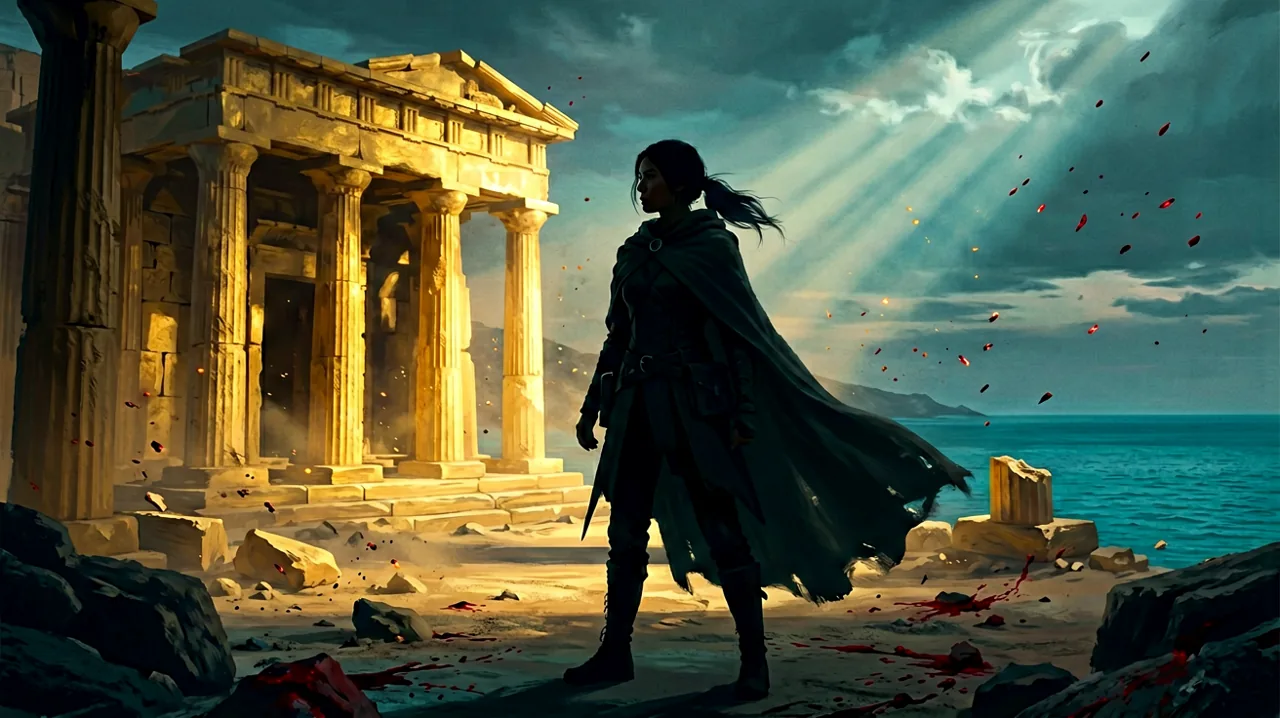
Asobo Studio and Focus Entertainment have officially launched Resonance: A Plague Tale Legacy, taking players back to 1334—roughly fifteen years before the grim events of Requiem. Stepping into the boots of Sophia, the Venetian smuggler, players are now charting their way across the labyrinthine landscapes of Crete. As reviews pour in and players dig into the day-one Xbox Game Pass release across PlayStation 5, Xbox Series X|S, and PC, a wealth of new details has surfaced regarding the game’s mechanics, story, and technical optimization.
From technical performance showdowns between current-generation consoles to behind-the-scenes motion capture secrets and community reactions regarding the departure from the series’ iconic rat swarms, there is a massive amount of information to unpack. Here is a comprehensive look at the most significant launch-day discoveries and what players can expect as they venture onto the Minotaur’s island.
Technical Performance: Xbox Series X Takes the Crown?
One of the most surprising early reports concerning the launch of Resonance is the console performance hierarchy. According to a technical deep dive from Pure Xbox, Resonance: A Plague Tale Legacy is running exceptionally well across all platforms, but the Xbox Series X version reportedly outperforms the newly released PlayStation 5 Pro. The optimization on Microsoft’s flagship console maintains an incredibly stable framerate during graphically intense sequences—particularly when transitioning seamlessly between the 14th century and ancient eras using the dual-timeline “resonance” mechanic.
Given the density of the Minoan ruins, the complex geometry of the underground labyrinths, and the dynamic lighting required for the game’s intricate Minoan light orb puzzles, maintaining performance is critical. While the PS5 Pro still offers a breathtaking visual experience, early metrics suggest the Xbox Series X holds a slight edge in framerate stability during intense, multi-enemy melee encounters where sparks, dust, and particle effects fly across the screen.
On the PC front, benchmarks from GameGPU highlight the sheer graphical demand of Asobo’s proprietary engine. Players utilizing top-tier, next-generation hardware like the RTX 5080 and RX 9070 XT are easily hitting a stable 60 FPS in full native 4K resolution. However, older hardware is struggling heavily to keep up with the sun-drenched, yet deeply oppressive, environments of Crete. Graphics cards like the GTX 1060 and RX 5500 XT are reportedly barely managing 25 FPS at 1080p, even on lowered settings. This serves as a stark reminder that PC players will need to strictly adhere to the recommended system requirements to ensure a smooth smuggling operation and avoid severe stuttering during critical parry timings.
Motion Capture Secrets: Channelling the Grief of Requiem
The sunny, Mediterranean setting of Crete might initially suggest a much lighter tone compared to the mud, rain, and blood-soaked battlefields of Innocence and Requiem. However, the narrative underpinnings of Resonance remain deeply tragic. In a fascinating behind-the-scenes report from TechRadar, it was revealed that Asobo Studio utilized the emotionally devastating soundtrack from A Plague Tale: Requiem during the motion capture sessions for Resonance.
Game director David Dedeine and the production team played Olivier Derivière’s somber, string-heavy compositions on set to help the actors—particularly Anna Demetriou, who voices and performs the motion capture for Sophia—tap into the necessary darkness for the game’s emotional peaks. The technique was specifically employed to help the cast bridge the gap between the adventurous, swashbuckling swagger of a smuggler and the profound sorrow tied to the looming curse of the Prima Macula. By surrounding the actors with the haunting cellos and choral grief of the previous game, the team ensured that this prequel maintained the distinct, heavy DNA of the A Plague Tale franchise, even without the immediate presence of Amicia or Hugo de Rune. It grounds Sophia’s journey not just as an adventure, but as a desperate fight against an ancient inevitability.
Unpacking Chapter 1: “Blood Ties” and Sophia’s Traumatic Past
With players finally getting their hands on the campaign, the details of the game’s opening hours have begun to circulate wildly across social media. Chapter 1, ominously titled “Blood Ties”, sets a drastically different tone from the peaceful, sunlit woods of the De Rune estate walkthrough that opened Innocence.
According to walkthroughs published by Sportskeeda and early gameplay footage shared on Reddit, the prologue provides a harrowing look at Sophia’s childhood in an isolated convent. Rather than a place of refuge, the convent is depicted as a site of extreme suffering, where religious sisters subjected a young Sophia to cruel experiments. This early exposition heavily hints at the broader machinations surrounding the Prima Macula and the fanatical religious orders attempting to understand or control the ancient bloodline long before the Inquisition hunted Hugo.
The first chapter also details Sophia’s eventual escape and her crucial meeting with Faro, a pivotal mentor and father figure who takes her under his wing. It is through Faro that Sophia learns the harsh realities of survival, leading directly into the game’s early combat tutorials. Players are introduced to the arena, a gritty proving ground where Sophia hones the evasion, parry, and execution skills that define the combat mechanics of this new prequel.
Community Reaction: A “Tomb Raider Without Guns”?
The mechanical shift in Resonance: A Plague Tale Legacy has sparked significant discussion among the community and critics alike. Moving away from a vulnerable child armed primarily with a rock-sling, players now control a highly capable, athletic smuggler. This transition heavily emphasizes one-on-many melee encounters, brutal timed parries, and lethal takedowns, as detailed in our comprehensive parry guide.
On Reddit, early player impressions have drawn highly favorable comparisons to classic action-adventure titles. One highly upvoted post described the gameplay experience as playing like “Tomb Raider without guns, mixed with dark fantasy elements.” The environmental traversal, verticality, and physical athleticism of Sophia offer a refreshing change of pace, making exploration through the Minotaur’s island feel deeply rewarding and significantly faster-paced than Amicia’s cautious sneaking.
However, this mechanical pivot has not been universally praised. A review from Absolute Geeks noted critically that “ditching the rats comes at a price.” For some veteran fans, the absence of the franchise’s iconic, flesh-eating rat swarms removes a specific layer of visceral tension that defined the earlier titles. Instead of navigating literal seas of rodents with a torch, Sophia’s stealth encounters revolve around evading “The Presence”—a much more psychological, invisible, and oppressive threat that haunts the underground reservoirs of Crete. This fundamentally shifts the focus of the stealth mechanics from puzzle-like pathfinding and light manipulation to nerve-wracking evasion and pure survival horror.
Collectibles, Trophies, and Late-Game Puzzles
Completionists and achievement hunters have their work cut out for them, as the game features 36 achievements across PS5, Xbox, and Steam. These trophies are intricately tied to combat milestones, skill tree progression, and discovering specific lore-heavy collectibles scattered across the dual timelines of the island.
Notably, players are tasked with tracking down “Blades,” a new type of collectible that rewards thorough exploration of both the ancient and medieval eras of the island. Players will need to actively utilize the Resonance mechanic to overlay the ancient Minoan architecture with the crumbling 14th-century ruins to uncover hidden pathways holding these rare items.
Furthermore, while early previews suggested a heavy emphasis on action, environmental puzzles remain a cornerstone of the Asobo experience. Reports indicate that while the back half of the estimated 20-hour campaign leans heavily into narrative momentum and intense combat encounters, it still features massive, brain-teasing obstacles. A notable example highlighted by early MSN guides is the massive Chapter 10 door puzzle. This encounter requires players to master the stolen Minoan light orbs, manipulating ancient mechanisms across both timelines simultaneously to progress deeper into the labyrinth. Players struggling with these spatial mechanics should consult our light puzzles guide to better understand the logic required to bypass these ancient locks.
The Journey Ahead
As the first weekend of release begins, the community is just barely scratching the surface of the labyrinth. Between the challenging one-on-many combat encounters, the emotional weight of Sophia’s origins, and the looming, ancient mysteries of the Prima Macula, Resonance: A Plague Tale Legacy is proving to be a bold, divisive, and visually stunning expansion of the franchise’s universe.
Whether you are optimizing your PC settings for the perfect framerate, seeking out every hidden Blade across time, or simply trying to survive your first terrifying encounter with the unseen horrors of the island, the Minoan ruins hold secrets that will keep players occupied for weeks to come. Ensure you brush up on your history by checking out our story primer before diving too deep into the dark.