Resonance: A Plague Tale Legacy – PC Fixes, Hellblade Comparisons, and Chapter 7 Puzzle Insights
Discover the latest community findings for Resonance: A Plague Tale Legacy, from fixing AMD FSR 4.1 bugs to solving the Black Temple and Blade Tomb puzzles.
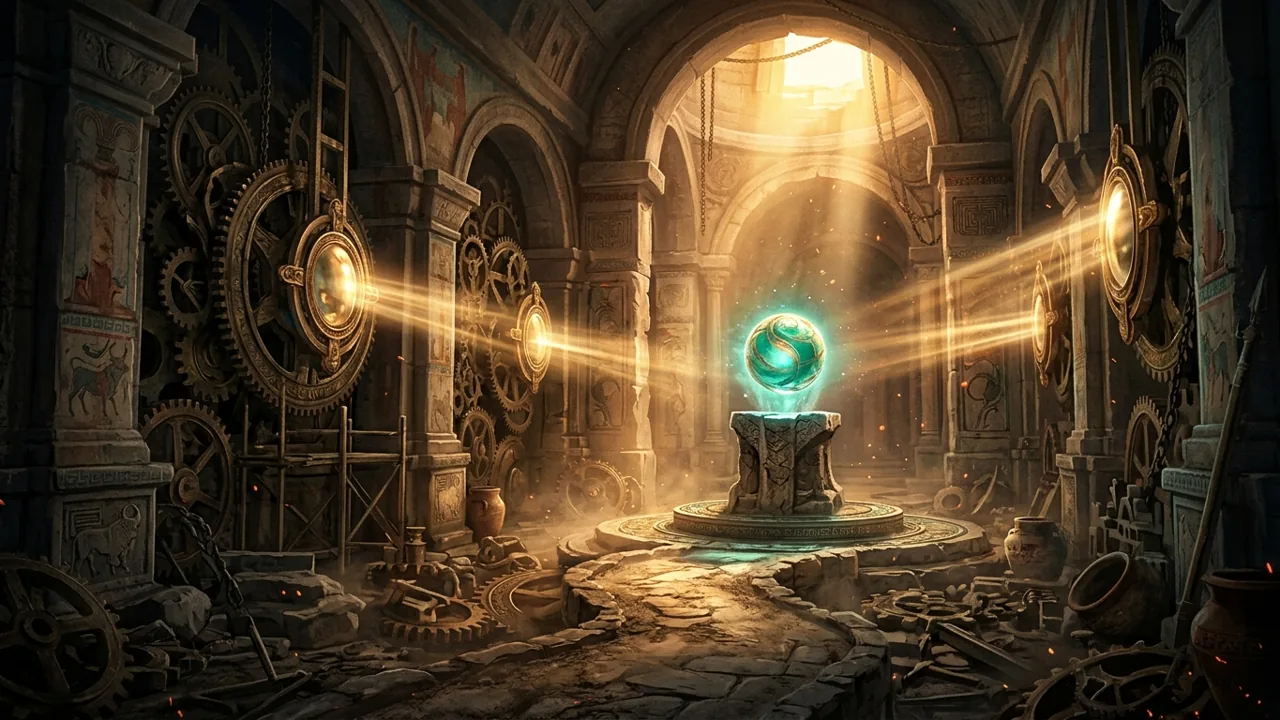
The launch of Resonance: A Plague Tale Legacy has successfully transported players to the year 1334, trading the damp, rat-infested streets of medieval France for the sun-baked, mythological dread of Crete. As Asobo Studio’s bold prequel starring the Venetian smuggler Sophia, the title is already being praised across major outlets as a sleeper hit of the summer. Now that the dust has settled on the highly anticipated day-one release across PC, PS5, and Xbox Series X|S (and its immediate arrival on Xbox Game Pass), the community is venturing further into the labyrinth.
What early adopters are finding is a compelling mix of breathtaking puzzle design, surprising thematic similarities to other psychological thrillers, and a handful of technical quirks that require some immediate attention. Today, we are looking at the most prominent discussions, technical workarounds, and mid-game puzzle roadblocks that players are currently facing.
Uncharted Meets Hellblade: The Community Verdict
Before release, much of the marketing focused on the transition from stealth-heavy gameplay to a more aggressive, parry-based melee combat system. But as players dig into the campaign, the narrative tone is drawing fascinating comparisons. Over on the r/GirlGamers subreddit, fans are strongly recommending the game to anyone who loved Uncharted: Lost Legacy. The pitch is highly effective: a badass pirate lady chasing down cursed treasure in an ancient setting. Sophia’s agility and raw survival instincts fit perfectly into this archetype, providing a refreshing departure from the desperate, protective struggles seen in earlier titles.
However, the most frequent and surprising comparison popping up across forums is Ninja Theory’s Senua’s Saga: Hellblade II. Players on r/gaming have pointed out eerie similarities in how both games handle psychological distress and altered reality. Sophia’s exposure to the Prima Macula’s ancient roots on the island triggers intense hallucinations and visions. Reality distorts around her, impossible figures appear in the shadows, and she constantly questions her own senses.
This connection is cemented by the game’s core progression mechanic: the Minoan sphere. Much like Senua manipulates her environment to reveal hidden paths, Sophia uses the stolen sphere to interact with the dual-timeline “Resonance” system, shifting the environment between its ancient glory and its current ruined state. Even the supporting cast is drawing comparisons, with players noting that the character Faro bears a striking resemblance to Hellblade’s Fargrímr. It is clear that Asobo has leaned heavily into the psychological toll of the Macula, making the curse feel like a localized madness rather than just a physical plague. For those curious about how this connects to the wider lore, you can review our Innocence and Requiem story recap.
The “Chatty Protagonist” Debate
While the narrative atmosphere is receiving high praise, one specific design choice is proving highly divisive. A trending thread on the gaming subreddit recently asked, “Why can’t modern games shut up?” specifically targeting Resonance. While the game is visually stunning—begging players to stop and take in the sheer scale of the Minoan ruins—the constant vocal barks from Sophia and her companions are pulling some players out of the immersion.
The complaints highlight a relentless stream of minor comments: “Hurry,” “Be careful,” “This looks interesting,” or “I can’t stay here.” Unlike puzzle hints—which the game graciously allows you to disable or delay via accessibility menus—this ambient chatter is seemingly tied to basic exploration triggers. For a game that relies so heavily on tension and the eerie silence of a dead civilization, having the protagonist constantly narrate her immediate surroundings feels exhausting for hardcore immersion seekers. The issue becomes so pronounced in the later, more stressful chapters that some players report navigating to the audio settings and completely muting the dialogue volume just to explore the ruins in peace. If you are finding the constant banter distracting, you are definitely not alone.
PC Technical Troubleshooting: FSR 4.1 and Proton Crashes
On the technical front, Resonance: A Plague Tale Legacy is remarkably well-optimized, running beautifully on most modern hardware and easily hitting its performance targets. However, a few specific hardware configurations are experiencing early growing pains.
For users equipped with AMD’s latest RX 9000 series GPUs (specifically the 9060 XT), there is a frustrating bug preventing the use of in-game FSR 4.1 Frame Generation. When attempting to toggle the feature in the graphics menu, the game throws a warning claiming that a driver update is missing, demanding at least version 3.1.4. This error occurs even when players have the absolute latest AMD Adrenalin 26.8.1 drivers installed alongside the day-one game patch. Curiously, standard FSR 4 upscaling works flawlessly, and driver-level AMD Fluid Motion Frames 2 (AFMF 2) also functions normally. As a temporary workaround, affected Radeon users should leave the in-game Frame Generation disabled and rely entirely on the driver-level AFMF 2 to boost their framerates until Asobo and AMD coordinate a fix for the version check logic.
Meanwhile, the Linux and Steam Deck communities have identified a severe progression blocker. According to reports on ProtonDB and the r/linux_gaming subreddit, the game runs perfectly up until Chapter 9. At this exact point, the appearance of a specific enemy type causes a consistent, hard crash to the desktop under the current Proton compatibility layers. If you are playing on a Linux machine, you may need to wait for a Mesa driver update or a hotfix from Valve. For those utilizing Game Pass or Steam cloud saves, the only viable workaround right now is to temporarily boot the game on a Windows device, clear the specific Chapter 9 encounter, save your progress, and then return to your Linux setup.
Overcoming Mid-Game Roadblocks: The Black Temple and Blade Tombs
As the player base pushes past the opening hours, the difficulty of the environmental puzzles ramps up significantly. If you have already consulted our Chapter 3 & 4 puzzle solutions, prepare yourself for what lies deeper in the Cretan underground.
Search trends over the last 24 hours indicate that players are collectively getting stuck on the Black Temple Trial in Chapter 7, specifically the infamous “Skull Room.” To open the massive Black Temple door, you cannot simply guess the combination. You must utilize the Minoan sphere to trigger the Resonance mechanic, shifting your vision to the past timeline. Only by observing the pristine state of the temple can you deduce the correct sequential order in which to press the skulls in the present day. Missing the sequence reportedly resets the room and triggers a deadly trap, so careful observation is mandatory. For more on how the sphere interacts with the environment, see our light puzzles guide.
Furthermore, players are discovering hidden challenge rooms scattered throughout Chapter 5, Chapter 6, and Chapter 10, colloquially known as the Blade Tombs. These optional areas are brutal tests of your reflexes and timing. They require a mastery of the new grapple hook mechanics to swing over pressure plates, combined with precise parry timing to deflect incoming projectiles while balancing on narrow stone beams. Completing these Blade Tombs is expected to reward players with high-tier crafting materials and unique weapon upgrades for Sophia, making the frustration well worth the effort. Getting comfortable with the new melee mechanics is essential here, so brush up on your skills with our combat guide.
Surviving “The Monster” in the Labyrinth
Finally, we cannot talk about the later chapters without mentioning the relentless entity stalking the lower levels of the labyrinth. Unlike the overwhelming, physics-based rat swarms of Innocence and Requiem, this localized threat acts as an unkillable stalker.
Guides and community reports confirm that brute force is simply not an option during these encounters. You must rely on pure evasion. Efficiently avoiding this monster requires hugging the walls, utilizing environmental distractions, and knowing exactly when to use the sphere to alter the lighting and blind the entity momentarily. If the creature spots you, your only hope is a well-timed escape to break the line of sight. Brushing up on your sneaking skills via our stealth guide is highly recommended before venturing into the darkest corners of Crete.
Resonance: A Plague Tale Legacy is proving to be a dense, rewarding, and psychologically taxing prequel. As the community continues to map out the secrets of the island, we will be here to document every workaround, lore discovery, and hidden tomb.
Sources
- Reddit: Just completed Resonance and couldn't stop noticing similarities to Hellblade II
- Reddit: Why can't modern games shut up?
- Reddit: Help:No FSR 4.1 Frame Generation on 9060XT
- Reddit: Bug report for Chapter 9 Linux crash
- GameRant: How to Solve Black Temple Trial Skull Room Puzzle
- GameRant: How to Solve Chapter 10 'Blade Tomb Puzzle'
- AltChar: How To Efficiently Avoid The Monster
- Reddit: If you're looking for a new single-player narrative action game