Resonance: A Plague Tale Legacy - Community Verdict on Sophia's Journey and Ongoing ROG Ally Issues
Over a week since launch, the community praises Sophia's character arc and the evolved melee combat, though ROG Ally shader crashes and audio bugs remain.
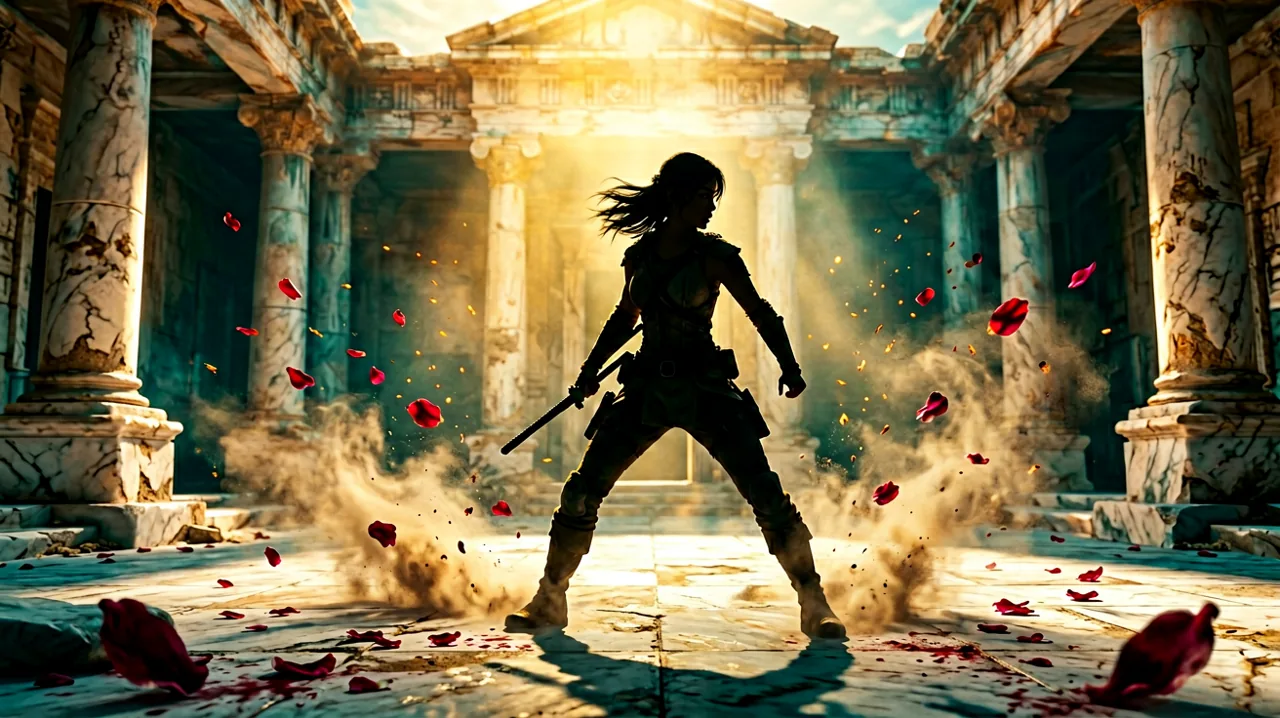
It has been just over a week since Resonance: A Plague Tale Legacy arrived on PlayStation 5, Xbox Series X|S, and PC, landing as a highly anticipated Day One addition to Xbox Game Pass. Asobo Studio’s ambitious prequel, set in the brutal yet beautiful year of 1334, has tasked players with guiding Sophia—a charismatic Venetian smuggler—through the perilous, sun-drenched, and blood-soaked ruins of Crete. Now that a significant portion of the player base has rolled the credits, a clear consensus is emerging across community hubs and forums.
The narrative payoff and the shift toward action-heavy combat are being lauded as series highs, cementing the game as a worthy standalone adventure that deeply enriches the franchise’s overarching lore. However, the post-launch honeymoon period is currently being marred by specific technical roadblocks, most notably severe game-breaking crashes on the ROG Ally and lingering audio glitches on desktop setups. Today, we are breaking down the community’s post-launch verdict, highlighting what works brilliantly and outlining the technical issues that still need fixing.
Sophia’s Journey and the Epic Narrative Payoff
When players first booted up the game late last month, the shift from the deeply bonded siblings Amicia and Hugo to a solo, hardened smuggler felt slightly jarring to some veterans of the franchise. Early community chatter reflected a minor disconnect with Sophia, whose initial motivations centered around a botched heist and stolen Minoan artifacts rather than familial survival. However, as completion rates rise across platforms, the verdict on her character arc has overwhelmingly flipped in her favor.
Players finishing the approximately 20-hour campaign are specifically highlighting the profound emotional weight of the finale. A highly upvoted post on community forums captures the sentiment perfectly, with the author noting that while they weren’t attached to Sophia at the beginning of the journey, by the time the credits rolled, she had proven to be a brilliantly crafted and deeply compelling protagonist. Asobo Studio has built a strong reputation for delivering gut-punching, emotionally resonant conclusions, and Resonance reportedly continues this tradition flawlessly.
The narrative successfully bridges the gap between the ancient Minoan myths of the labyrinth and the horrifying reality of the Prima Macula. Uncovering the origins of the rat plague through the dual-timeline “resonance” mechanic—which allows players to glimpse the island’s prosperous past while navigating its decaying medieval present—has provided lore enthusiasts with exactly the context they craved. This dual-timeline approach doesn’t just serve as a clever storytelling device; it fundamentally alters how players perceive the world. By activating the resonance, Sophia can see echoes of ancient Minoan civilization, revealing hidden pathways or the original pristine state of crumbled architecture. It is a stunning visual trick that gives the ruins of Knossos a tragic, haunting beauty, reminding the player that the Macula has consumed entire empires long before setting its sights on 14th-century France.
Trading Shadows for Steel: The Combat Verdict
Perhaps the most universally praised aspect of the post-launch discussion is the completely revamped combat system. While the previous entries heavily emphasized hiding in the shadows and using a slingshot or crossbow to manipulate environments from afar, Resonance forces a much more direct confrontation. Sophia is older, tougher, and significantly more proficient in close-quarters engagements than Amicia was.
Instead of cowering behind knee-high walls, players are encouraged to stand their ground. The clashing of steel in the marble courtyards of Crete feels weighty and consequential. When surrounded by hostile factions, Sophia can utilize her agility to dodge and deliver fatal strikes. The community is actively celebrating this dynamic nature of the one-versus-many melee system. Parrying incoming strikes and chaining together brutal executions feels fluid, responsive, and incredibly satisfying. Many fans feel this evolution makes the gameplay loop far more engaging than pure stealth, eliminating the frustration of instant-fail detection states that occasionally hampered the pacing of earlier adventures.
However, this shift hasn’t come without a minor critique regarding the overall difficulty balance. A vocal segment of series veterans feels that Sophia’s proficiency makes the game slightly too forgiving. Once players master the timing of the parry mechanics, the tension of human encounters drops significantly compared to the desperate scrambles of the prior games. The power fantasy of being a capable fighter somewhat overshadows the sheer vulnerability that defined the series. If you are a newcomer struggling to find the rhythm of the swordplay, checking out our comprehensive combat guide or our specialized parry guide can help smooth out the learning curve and keep you alive in the arena.
Surviving the Dark: Boss Faros and The Presence
While human enemies might feel more manageable, Asobo hasn’t abandoned the franchise’s trademark tension. The true terror of Resonance: A Plague Tale Legacy is found deep within the underground reservoirs and ancient labyrinths of Crete. Players are widely discussing the harrowing night sequences, particularly the desperate escape from the terrifying entity known simply as “The Presence” (frequently referred to as the Criatura in international community forums).
During these claustrophobic sections, Sophia cannot rely on her blade. Survival depends entirely on environmental awareness and the manipulation of Minoan light orbs. Community clips highlight the intense pressure of these encounters, specifically pointing to the late-game confrontation with “Boss Faros.” The interplay between the encroaching darkness, the massive swarms of rats tied to the Prima Macula, and the fragile, ancient light sources creates a terrifying horror experience that contrasts sharply with the sunlit overworld.
“The Presence” acts as an unstoppable force, a physical manifestation of the ancient curse that forces the player into a pure survival mindset. You cannot fight it; you can only outsmart it. Navigating the flooded, subterranean chambers while keeping the glowing orbs active requires quick reflexes and a cool head. Solving these environmental puzzles under extreme duress requires a solid understanding of how light interacts with the shifting environments, mechanics which you can read up on in our light puzzles guide. Furthermore, the community is praising how these encounters naturally escalate in complexity, culminating in the Faros sequence which tests every single survival skill the game has taught up to that crucial point.
Handheld Headaches: ROG Ally Shader Crashes
Unfortunately, the post-launch conversation isn’t purely focused on narrative triumphs and satisfying gameplay tweaks. A highly frustrating technical issue has surfaced for handheld PC players, specifically those utilizing the ASUS ROG Ally and the newly released ROG Ally X hardware.
Multiple user reports across Reddit and support forums indicate a hard-stop bug occurring during the initial boot sequence. When the game launches, it begins compiling shaders—a standard procedure for modern PC releases to ensure smooth performance during gameplay. However, upon reaching 100% completion on this progress bar, the screen goes entirely black with a thin white border before abruptly crashing back to the Xbox app launcher. This effectively locks affected players out of the game entirely, leaving them stuck in a frustrating loop of booting up and immediately crashing.
Given that Resonance is a major, highly publicized Game Pass release, a massive portion of the handheld audience relies on the Xbox app ecosystem for PC, making this a widespread and highly visible pain point. Users have attempted all standard workarounds—reinstalling the game, clearing the DirectX shader cache, forcing DirectX 11 via command line arguments, and rolling back AMD drivers—but the problem appears deeply rooted in how the current game build interacts with the ROG Ally’s specific APU architecture and the Xbox wrapper. As of now, there is no official community workaround, and players are anxiously waiting on Asobo Studio and Focus Entertainment to acknowledge the bug and deploy an emergency hotfix.
Audio Glitches and HDR Tuning
Beyond the severe handheld crashes, desktop PC players are also flagging persistent, though less game-breaking, audio issues. Reports of sound cutting out completely, ambient noise dropping unexpectedly, or audio desyncing during dialogue-heavy cutscenes have been popping up consistently. While standard PC troubleshooting usually dictates updating audio drivers or changing sample rates in Windows settings, affected users have confirmed that these steps do not resolve the bug, pointing to an underlying issue within the game engine’s audio mixing itself.
On a brighter technical note for visual purists, the community’s display enthusiasts have been hard at work optimizing the game’s visuals. A comprehensive HDR analysis has been published on GitHub, detailing exactly how the game handles peak brightness and absolute black levels across its heavily contrasted environments. For players equipped with high-end OLED displays or premium Mini-LED monitors, tweaking the in-game HDR calibration settings based on these community findings significantly enhances the visual impact. The glowing golden hues of the Minoan ruins and the pitch-black, writhing rat swarms benefit immensely from proper HDR tuning, adding an extra layer of depth to the already stunning art direction.
Chapter Select Inquiries for Completionists
Finally, as the initial wave of players finishes the story, attention has naturally turned to the post-game mop-up phase. Resonance features a variety of hidden collectibles, including equippable Charms that offer minor stat tweaks and lore-heavy Artifacts scattered throughout the expansive chapters. A common question echoing across achievement hunting forums is whether utilizing the Chapter Select feature to grab a missed collectible requires finishing the entire chapter for the progress to officially save.
Fortunately, the community has tested this extensively and confirmed that you can grab the missing item and safely back out to the main menu without losing the collectible. The game saves the acquisition immediately, streamlining the path to 100% completion and preventing players from having to replay hours of content just for one missed item. If you are mapping out your route for all achievements, be sure to reference our platinum roadmap to track down any elusive items you might have missed in the labyrinth. The chapter select screen conveniently displays a counter for all regions, so you can easily pinpoint which section of Crete is hiding that final trinket before committing to a replay.
Looking Ahead
As week two progresses, Resonance: A Plague Tale Legacy stands strong as a worthy, surprisingly action-packed expansion of the franchise’s grim universe. The shift to a more capable protagonist has injected fresh energy into the series, successfully carving out a unique identity separate from Amicia and Hugo’s tragic tale. Even as developers scramble to iron out the remaining technical kinks for the PC and handheld crowd, the game remains a must-play experience for fans of narrative-driven action games. We will continue to monitor the situation regarding the ROG Ally crashes and will update our coverage as soon as Focus Entertainment issues a stabilizing patch.
Sources
- Reddit: A Plague Tale Resonance zerado é o game tá incrível
- Reddit: Resonance A Plague Tale Legacy not starting (ROG Ally)
- Reddit: Resonance not starting (Handhelds)
- Reddit: Audio issues while playing Resonance
- Reddit: Escaping the Creature and Boss Faros
- Reddit: 100% completion chapter replay question
- Reddit: HDR Analysis