Mastering Sophia’s Arsenal: Unlockable Blades, Boss Irene, and Hidden Missables in Resonance
A week after launch, the community is decoding Resonance: A Plague Tale Legacy. We break down the unlockable blades, Chapter 11's Boss Irene, and crucial tech tweaks.
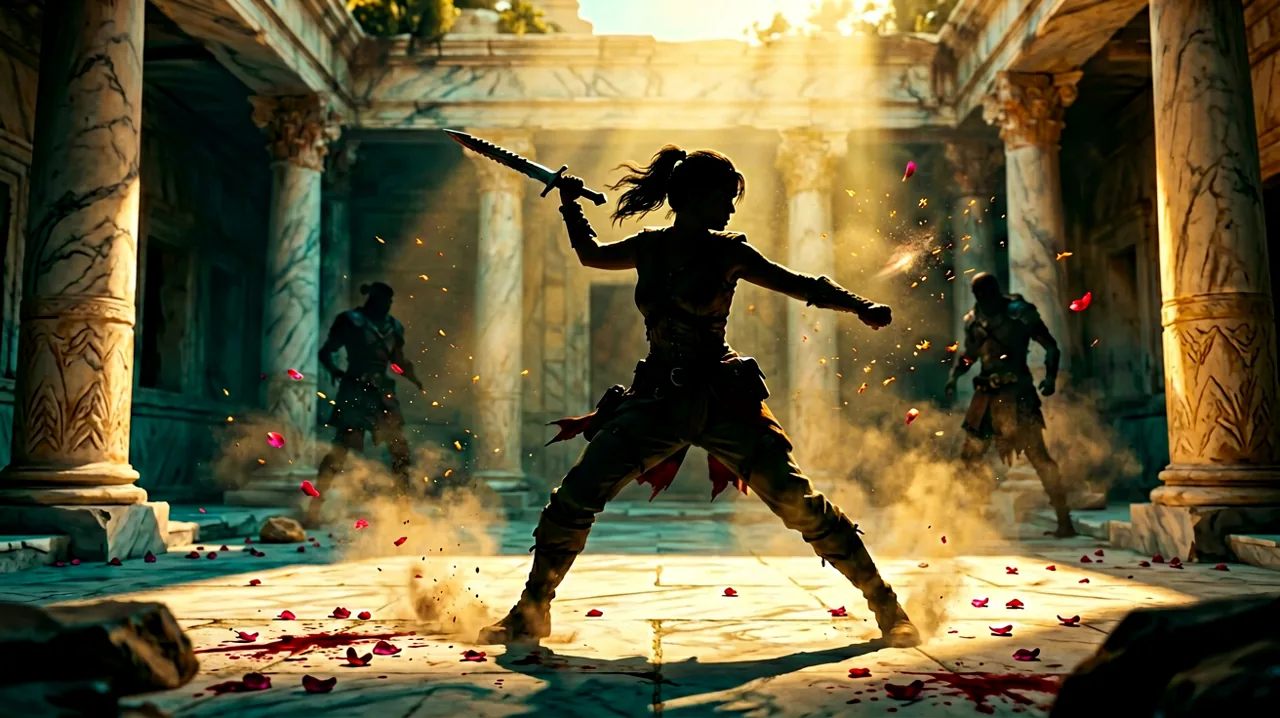
It has been just over a week since Asobo Studio launched Resonance: A Plague Tale Legacy, and the community is entirely consumed by the labyrinthine mysteries of 1334 Crete. Leaving behind the familiar narrative of Amicia and Hugo, players are now stepping into the boots of Sophia, a pragmatic Venetian smuggler navigating a deadly, mythology-infused Mediterranean landscape.
The game’s reception has been stellar. It debuted straight at number one on the French sales charts, beating out massive franchise re-releases and validating Asobo’s risky pivot to an action-heavy, standalone prequel. But as players push past the initial awe of the dual-timeline mechanics and the haunting Prima Macula origins, hard discussions are emerging regarding late-game combat optimization, notoriously hidden achievements, and a few lingering technical quirks on PlayStation 5 and PC.
Whether you are struggling with parry timings, preparing for a mid-game difficulty spike, or just trying to take clean screenshots of the island, our week-two status report breaks down exactly what the community has discovered.
The Arsenal Evolution: Why Unlockable Blades Matter
One of the largest departures from the previous A Plague Tale titles is the shift away from ranged distraction tools like the slingshot or crossbow. Sophia is a smuggler who thrives in close-quarters chaos. Her survival hinges on a high-stakes parry and execution system designed specifically to handle one-versus-many engagements.
Recently, the action-game enthusiasts at DualShockers published a ranking of all unlockable blades available in the game, sparking a wider community conversation about loadout optimization. If you have been relying solely on Sophia’s default Venetian dagger, you are making your journey through the Minotaur’s island significantly harder than it needs to be.
The unlockable blades scattered throughout Crete—often hidden behind intricate light puzzles requiring the stolen Minoan orb—are not just cosmetic pallet swaps. Community testing over the past week indicates that different swords offer highly distinct handling profiles. Some ancient Minoan relics provide wider parry windows, making them incredibly forgiving when you are swarmed by island mercenaries. Others offer vastly accelerated execution animations. In Resonance, where getting bogged down in a long finishing move leaves your flank exposed to both human threats and the surging tides of “the presence,” a faster blade is a literal lifesaver.
Finding these weapons usually demands heavy engagement with the dual-timeline “resonance” mechanic. Players have reported that some of the highest-tier blades require you to shift timelines, observing where a pristine weapon was stored in the distant past so you can unearth it from the corresponding rubble in 1334. If you are looking to master these combat encounters, it is highly recommended you study up on the fundamental combat guide and our dedicated parry mechanics breakdown before going weapon hunting.
Preparing for Chapter 11: The Patera Region and Boss Irene
Asobo confirmed early on that Resonance: A Plague Tale Legacy boasts a robust 20-hour runtime. Based on a massive 50-minute 4K gameplay leak that surfaced this week via Xbox Cloud Gaming, we now have a clear picture of where the game’s difficulty reaches its absolute peak: Chapter 11.
Taking place in an sprawling, oppressive area known as “Patera,” Chapter 11 tests every single skill you have acquired up to that point. The stealth mechanics that allowed you to quietly bypass early-game patrols are heavily suppressed here. Instead, players are thrust into a relentless gauntlet that culminates in a major confrontation with “Boss Irene.”
Community members who have reached this milestone describe Boss Irene as a harsh reality check for those who have skimped on upgrading Sophia’s abilities or locating better blades. The fight reportedly demands aggressive mastery of the parry system. Irene will punish defensive players, forcing you to use the Minoan light orb dynamically mid-combat to expose environmental hazards or briefly blind her, allowing you to close the distance.
If you have been playing Resonance purely as a traditional stealth game, Chapter 11 will force you to adapt. Ensure you have scoured the earlier chapters for weapon upgrades, and do not hesitate to experiment with different unlockable blades if your current parry timing feels sluggish against Irene’s erratic attack patterns.
The Platinum Trap: Beware the ‘Annoying Missable’
With the game being available on day one via Xbox Game Pass, achievement hunters are out in full force. The consensus on the r/xboxachievements subreddit is overwhelmingly positive regarding the story, music, and voice acting, but there is a major warning circulating: there is one incredibly annoying missable objective.
While Resonance offers chapter select post-game, community members note that this specific missable requires a sequence of actions that are easily overwritten or missed entirely if you push the narrative forward too quickly. Without dropping massive story spoilers, veterans recommend being hyper-vigilant during transitional areas—specifically when moving between the ancient Greek ruins and the medieval encampments.
If you are a completionist, you need to comb every corner of the environment before triggering point-of-no-return cutscenes. Pay special attention to hidden lore items regarding the ancient curse. For those who absolutely do not want to risk a second 20-hour playthrough just for a single trophy, you can cross-reference our platinum roadmap and missable resonance points to secure your 100% completion safely.
Technical Tweaks: PS5 Water Artifacts and HDR Headaches
Asobo Studio’s proprietary engine pushes some incredible visual boundaries, heavily contrasting the pitch-black horror of the Prima Macula with the golden, sun-drenched coasts of the Aegean Sea. However, a week into launch, players across multiple platforms are sharing notes on a few distracting graphical hurdles.
On the PlayStation 5, a highly upvoted thread on the PlayStation subreddit highlighted severe artifacting regarding water reflection effects. The game utilizes Screen Space Reflections (SSR) to render the beautiful coastal waters and the flooded subterranean aqueducts. Unfortunately, when moving the camera horizontally, players are noticing heavy distortion and smearing around the edges of the screen where the SSR fails to resolve the image properly.
Community testing confirms this issue persists regardless of whether you have the PS5 set to Fidelity Mode or Performance Mode. If you are prone to motion sickness from visual smearing, players currently recommend keeping the camera steady near large bodies of water until Asobo issues a post-launch patch to refine the reflection rendering.
Meanwhile, on PC and Xbox Series X|S, the community’s virtual photographers are struggling with High Dynamic Range (HDR). While the game looks phenomenal in HDR on a proper display, attempting to capture those moments using the Xbox Game Bar is currently flawed. Players comparing standard dynamic range (SDR) PNG files against HDR JXR files have unanimously concluded that the SDR screenshots look universally better. The current HDR capture implementation results in washed-out colors and crushed blacks that completely ruin the contrast of the game’s stunning light puzzle rooms. If you are sharing your adventure on social media, force your captures to standard PNGs for the time being.
Resonance: A Plague Tale Legacy is already shaping up to be one of the strongest action-adventure titles of the year. As the player base continues to untangle the knot of the dual-timelines and the Minoan mysteries, we expect even more secrets regarding Sophia’s past to surface. If you are still on the fence about jumping in because you missed the story of Amicia and Hugo, remember that this prequel stands entirely on its own—though long-time fans will want to read our story primer to catch the subtle nods to the events of 1348.