Why Asobo Rejects the 'AAA' Label for Resonance as Community Lore Theories Multiply
Asobo Studio explains their deliberate departure from AAA development conventions, while the Resonance community pieces together end-game theories about Alec and Asterion.
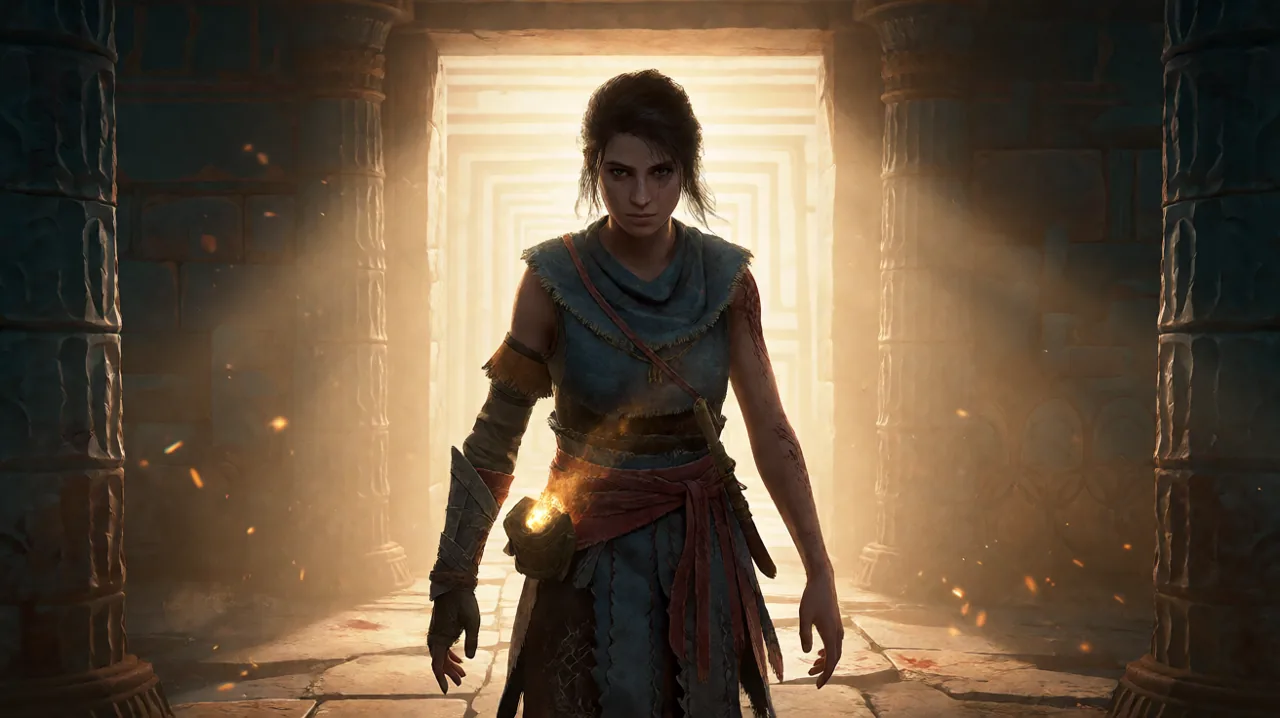
With Resonance: A Plague Tale Legacy firmly in the hands of players worldwide following its August 27 launch, the discussion surrounding Asobo Studio’s ambitious prequel has shifted from pre-release anticipation to deep narrative analysis. Between the game’s robust critical reception and the player base actively dissecting its intricate lore, one recent developer statement stands out: Asobo Studio does not consider Resonance to be a AAA game, nor are they currently interested in becoming a AAA studio.
This candid admission provides a fascinating lens through which to examine the game’s success, particularly as the community dives into wild, unconfirmed theories regarding the fate of characters like Alec, the true nature of Asterion, and how Sophia’s 1334 adventure connects to the overarching Plague Tale universe.
The Anti-AAA Philosophy: Crafting a “Plunderer’s Adventure”
In an industry currently dominated by ballooning budgets, live-service models, and endless open-world checklists, Asobo’s recent comments on Reddit highlight a deliberate pivot away from industry norms. The team explicitly stated they prefer to remain out of the AAA categorization. This philosophy allows them to maintain creative control and focus strictly on delivering a tightly paced, 20-hour narrative experience without the pressure of padding the runtime with repetitive content.
This focused approach is paying off. The Irish Independent recently published a glowing review, noting that “What lies beneath this plunderer’s adventure captivates more than any surface similarities.” By steering clear of the AAA bloat, Asobo was able to pour their resources into bespoke, high-quality mechanics that define Sophia’s journey. Instead of a massive, sprawling skill tree, players engage with a highly curated combat system that emphasizes athletic parries and brutal executions over mindless button-mashing. The absence of a hundred-hour map allows the environmental storytelling of Crete to shine, giving weight to every crumbling Minoan ruin and every terrifying encounter in the dark. It is a focused evolution of the formula, deliberately sidestepping the trap of becoming “bigger just to be bigger” as seen in our breakdown of the series evolution.
The Unresolved Fate of Alec and Faro’s Secrets
Because Asobo’s narrative design is so tightly woven, the intentional gaps they leave behind have become a playground for lore enthusiasts. One of the most heavily debated topics on the community subreddits currently concerns the unresolved fate of Alec. According to community-reported details, Alec was the first individual to travel to the island of Crete alongside Faro. However, he never returned from this expedition.
Players have meticulously combed through environmental storytelling and dialogue snippets, formulating theories that Alec discovered a profound truth about the stolen Minoan sphere—the central artifact Sophia uses to manipulate ancient mechanisms and solve intricate light puzzles throughout the sun-drenched ruins. Fans highly suspect that Faro’s motives were entirely deceptive from the very beginning. The “treasure” that Sophia was sent to retrieve was reportedly never an ordinary cache of gold or artifacts. Instead, the community theorizes that the treasure is intrinsically connected to the Prima Macula itself. It is widely expected by lore analysts that Faro knew significantly more than he disclosed to Sophia, essentially sending the Venetian smuggler into a meticulously laid trap to uncover a curse he dared not touch himself.
Irene’s Betrayal and the Macula’s Many Forms
This theory of deep-rooted deception naturally extends to Irene. The confrontation with Irene serves as a major emotional and mechanical climax in the later chapters of the game, forcing players to utilize every tactic they’ve learned to defeat boss Irene. While her betrayal is a bitter pill for Sophia to swallow on a personal level, community analysts suggest that her actions were not merely an act of opportunistic greed. Theories posit that Irene possessed forbidden, esoteric knowledge regarding what was truly hidden deep within the island’s labyrinthine structures, and her betrayal was a calculated move to control—or perhaps contain—the ancient curse.
Furthermore, the narrative introduces Asterion, referred to ominously by the island’s inhabitants as “the creature.” While Greek mythology assigns the name Asterion to the Minotaur, Asobo’s subverted Minoan myth represents something far more terrifying. The community hypothesizes that Asterion is a localized, ancient manifestation of the Prima Macula. But a critical, not-yet-confirmed question remains: was Asterion the only manifestation of the Macula on the island, or in the wider Mediterranean world?
Players theorize that the terrifying “Presence” Sophia must constantly evade using careful stealth in the damp, claustrophobic underground cisterns might just be one localized symptom of a much larger, dormant infection. If Asterion is merely one localized form of the Macula born from the dual-eras resonance, it is entirely expected that other horrific forms exist elsewhere, waiting for the right catalyst to awaken.
The Post-Credits Scene: Bridging the Gap to Amicia
Perhaps the most significant revelation driving these community discussions is the reported post-credits scene. As players complete their grueling journey through the labyrinth, community-reported accounts detail a scene that explicitly connects Sophia’s 1334 timeline to Amicia de Rune’s journey, which famously begins fourteen years later in 1348. This connective tissue radically recontextualizes the entire game.
Did Sophia simply leave the island and quietly return to her life of smuggling in Venice? The community strongly suspects otherwise. Prominent theories suggest that Sophia may have continued her investigation long after the credits rolled, following the obscure clues left behind by Alec to hunt down the remaining secrets of the Macula across the Mediterranean. While a sequel, expansion, or story DLC is not yet confirmed by Asobo Studio, it is highly expected by the dedicated player base. The 14-year narrative gap between Resonance and Innocence provides fertile ground for Sophia to continue her plunderer’s adventure, seeking the truth behind the ancient curse before the rat plague truly inherits the earth.
A Technical Scalability Masterclass: DLSS 5 on a CRT Monitor
Shifting gears from ancient lore to modern hardware, the PC community has been aggressively testing the limits of Asobo’s highly optimized proprietary engine. Asobo’s refusal to chase the AAA dragon certainly did not compromise their technical prowess. While the game boasts stunning modern visual fidelity, one dedicated player on the r/crtgaming subreddit recently showcased Resonance running flawlessly on a 21-inch ViewSonic CRT monitor.
Utilizing a modern Nvidia RTX 5060 Ti graphics card paired with the latest DLSS 5 upscaling technology, the user managed to run the game at a resolution of 1600x1200 with an 85Hz refresh rate, achieving a stable 60+ frames per second. This bizarre but impressive technical achievement highlights the immense flexibility of the game’s engine. Playing a modern, visually dense title featuring dynamic rat swarms and real-time dual-timeline rendering on vintage phosphor technology is a beautiful anomaly. It proves that a studio doesn’t need a bloated budget to deliver top-tier PC scalability. The ability to leverage cutting-edge AI upscaling to breathe life into retro hardware demonstrates that Resonance is as much a triumph of software engineering as it is of narrative design.
The Future of the Legacy
Asobo Studio’s candid admission regarding their identity is a refreshing dose of honesty in an industry often obsessed with endless scale. By rejecting the AAA label, they have successfully delivered a taut, emotionally resonant prequel that honors the legacy of Amicia and Hugo while establishing Sophia as a deeply compelling protagonist in her own right. The overwhelming wave of community theories regarding Alec, Irene, Asterion, and the true nature of the Macula proves that a game does not need a hundred-hour map to foster deep, sustained engagement. As we wait for official confirmation on what comes next for Sophia’s journey, the labyrinth of community lore will undoubtedly continue to expand.