How Resonance's 'Changed Formula' Is Dividing Platinum Hunters and Critics
Three weeks post-launch, we analyze NeoTeo's review of the franchise's formula shift and community feedback on Sophia's parry-heavy combat and Minoan trials.
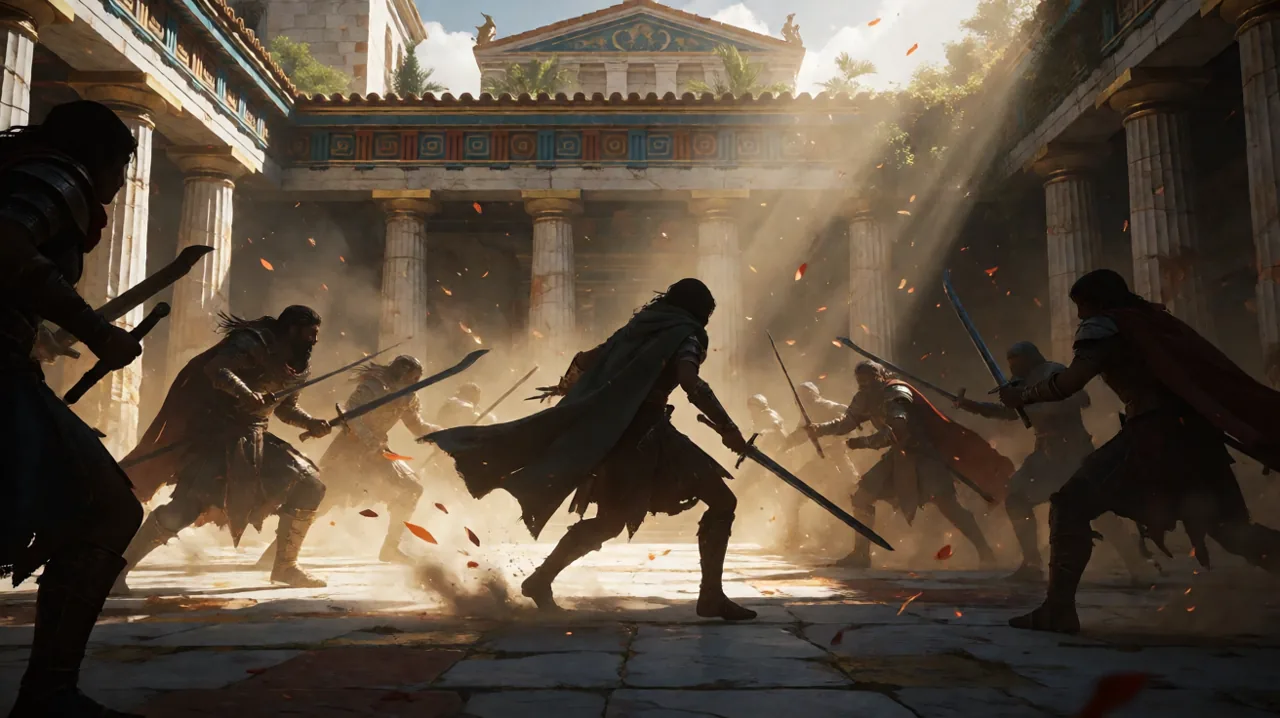
Three weeks have passed since Resonance: A Plague Tale Legacy arrived on PlayStation 5, Xbox Series X|S, PC, and day-one on Xbox Game Pass. With the initial launch window dust finally settling across the sun-baked ruins of 1334 Crete, a distinct narrative is beginning to form around Asobo Studio’s ambitious prequel. By leaving behind the rain-slicked, rat-infested mud of 14th-century France—and, more importantly, the emotional anchor of Amicia and Hugo de Rune—the developers took a massive creative risk. Now, as more players secure their Platinum trophies and critics finalize their assessments, the consensus points to a highly polarizing, mechanically distinct, yet undeniably beautiful experience.
A Gorgeous, Formula-Altering Experience
A recent assessment by NeoTeo perfectly encapsulates the critical response, labeling Resonance as a “gorgeous prequel that changes the formula.” That specific phrasing—changing the formula—is the crux of almost every community debate right now. For veterans of Innocence and Requiem, the original gameplay loop was defined by intense vulnerability. You were a teenager armed with a piece of leather and some rocks, desperately trying to keep your little brother away from the Inquisition and the literal tides of the Prima Macula. Stealth was not just an option; it was a strict requirement for survival.
Resonance actively dismantles that structure. Sophia, our protagonist, is a hardened Venetian smuggler. She operates alone, completely altering the pacing and tone of the moment-to-moment gameplay. The environment of the Aegean Sea and the island of Crete offers a stark visual departure from the grim, oppressive atmosphere of the previous titles. It is, as NeoTeo notes, a genuinely gorgeous game. The Mediterranean sun casts long, harsh shadows across ancient Minoan marble, creating a striking contrast when players are forced into the light-starved underground labyrinths. But the visual upgrade is only half of the equation; the mechanical shift is what truly has the community talking.
Trophy Hunter Consensus: Simple, Solid, but Divisive
Over on the r/Trophies subreddit, dedicated completionists are already logging their final thoughts after earning the game’s Platinum trophy. User Sumthin_Stoopid recently shared their Platinum milestone, offering a concise but highly representative review: “Thought this was another well-written game by Asobo… This admittedly wasn’t as good as the first 2 games, but still a great story and the combat, while simple, was done well. 7/10.”
This 7/10 rating appears to be the sweet spot for many legacy fans. The slight disappointment stems almost entirely from the narrative restructuring. Without the intense, protective dynamic between Amicia and Hugo, Sophia’s solitary journey of self-discovery and survival can occasionally feel emotionally cooler. Her banter and internal monologues are sharp, but they serve a different narrative purpose than the desperate sibling dialogue of the mainline series. However, the trade-off for this emotional shift is a far more robust, proactive protagonist.
The user’s observation that the combat is “simple, but done well” highlights Asobo’s new approach to action. Unlike Amicia, who relied heavily on ranged alchemy and panicked evasion, Sophia thrives in close-quarters engagements. The melee system revolves around a rhythmic parry mechanics framework that allows players to handle multiple opponents simultaneously. When cornered by island mercenaries or cultists in a courtyard, players can no longer just throw an Ignifer pot and run. You have to stand your ground, read enemy telegraphs, and execute precise parries that open up brutal execution windows.
For players seeking a high-ceiling character action game, Resonance might feel a bit constrained—hence the “simple” moniker. It doesn’t feature sprawling combo trees or excessive weapon swapping. Instead, it asks players to master timing and situational awareness. Every strike feels appropriately weighty, a testament to Asobo’s improved animation work. If you are struggling with the timing windows, we highly recommend checking out our comprehensive combat deep dive to better understand how Sophia’s evasion cancels and parry follow-ups function under pressure.
Decoding “The Second Trial” and Environmental Puzzles
Beyond the combat, the “changed formula” extends heavily into the game’s environmental puzzle design. A recent Let’s Play series by community content creator CraigWL highlighted a specific mid-game sequence titled “The Second Trial.” This section perfectly illustrates how the development team has replaced the traditional rat-herding puzzles of the previous games.
In Innocence and Requiem, puzzles almost exclusively revolved around manipulating light sources to clear paths through seas of plague rats. In Resonance, the island of Crete presents entirely different obstacles, leaning heavily on the dual-timeline “resonance” ability and the stolen Minoan light orb. During “The Second Trial,” players are reportedly tasked with navigating a massive, multi-tiered chamber within the Knossos labyrinth ruins. By using Sophia’s resonance mechanic, players can temporarily shift their perception between the 1334 reality and the ancient, pristine Minoan era.
This temporal shifting allows you to bypass collapsed staircases, align ancient reflectors, and manipulate water levels that only existed in the past. It is a highly cerebral approach to progression that relies on spatial awareness rather than panic-inducing swarm management. The Minoan light orb serves as your primary tool here, acting as both a key for these ancient mechanisms and a vital lifeline in the dark. For those stuck on these temporal logic gates, our light puzzles guide breaks down the mechanics of the resonance shifts.
Surviving “The Presence” and The Macula’s Origins
Despite the increased focus on action and temporal puzzle-solving, Resonance has not entirely forgotten its roots. The Prima Macula—the ancient curse at the heart of the series—still looms large over Sophia’s journey, even if it manifests differently here than it does fifteen years later in France. While players are not constantly managing the hyper-aggressive rat swarms of the mainline entries, the stealth segments are arguably more tense.
Sophia must frequently navigate subterranean reservoirs and crypts while evading “The Presence,” an expected manifestation of the Macula’s early corruption that hunts by sound and shadow. These sequences entirely strip away your combat advantages. You cannot parry or execute your way out of an encounter with The Presence; you must rely entirely on environmental cover, distraction, and a deep understanding of the game’s stealth survival mechanics. It is in these moments that Resonance feels the most like a traditional Plague Tale game, forcing the player to respect the lethal nature of the world. The stark contrast between the sunlit, action-heavy mercenary fights on the surface and the desperate, crawling stealth in the dark underground creates a highly effective pacing loop.
Looking Forward
As more of the community reaches the endgame and uncovers the full scope of Sophia’s role in the overarching lore, the debate over Asobo’s new formula will undoubtedly continue. For some, the absence of the De Rune siblings and the shift away from vulnerability-driven stealth makes this a 7/10 spin-off. For others, the gorgeous Aegean setting, the satisfying parry-based combat, and the ingenious temporal puzzles make it a bold, necessary evolution for the franchise.
What is clear, however, is that Resonance: A Plague Tale Legacy succeeds on its own terms. It proves that the universe of the Prima Macula is rich enough to support different types of stories and varying gameplay styles. Whether you are hunting for the Platinum trophy, unraveling the Minoan trials, or simply soaking in the incredible vistas of 14th-century Crete, Sophia’s prequel has established a strong legacy of its own. Let us know how you are finding the combat changes and the puzzle trials on our community forums, and be sure to read our story primer if you need a refresher on how exactly Crete connects to the events of the original games.