Resonance: A Plague Tale Legacy Secures a Massive 4.71 PS Store Rating as Players Praise Sophia's Journey
A month after launch, PlayStation Store data reveals a massive 4.71 out of 5 player rating for Asobo's prequel, proving its combat and dual-timeline mechanics are a massive hit.
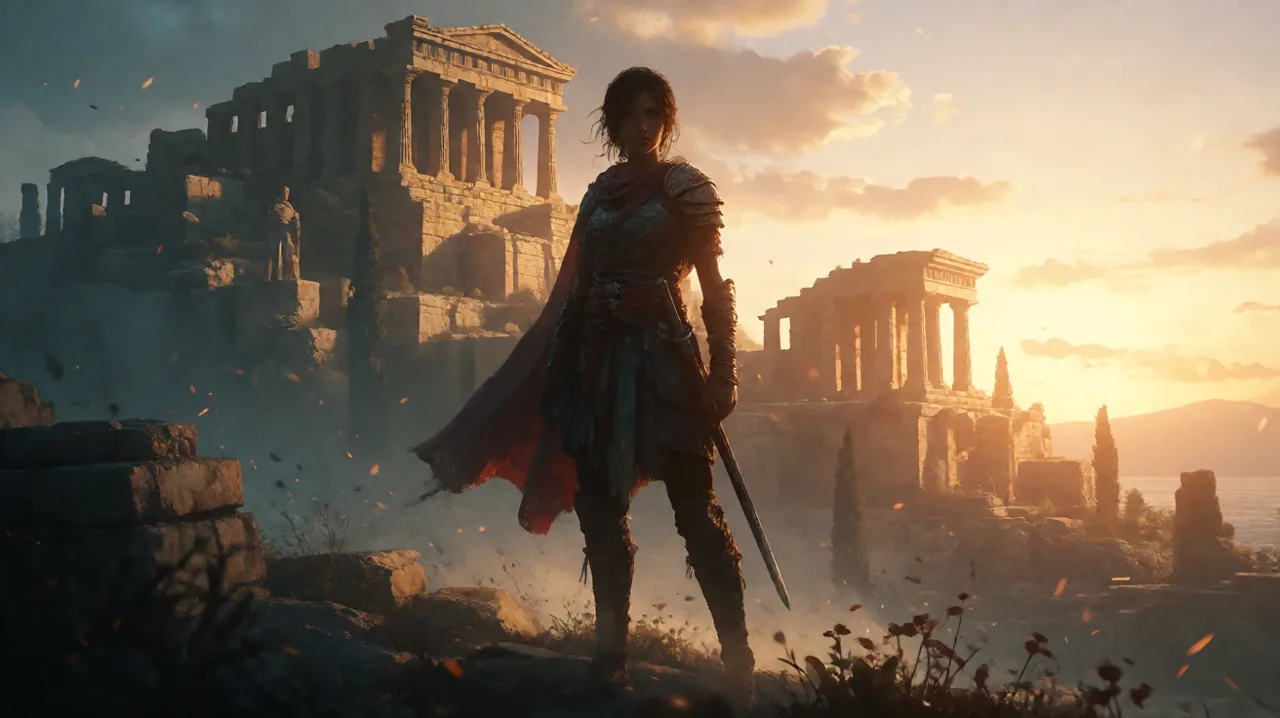
Almost exactly a month after its highly anticipated launch on August 27, Resonance: A Plague Tale Legacy has firmly established its foothold in the gaming community. Developed by Asobo Studio and published by Focus Entertainment, this standalone prequel took a massive risk by stepping away from the familiar faces of Amicia and Hugo, transporting players instead to the year 1334 on the island of Crete. While early critical reviews showed a somewhat divisive reception—with some outlets struggling to adapt to the new mechanical formula—the actual player consensus is painting a remarkably different picture. Recent data mined from storefronts reveals that everyday players are overwhelmingly positive about the Venetian smuggler Sophia and her harrowing journey into the heart of the Minoan ruins.
The Telling PlayStation Store Data
One of the most reliable metrics for unfiltered player sentiment in recent years has become the PlayStation Store’s internal 5-star rating system, primarily because it requires users to actually own the game before casting a vote. According to recent community tracking data shared across gaming subreddits, Resonance: A Plague Tale Legacy currently boasts an incredibly strong 4.71 out of 5 average rating, aggregated from over 3,100 verified owners on PS5.
To put this 4.71 rating into perspective, it places Asobo’s prequel in the upper echelon of user satisfaction for titles released this year. It stands shoulder-to-shoulder with massive AAA juggernauts and handily outpaces several other highly publicized autumn releases. This data completely reframes the narrative surrounding the game. It proves that the core audience—those who invested their time and money on Day One—are connecting deeply with the game’s bold new direction. The transition from the muddy, war-torn fields of 14th-century France to the sun-drenched, yet deeply cursed, shores of the Aegean Sea has clearly hit the right notes with fans of the franchise.
Redefining Survival: Sophia’s Brutal Combat
A significant factor contributing to this high player satisfaction is the revamped combat system. If Amicia de Rune was defined by her desperate, ranged resourcefulness with a slingshot, Sophia is defined by her hardened, street-smart lethality. The community has praised how the developers handled this shift in perspective. Sophia is a smuggler; she is older, more experienced, and entirely capable of holding her own in a desperate close-quarters struggle.
The game’s action heavily leans into a brutal, one-versus-many melee philosophy. The newly introduced parry and execution mechanics have been a massive hit among players who wanted more agency when cornered. Timing a perfect block against a charging mercenary, only to follow up with a devastating, momentum-shifting execution, feels incredibly rewarding. It is a high-stakes dance that punishes careless button-mashing but highly rewards tactical patience and observation. For those struggling to master the exact timing windows on harder difficulties, our parry guide breaks down the enemy attack animations.
Players have noted that this combat overhaul does not make Sophia feel like an invincible superhero. She is still profoundly vulnerable. The stamina limitations and the sheer numbers of the opposing factions mean that direct confrontation is often a desperate last resort rather than a primary strategy. This careful balancing act—making the protagonist highly lethal but still undeniably fragile—is exactly what fans have highlighted as a standout triumph in forum discussions. For a deeper breakdown of how to utilize her arsenal, check out our combat deep dive.
Mastering the Shadows and Evading the Presence
While the melee encounters provide adrenaline-pumping highlights, the core of the Plague Tale DNA remains rooted in tension and stealth. However, Resonance takes a decidedly darker turn when it comes to sneaking. The sunlit marble courtyards of the Minoan ruins often give way to suffocatingly dark underground cisterns and forgotten catacombs beneath the island. Here, the traditional stealth formula is tested by a terrifying new threat known only as the “Presence.”
Community feedback highlights the stealth segments as some of the most anxiety-inducing moments in the entire franchise. The AI behavior of the enemies hunting Sophia is noticeably more aggressive and coordinated than the Inquisition soldiers of previous games. Players are forced to carefully manage their visibility, hugging damp stone walls and utilizing environmental distractions to slip by unnoticed. The stakes are much higher, and the margin for error is razor-thin.
Furthermore, the iconic rat swarms—the relentless, writhing manifestations of the Prima Macula—return in full force, demanding the clever use of light and shadow. But the interplay between human enemies, the Macula swarms, and the unseen Presence creates a volatile sandbox where a single mistake can trigger a cascading failure. If you are finding these underground sections particularly punishing, our stealth mechanics overview offers essential strategies for navigating the labyrinths without raising the alarm.
The Brilliance of the Dual-Timeline and Minotaur Orbs
Perhaps the most universally praised innovation among the player base is the eponymous “Resonance” mechanic. As Sophia explores the ruins of Knossos, she gains the ability to perceive and interact with two distinct timelines simultaneously: the crumbling, rat-infested reality of 1334, and the pristine, ancient glory of the Minoan era.
This dual-timeline feature is not just a visual spectacle; it is fundamentally woven into the game’s environmental puzzle design. Players on Reddit and dedicated Discord servers have frequently cited the puzzle design as a massive step up from Requiem. By shifting perspectives, Sophia can bypass collapsed corridors in the present by walking through them in the past, or manipulate ancient machinery to clear pathways blocked by the Macula.
Central to these puzzles is the stolen Minotaur Orb, an artifact that acts as the key to manipulating light and triggering these timeline shifts. The complexity of the light-based puzzles scales beautifully throughout the 20-hour campaign. Late-game sections require players to rapidly switch eras mid-jump or carefully align beams of ancient light to carve safe paths through otherwise impenetrable oceans of rats. The satisfaction of finally solving these sprawling, multi-room brain-teasers is a recurring theme in positive user reviews. Be sure to reference our light puzzles guide if you find yourself stuck in the later chapters.
A Thriving Community of Completionists and Photographers
As the game approaches its one-month anniversary, the community engagement is naturally shifting from initial playthrough reactions to deep, sustained involvement. Over on the dedicated Xbox achievements subreddits, a wave of players has proudly begun posting their 100% completion screens. Earning all the achievements or securing the Platinum trophy in Resonance is reportedly a demanding but fair endeavor, requiring players to uncover all the hidden narrative echoes and fully upgrade Sophia’s skill tree. The fact that players are willingly diving back in for subsequent playthroughs on harder difficulties speaks volumes about the game’s inherent replay value.
Additionally, the sheer visual fidelity of Asobo’s proprietary engine has sparked a massive trend in virtual photography. Dedicated communities like r/VirtualPhotographers are currently flooded with breathtaking captures of the game. The contrast between the sunlit, vibrant Aegean vistas and the horrifying, macabre reality of the underground Macula nests provides a perfect canvas for digital artists. Players are heavily utilizing the built-in photo mode to capture Sophia mid-parry, the terrifying scale of the rat tsunamis, and the haunting beauty of the dual timelines blending together.
Accessibility and Platform Performance
Another critical factor in the game’s sustained success has been its robust performance across multiple platforms and its immediate accessibility. Launching day-one on Xbox Game Pass significantly lowered the barrier to entry, allowing millions of subscribers to instantly experience Sophia’s journey without a steep upfront investment. This distribution model has undoubtedly fueled the massive influx of player reviews and community discussion online.
For PC players, the game has proven to be a solid technical showcase. While some pre-release leaks hinted at demanding system requirements, the final optimized build has been well-received by the PC gaming community. Features like ultra-wide monitor support and advanced upscaling technologies have ensured that the breathtaking vistas of the Aegean Sea run smoothly on a wide variety of hardware configurations. Interestingly, the availability of Steam keys through secondary markets—often hovering around the $31 mark according to recent subreddit posts—has also provided a budget-friendly entry point for PC gamers outside the Game Pass ecosystem, further expanding the active player base.
Delving Deeper into the Prima Macula
From a narrative perspective, players are deeply invested in how Resonance expands the overarching lore. Set roughly 15 years before the events of Innocence, Sophia’s journey is answering long-standing questions about the ancient origins of the Prima Macula curse.
Without delving into heavy spoilers, the community has enthusiastically dissected the narrative clues left scattered throughout the Cretan ruins. Asobo promised a story that subverts traditional Minoan mythology, blending historical fiction with dark fantasy, and players feel the studio absolutely delivered. Sophia’s personal stakes—unraveling the truth behind her own past while surviving a heist gone terribly wrong—ground the grand, apocalyptic lore in a deeply personal, character-driven narrative. For more context on her background and motivations, you can read our summary in the Sophia story devblog breakdown.
The Verdict is In
While the early review cycle for Resonance: A Plague Tale Legacy may have generated some mixed headlines regarding the mechanical departures from the Amicia and Hugo saga, the dust has officially settled. The massive 4.71 rating on the PlayStation Store, combined with the active, passionate player base completing the game and sharing their experiences online, tells the true story of this release.
Asobo Studio took a massive gamble by pivoting to a prequel featuring a new protagonist, a new setting, and a more aggressive combat loop. Based on the overwhelming player support a month after launch, that gamble has paid off spectacularly. Whether you are playing on PlayStation 5, Xbox Series X|S, PC, or accessing it via Xbox Game Pass, Resonance is cementing its status as an essential, high-quality chapter in one of gaming’s most compelling dark fantasy universes.