Resonance: A Plague Tale Legacy – Xbox Series X 40 FPS Mode and Action Combat Explored
Discover why the community is praising Resonance: A Plague Tale Legacy on Xbox Series X, highlighting the reportedly flawless 40 FPS mode, HDR visuals, and Tomb Raider-esque puzzles.
The Pulse of the Community: A Game Pass Triumph
Since its high-profile late August launch, Resonance: A Plague Tale Legacy has firmly established itself as a massive conversation starter across the gaming landscape. Arriving as a highly anticipated addition for Xbox Game Pass subscribers, the prequel has seen a massive influx of players eager to uncover the dark origins of the dreaded Prima Macula curse. What is particularly fascinating is how the discourse has evolved over the past few weeks. While initial previews focused heavily on the visual leap and the shift in setting from medieval France to the Mediterranean, the current conversation—driven by those who are now rolling the credits—is entirely focused on the profound emotional storytelling and the unexpectedly refined gameplay mechanics.
Across various platforms and subreddits, the sentiment is overwhelmingly positive. Players are taking to community forums to express their absolute awe, frequently calling it one of the most beautiful and heartbreaking interactive experiences available on current hardware. By successfully blending a deeply personal narrative with highly polished gameplay systems, the development team at Asobo Studio has reportedly delivered a title that not only meets the sky-high expectations set by its predecessors but arguably surpasses them in terms of pure mechanical depth. For those wondering how this specific adventure stacks up against similar narrative-driven titles, checking out discussions on games like Resonance provides excellent context for its unique achievements within the action-adventure space.
Xbox Series X Performance: The Community-Reported 40 FPS Sweet Spot
On the technical front, the discussion among console players has been particularly illuminating. While PC users naturally have access to a myriad of graphical tweaks and upscaling technologies, Xbox Series X owners are reportedly enjoying an incredibly optimized and flawless experience, specifically through the game’s tailored 40 FPS display mode. For those equipped with a compatible 120Hz television, this mode is quickly becoming the community’s highly recommended way to play.
The 40 FPS target is a technical sweet spot that is notoriously difficult to pull off without frame pacing issues, yet Asobo’s proprietary engine seems to handle it with remarkable aplomb. Community-reported impressions indicate that this mode perfectly balances the high-fidelity graphical assets—such as the intricate, crumbling textures of ancient marble and the staggeringly complex swarm physics—with a noticeable reduction in input latency. This responsiveness is reportedly a massive advantage for the newly introduced combat mechanics, where split-second timing is the difference between a successful execution and a fatal blow. Players report that the image remains incredibly crisp, with some even claiming the visual fidelity easily rivals the heavily discussed PS5 Pro enhancements.
Additionally, users playing on high-end OLED displays have singled out the HDR implementation as an absolute visual masterpiece. The stark contrast between the brilliant, blinding Mediterranean sun of the overworld and the oppressive, pitch-black undergrounds where the rats dwell is striking. The HDR reportedly makes the golden luminescence of the Minoan light spheres practically leap off the screen, adding a palpable sense of warmth to the cold, dead ruins. For players who want to ensure their setup is optimized for this level of visual fidelity, reviewing the detailed system requirements and display guidelines is highly recommended before stepping into the darkness.
A Shift in Paradigm: From Pure Stealth to God of War-Lite Brutality
One of the most significant departures from the established franchise formula is the distinct evolution of the combat loop. For years, fans have associated this series with frantic evasion, calculated stealth, and relying on a simple slingshot to survive overwhelming odds. However, community-reported impressions strongly suggest that Sophia’s approach to danger in 1334 is fundamentally different. Described by enthusiastic players as a highly satisfying blend of Hellblade’s claustrophobic duels and a lighter, more grounded version of the modern God of War titles, the combat system introduces a completely new, aggressive rhythm to the island of Crete.
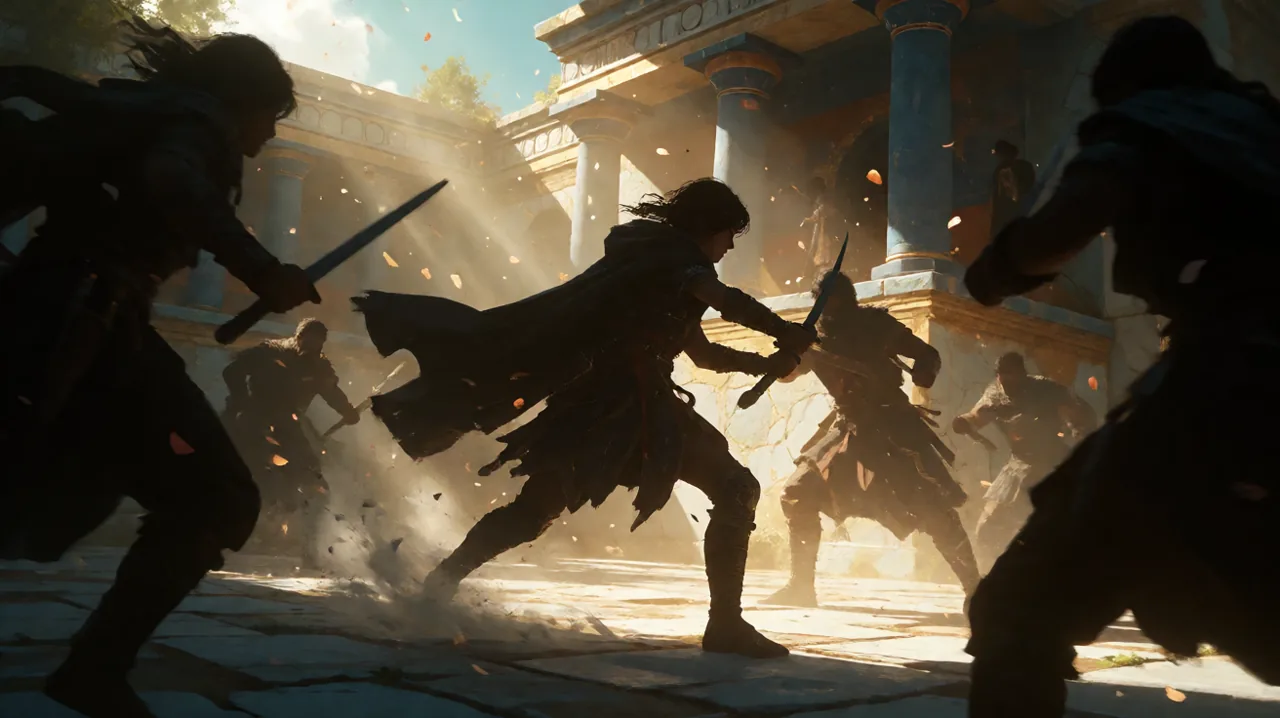
Rather than constantly fleeing from human threats, Sophia is reportedly capable of standing her ground using a dedicated, brutal melee repertoire. Players on the dedicated Xbox subreddits have highlighted the sheer satisfaction of the new evasion and parry mechanics. When cornered by the island’s ruthless mercenary factions in a closed arena, survival depends heavily on reading enemy animations and executing perfectly timed deflections. Successfully intercepting an attack is expected to leave enemies vulnerable to cinematic executions that emphasize the desperate, gritty nature of the fights. This is not a frictionless power fantasy; it is a raw struggle where every encounter feels earned and dangerous.
Furthermore, the community has pointed out that the combat feels highly rewarding thanks to an expanded, RPG-lite upgrade tree. As players gather rare resources scattered across the sun-drenched ruins and dark subterranean rivers, they can reportedly enhance Sophia’s bladed weapons and defensive capabilities significantly. These upgrades are practically essential for managing late-game encounters where you are forced to fight multiple heavy, armored adversaries simultaneously. For those eager to master this new aggressive playstyle, studying the intricacies of the combat mechanics and practicing how to handle crowd control by parrying effectively will be essential for survival. This design shift successfully retains the high-stakes tension of avoiding the rat swarms while empowering players to confront human threats head-on.
Navigating the Labyrinth: Tomb Raider Vibes and Minoan Puzzles
Beyond the visceral thrill of the melee encounters, the structural design of the game’s environments is reportedly drawing heavy comparisons to classic exploration games. Multiple Reddit users have expressed that navigating the ruins of Crete gave them profound Tomb Raider vibes, a sentiment that speaks to the intricate, puzzle-heavy nature of the level design. The labyrinthine architecture of the Minoan civilization serves as both a breathtaking historical backdrop and a complex mechanical obstacle course that demands constant spatial awareness.
At the center of this exploration loop is the clever integration of stolen Minoan light spheres. In previous titles, simple fire was the primary tool for manipulating the environment and keeping the terrifying swarms of infected rats at bay. Here, the community reports that the ancient light spheres function as portable, multi-use artifacts. They are expected to be used not just for warding off the encroaching darkness and the deadly “Presence” that lurks within it, but also for activating ancient, light-sensitive mechanisms built by a lost civilization. Players must critically analyze their surroundings, utilizing these spheres to align massive stone mirrors, open heavy monolithic gates, and reveal hidden pathways through the catacombs.
Adding a fascinating layer of complexity to these exploration segments is the much-anticipated dual-timeline “resonance” mechanic. According to early player accounts, Sophia can perceive echoes of the past, allowing her to superimpose the pristine ancient architecture of the Minoan era over the crumbling ruins of 1334. This mechanic requires players to think laterally, shifting between different eras to solve environmental riddles that span centuries. The seamless integration of this mechanic with the physical manipulation of light sources has been widely praised by early adopters. If you ever find yourself completely stuck in the treacherous depths of Knossos, consulting a walkthrough for solving light puzzles will save you from spending too much time in the dark.
The Atmosphere of 1334: Echoes of the Prima Macula
Of course, mechanics and technical performance are only part of the equation; the soul of this franchise has always been its oppressive, deeply emotional atmosphere. Set roughly fifteen years before the harrowing journey of Amicia and Hugo, this prequel forces players to confront the terrifying ancient roots of the Prima Macula curse. According to community reviews, Asobo Studio has not lost its touch when it comes to crafting a narrative that is both epic in its historical scope and devastatingly intimate in its character moments.
Sophia’s personal stakes, her origins as a hardened Venetian smuggler, and her complex, banter-filled relationship with her companion Leni provide a compelling emotional anchor throughout the campaign. Players have reported that the story is profoundly sad, seamlessly weaving themes of sacrifice, inescapable destiny, and the sheer inevitability of the plague. This oppressive atmosphere is elevated by an exceptional original soundtrack that utilizes haunting stringed instruments and deep, resonant vocal chants to underscore the horror and tragedy of the era. The audio design reportedly works in perfect harmony with the breathtaking visuals to create a world that feels incredibly dangerous and beautifully tragic at the same time. For a deeper understanding of the lore driving this sorrowful journey to Crete, exploring the narrative background offers vital context for the terrifying events unfolding on the island.
Why Sophia’s Journey Marks a Bold New Direction
Ultimately, the latest wave of community feedback paints a very clear and promising picture: Resonance: A Plague Tale Legacy is a masterclass in atmospheric storytelling and deliberate mechanical evolution. By boldly moving away from a pure stealth focus and introducing a satisfying, weighty combat system alongside intricate, era-spanning environmental puzzles, Asobo Studio has successfully revitalized the franchise formula.
Supported by reportedly stellar technical performance on the Xbox Series X—particularly the highly praised 40 FPS mode—the game offers a cinematic survival experience that will linger with players long after the final credits roll. Whether you are parrying a deadly mercenary strike in a sunlit courtyard or illuminating a forgotten Minoan tomb to keep the terrifying rat swarms at bay, Sophia’s quest is an unforgettable descent into ancient darkness.