The Minoan Ruins
The Ancient Surface World
Sun-bleached Minoan ruins form the explorable surface world of Resonance: A Plague Tale Legacy. Here's what to expect from Crete's ancient sites, traversal and the secrets they hold.
A civilization's bones, baking in the sun.
Between the palace of Knossos and the depths of the labyrinth, Sophia spends much of Resonance among the Minoan ruins — the sun-bleached remains of a Bronze Age civilization scattered across Crete. This is the game’s explorable surface world: open, vertical, golden, and very different from the claustrophobic corridors the series used to favour.
Drawn from trailer footage and the game’s framing; marked expected until launch.
A civilization in ruins
The Minoans were Europe’s first advanced society, and their architecture — columned halls, grand staircases, frescoed walls, sacred horns and bull motifs — was unlike anything else in the ancient world. By Sophia’s 14th-century present, all of it lies in ruins: collapsed columns, broken walls, ancient mechanisms half-buried by time and overgrown by Mediterranean scrub. The trailers linger on these spaces, thick with warm light and floating dust, and they’re among the most beautiful environments the series has ever produced.
Exploration and traversal
What’s striking from the footage is how explorable and vertical these ruins look. Sophia climbs, drops, vaults and picks her way through layered spaces, reading the environment for routes forward. It suggests Resonance opens up the level design considerably compared to the more linear earlier games — wider areas with hidden paths, multiple routes, and the sense of a real place to poke around rather than a corridor to walk down.
That openness rewards curiosity. If the series’ tradition holds, the ruins will hide resources, lore and optional discoveries off the critical path. The smart player explores the edges, checks the side rooms and dead ends, and treats the ruins as a place to investigate rather than just pass through.
Light and the puzzles
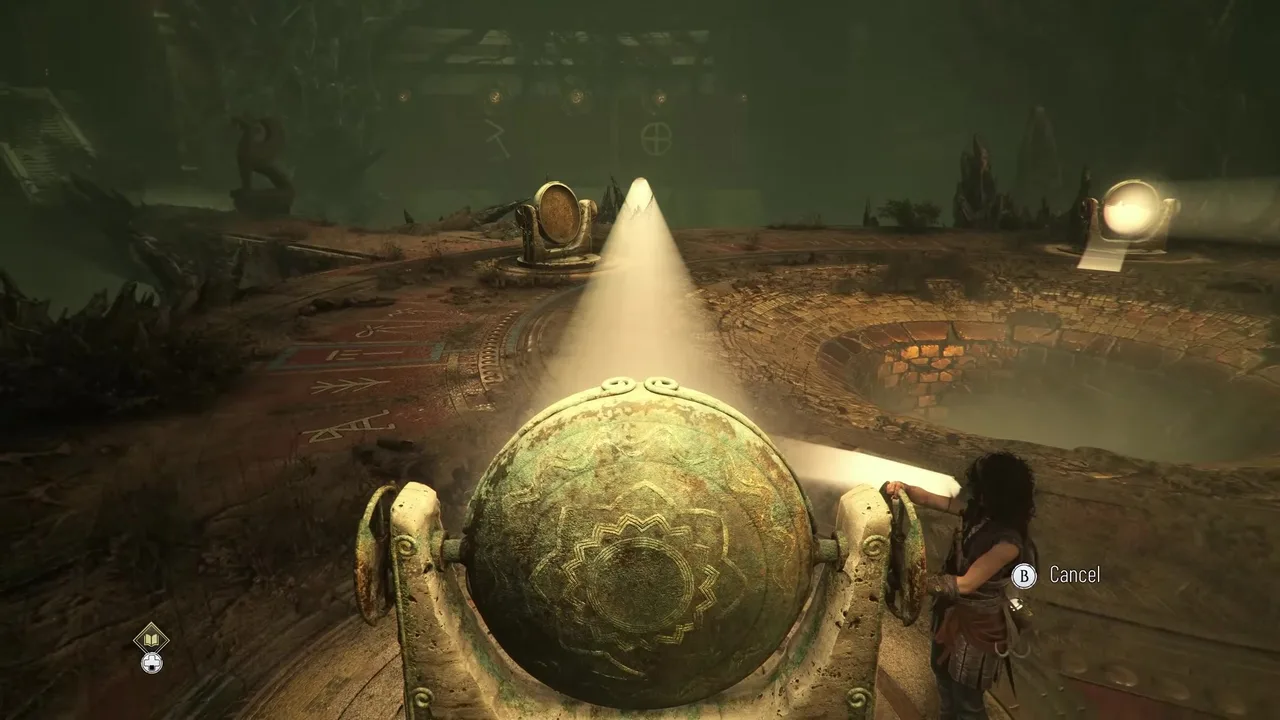
The ruins are also where many of the game’s light puzzles live. The ancient Minoan light machinery — the mechanisms Sophia operates with her stolen sphere — is embedded in these structures, using the strong Mediterranean sun and the architecture of the ruins to create the beams and reflections you redirect. The setting and the central mechanic are inseparable: the ruins aren’t just where the puzzles happen, they are the puzzles.
The surface and the dark
Thematically, the sunlit ruins serve as the bright counterpart to the game’s underground horror. Above, there’s gold, light, openness, beauty. Below, in the cisterns and the labyrinth, there’s darkness, confinement and dread. Resonance seems built around that rhythm — the relief of the sunlit surface and the tension of the depths — and the contrast makes both halves hit harder.
It’s also a technical showcase. The Zouna engine made Requiem’s lighting and rat tides jaw-dropping, and the Minoan ruins, drenched in god-rays and atmospheric haze, are clearly designed to show off what it can do with light. Walking through them is going to be a genuine spectacle.
Continue down into the labyrinth or the sunless cisterns, or read how the ruins’ puzzles work in the light puzzle guide.