Balancing Brutality and Action: Developer Insights on Combat and Music in Resonance: A Plague Tale Legacy
Discover how Asobo Studio pairs the series' signature brutal tone with aggressive one-vs-many combat and mythic dual-timeline audio in the upcoming prequel.
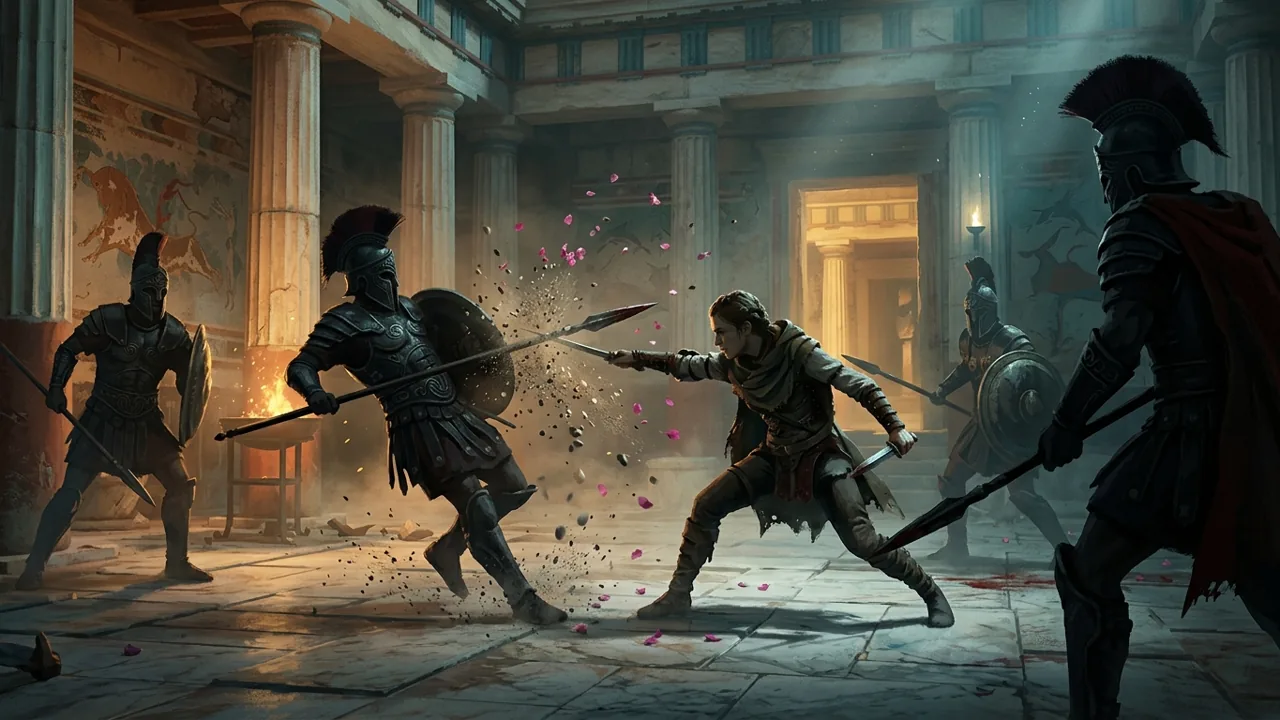
As the August 27, 2026 release of Resonance: A Plague Tale Legacy approaches on PlayStation 5, Xbox Series X|S, and PC (including a confirmed Day One launch on Xbox Game Pass), Asobo Studio continues to outline the mechanical shifts defining this standalone prequel. Set in 1334, roughly 15 years before the events of Requiem, players take on the role of Sophia, a battle-hardened Venetian smuggler. Her expedition to the island of Crete and the mythic ruins of Knossos promises to reveal the ancient origins of the Prima Macula. However, a persistent question among long-time fans has been how the studio intends to maintain the franchise’s historically grim, vulnerability-focused tension when the protagonist is a highly capable fighter.
Today, via a revealing interview with GamesRadar+ and the release of Steam Devblog #4 featuring acclaimed returning composer Olivier Derivière, the vision has become much clearer. The development team is attempting an ambitious balancing act: retaining the series’ heavy, brutal atmosphere while actively encouraging aggressive, multi-target melee combat, all wrapped in an audio landscape that bridges two entirely different eras. Here is our breakdown of what these new developer insights signal for your upcoming journey into the Mediterranean shadows.
The Evolution of Combat: From Desperation to Domination
To understand the significance of the latest designer interview, we have to recognize the established mechanical foundation of the franchise. In both Innocence and Requiem, Amicia de Rune was a young noblewoman surviving on sheer desperation. Her combat style—utilizing a sling or a scavenged crossbow—carried the traumatic weight of a civilian forced into violence. Engaging more than two armored guards simultaneously was heavily discouraged, pushing players naturally toward stealth and alchemy.
Resonance actively alters this dynamic. Sophia is not a frightened teenager learning to kill; she is a seasoned smuggler who has spent years surviving the ruthless underworld of the 14th-century Mediterranean coast. In the GamesRadar+ piece published today, a game designer highlighted the intricate challenge of translating Sophia’s background into a satisfying gameplay loop. The standout quote confirms that the team has successfully paired the franchise’s signature “brutal” tone with the mechanical “fun of killing five or six soldiers” in a single skirmish.
This statement is a definitive confirmation that players will regularly face one-versus-many scenarios where standing your ground is a viable, encouraged strategy. Rather than hiding in tall grass while patrols pass, Sophia has the tools to dismantle small squads. To prepare for these aggressive encounters, we recommend reviewing our Combat Deep Dive and the mechanics outlined in our Parry Guide, which detail how stamina management and well-timed deflections will keep Sophia alive when she is inevitably surrounded.
Mastering the “Brutal” Tone
How does Asobo ensure that effortlessly slicing through a squad of mercenaries does not turn the game into a generic action title? The answer lies in the specific “brutal” execution the designer emphasized. The team believes they “nailed it,” pointing to a system where every victory feels exhausting, visceral, and hard-fought.
In Resonance, eliminating five or six soldiers is not expected to be a simple button-mashing affair. Enemy AI is reportedly designed to flank, coordinate, and overwhelm. You will need to utilize the environment, manage your spacing carefully, and execute flawless parries to avoid being staggered. The brutality will likely stem from the heavy, committed animation locks and the ever-present threat that a single misstep can result in massive damage. The “fun” is derived from the tactical mastery of the arena, not from making Sophia an invulnerable superhero.
Furthermore, this heightened lethality feeds directly into the larger survival narrative. While Sophia might be highly effective against human mercenaries and zealots exploring the ruins, these are merely the surface-level threats on Crete. The ancient “Entity” and the Macula-infected horrors that lurk deeper in the Minoan labyrinth will likely require entirely different approaches. Players will need to know exactly when to transition from a loud, aggressive brawler to a silent survivor. If you want to understand how to break aggression and vanish, our Stealth Guide offers practical advice for navigating these terrifying tonal shifts.
The Symphony of Two Eras: Olivier Derivière’s Return
While the combat team has refined the clash of steel, the audio department has been constructing the sonic identity of Crete. Today’s Steam News update, “DEVBLOG #4 - The Melody Resonates,” offers a fascinating interview with composer Olivier Derivière. His previous work defined the franchise’s emotional dread, utilizing harsh strings, cellos, and the nyckelharpa to embody the grinding, agonizing march of the rat swarms.
For Resonance, Derivière noted that returning to the universe was a “massive” undertaking requiring a fresh philosophy. “I spent hours with Creative Director David Dedeine and Audio Director Aurelien Piters discussing the approach we would have for this episode,” Derivière explains. “We were driven by the origins of Sophia, her story and of course the Greek mythology that was a big source of inspiration.”
This mythological influence is a critical pillar of the game. Resonance utilizes a “dual timeline” resonance mechanic, pulling players back and forth between the 14th-century reality and the echoes of the ancient Minoan civilization. Out of his creative discussions, Derivière envisioned a score that he describes as “mystical yet personal, emotional with a lot of action, and finally something grounded into the real world and the fantasy of the game.”
Integrating Myth and Reality in the Audio Landscape
Mechanically, the soundtrack of Resonance will serve as a vital gameplay compass that bridges the gap between these distinct eras. Derivière explicitly notes that “the many dimensions cross more than often in the game,” and the audio team had to carefully decipher what was crucial for the player to hear.
When Sophia triggers a resonance shift, the audio landscape is expected to physically alter the world around her, transitioning from grounded medieval instrumentation to ancient, ethereal Minoan motifs. This auditory shift is not merely for cinematic flair; it is expected to signal environmental changes, reveal hidden labyrinth pathways, and warn of ancient machinery springing to life. For those interested in the narrative implications of these shifts, we highly recommend reading our analysis on how Asobo is adapting subverted Minoan myth and dual eras.
Additionally, Derivière’s emphasis on creating music “with a lot of action” ties seamlessly into the aggressive combat loop discussed by GamesRadar+. The dynamic score will likely swell with heavy, ancient percussion during those intense one-versus-six sword fights in the marble courtyards. However, if the noise of battle draws the attention of the Prima Macula’s ancient equivalent, the music may violently fracture into dissonant horror strings, signaling that it is time to run.
The Synergy of Light, Sound, and Steel
By synthesizing these new developer insights, the core gameplay loop of Resonance: A Plague Tale Legacy reveals itself as an intricate synchronization of light, sound, and steel. While recent community coverage highlighted the puzzle-solving focus of the stolen Minoan light orbs, today’s news proves these systems are deeply interconnected.
Players might utilize a light orb to blind a coordinated group of guards, instantly turning a deadly disadvantage into a window for multiple brutal executions (see our Light Puzzles Guide for a breakdown of confirmed interactions). Simultaneously, the dynamic audio score will constantly feed you information, alerting you if the blood spilled in the medieval era is awakening the dark entities of the ancient Minoan past. Asobo is building a highly reactive ecosystem where every parry and every dimension shift carries weight.
Preparing for the Journey
With less than a month until the August 27, 2026 launch, Resonance: A Plague Tale Legacy is shaping up to be a confident mechanical evolution for the franchise. By embracing Sophia’s lethal background while fiercely guarding the series’ signature vulnerability against the supernatural, Asobo Studio is charting a bold new path for the IP.
Whether you are deciding which version to purchase to secure the exclusive Heritage Pack (consult our Preorder Editions guide for a full breakdown) or planning to install it on Day One via Xbox Game Pass, mastering this aggressive new combat style and learning to interpret the musical echoes of Crete will be mandatory for your survival. Keep your blades sharp, and trust your ears as you descend into the labyrinth.